


Key takeaways: 6061-T6 aluminum is an aluminum-magnesium-silicon alloy that has been solution heat treated and artificially aged, and it is the material used in the overwhelming majority of true forged wheels. It is chosen because it forges cleanly, machines well, and lands at roughly 45,000 psi ultimate tensile strength with meaningful ductility, versus about 33,000 psi for the A356-T6 casting alloy used in cast wheels. The alloy matters, but so does the process: 6061-T6 in a forged wheel and 6061 in a poorly made part are not the same thing.
If you have shopped for performance wheels, you have seen 6061-T6 aluminum listed on nearly every forged spec sheet. It gets printed on box labels and stamped on barrels so often that it starts to read like marketing filler. It is not. The designation tells you two specific, verifiable things about the metal, and understanding them makes it much easier to read a wheel spec sheet honestly.
What does 6061-T6 actually mean?
The number and the temper code answer two different questions.
6061 is the alloy. It belongs to the 6xxx series of wrought aluminum alloys, which use magnesium and silicon as the primary alloying elements. Those two elements form magnesium silicide precipitates during heat treatment, which is what gives the alloy its strength. Silicon also lowers the melting point and improves how the material behaves under a press, which is exactly what you want in a forging alloy. You can read the full composition breakdown on Wikipedia's 6061 aluminium alloy entry.
T6 is the temper. Temper designations describe the thermal and mechanical treatment the metal received after forming. T6 means solution heat treated and then artificially aged, sometimes called precipitation hardening. The part is heated so the alloying elements dissolve into the aluminum, quenched to lock them in place, then held at a lower temperature so fine precipitates form throughout the structure. Those precipitates block dislocation movement, which is the physical mechanism behind the strength number.
Skip either step and you have a very different part. The same 6061 in the O (annealed) temper is soft enough to bend by hand in thin sections. The alloy and the temper only mean something together.
Why do forged wheels use 6061-T6 instead of cast alloy?
The direct answer: 6061-T6 is significantly stronger and more ductile than the A356-T6 alloy used in cast wheels, and it responds well to forging, which is the process that actually creates the strength advantage.
Cast wheels are typically made from A356, an aluminum-silicon casting alloy chosen because it flows into a mold well. Wrought alloys like 6061 do not cast well, which is why the two processes use different chemistry. Here is how the mechanical properties compare in the T6 condition:
| Property | 6061-T6 (forged) | A356-T6 (cast) |
|---|---|---|
| Ultimate tensile strength | ~45,000 psi (310 MPa) | ~33,000 psi (230 MPa) |
| Yield strength | ~40,000 psi (275 MPa) | ~24,000 psi (165 MPa) |
| Elongation at break | ~10-12% | ~3-5% |
| Brinell hardness | ~95 HB | ~70 HB |
| Internal porosity | Essentially none | Possible |
Look past the tensile numbers and pay attention to elongation. That column describes how much the material stretches before it fractures. A wheel with 10 to 12 percent elongation absorbs an impact by deforming. A wheel with 3 to 5 percent elongation has far less room to do that before it cracks. This is the practical reason forged wheels tend to bend where cast wheels tend to split, and we go deeper on it in our guide to whether forged wheels bend or crack.
How does forging change the metal?
Forging does three things to a 6061 billet that casting cannot do.
- It eliminates porosity. Molten metal traps gas as it solidifies, leaving microscopic voids inside a casting. Forging under thousands of tons of pressure closes those voids and produces a fully dense part.
- It aligns grain flow. The pressure elongates and orients the metal's grain structure to follow the shape of the wheel, rather than leaving the random grain orientation you get from a casting. Load paths run with the grain instead of across it.
- It refines grain size. The deformation breaks up coarse grains, and finer grains generally mean higher strength and better fatigue life.
The heat treatment to T6 happens after forging, so the alloy's precipitation strengthening stacks on top of the structural benefits from the press. If you want the full sequence, from billet to finished barrel, see how forged wheels are made, step by step.
Does 6061-T6 automatically mean a lighter wheel?
No, and this is where spec sheets get oversold. All aluminum alloys have essentially the same density, right around 2.7 grams per cubic centimeter. A pound of 6061 and a pound of A356 occupy the same volume.
The weight savings come from what the higher strength lets an engineer do. Because forged 6061-T6 carries more load per unit of cross-section, spokes can be thinner, barrels can be thinner, and the transition radii can be tighter while still passing load and fatigue testing. Design and target load rating drive the final number. A conservatively designed forged wheel rated for a heavy SUV can easily outweigh a cast wheel built for a light coupe. We covered the honest version of this in are forged wheels lighter than cast wheels.
What are the trade-offs of 6061-T6?
It is a genuinely good wheel material, not a magic one. Three things worth knowing:
- It is expensive to work. Forging requires large presses and dies, and monoblock wheels are then machined from a solid forged blank, which means most of that blank becomes chips. That machining time is a real part of what you pay for.
- It is not the strongest aluminum available. Alloys like 7075 have higher tensile strength. They are also harder to form, more notch sensitive, and less corrosion resistant, which is why 6061-T6 remains the sensible choice for a road wheel that has to survive salt, curbs, and thousands of heat cycles.
- Heat can undo the temper. Prolonged exposure above roughly 200 degrees C can over-age 6061-T6 and reduce its strength. This is the technical reason to be careful about welding repairs on a structural part of a wheel, and it is one reason we take a cautious line on curb rash repair.
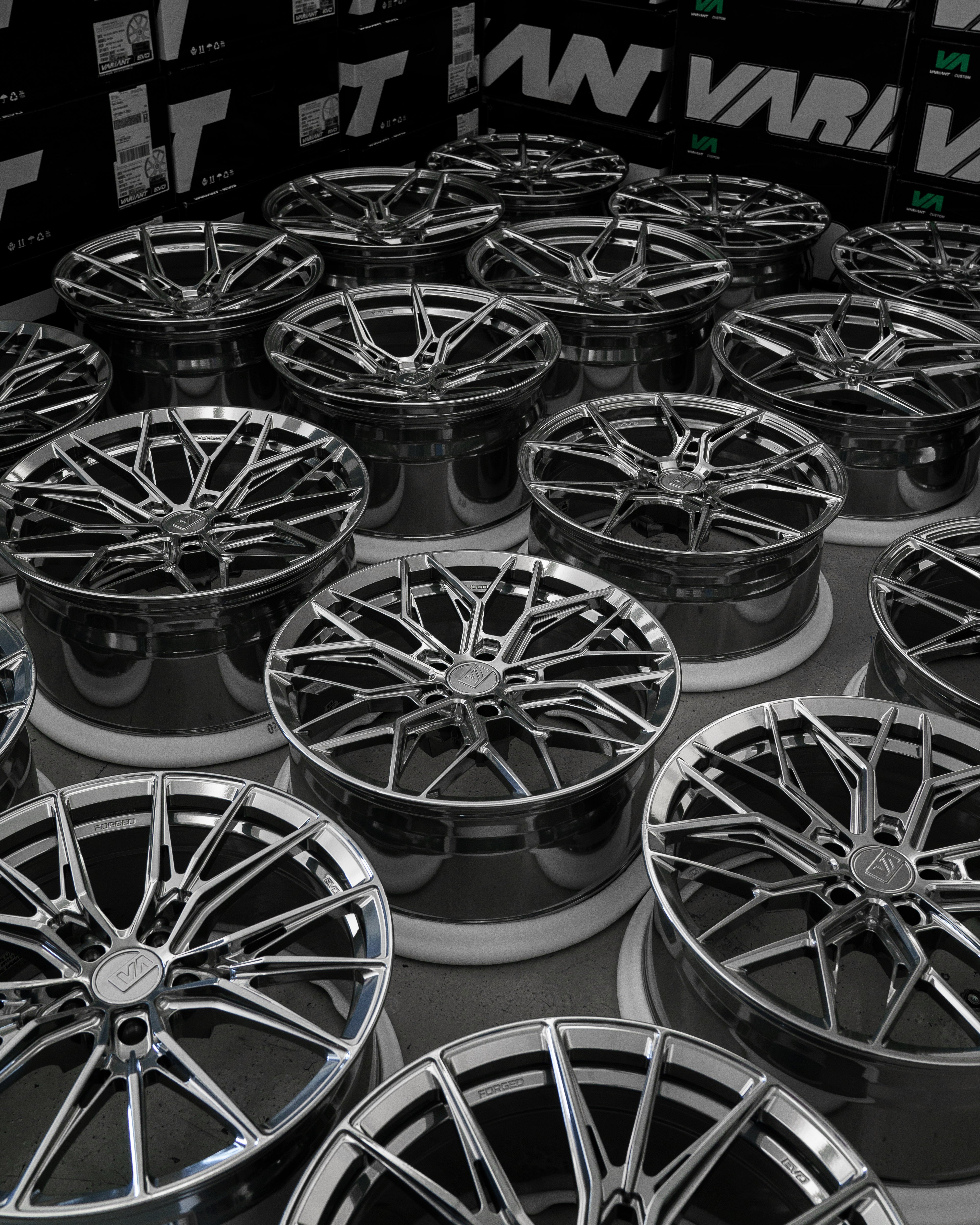
Every wheel Variant builds is a true forged wheel in 6061-T6. That is the whole catalog, from the Corsa and Evo ranges through the rest of our forged wheel lineup. We do not sell cast or flow-formed product, so there is no lower tier to compare against internally. If you want the process comparison, we wrote it up in forged vs. flow-formed wheels. For general background on wheel construction methods, Wikipedia's alloy wheel overview is a reasonable neutral starting point.
Frequently asked questions
Is 6061-T6 the same thing as billet aluminum?
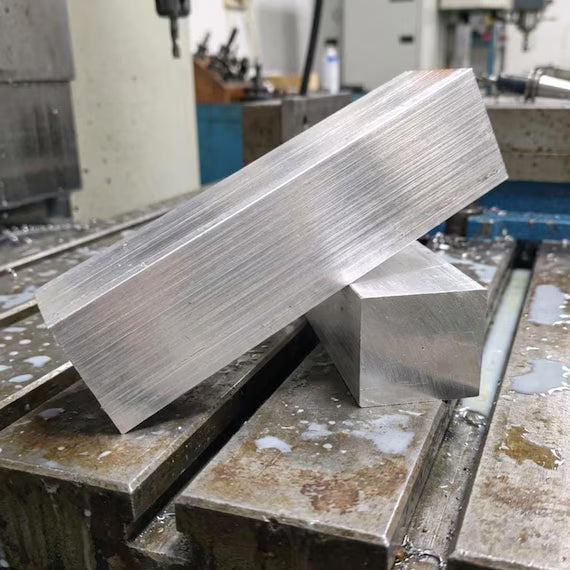
Not quite. Billet describes the starting stock, not the alloy. A billet wheel is machined from a solid bar of aluminum without a forging step, while a forged monoblock is machined from a blank that has already been pressed. Both can be 6061-T6, but the forged blank has the aligned grain flow that the billet bar does not.
Is 6061-T6 stronger than A356 cast aluminum?
Yes. In the T6 condition, 6061 runs roughly 45,000 psi ultimate tensile strength and 40,000 psi yield, compared with about 33,000 psi and 24,000 psi for A356-T6. The gap in elongation is even more relevant for impact behavior.
Does 6061-T6 corrode?
Aluminum forms a protective oxide layer, and 6061 has good general corrosion resistance, better than high-strength 7xxx alloys. It is still vulnerable to road salt attacking through chips in the finish and to galvanic corrosion where dissimilar metals meet. Keeping the finish intact is the practical defense.
Do all forged wheels use 6061-T6?
The large majority do. Some motorsport and specialty applications use other 6xxx variants or higher-strength alloys with different heat treatments, but 6061-T6 is the accepted standard for street and track wheels because of its balance of strength, ductility, formability, and corrosion resistance.
Can a 6061-T6 forged wheel be repaired after a pothole?
Sometimes, and it depends entirely on where and how badly. Cosmetic lip damage is a different conversation than a bent barrel or any crack. Because heat can degrade the T6 temper, structural welding on a wheel is not something to take lightly. Have any impact damage inspected by a qualified wheel specialist rather than assuming it is fine.
Written by Taylor Smith, co-founder of Variant Alloy Wheels, who has spent nearly two decades in the automotive aftermarket.
Share:
What Are the Best Wheels for the BMW M3 (G80)?
Do You Need Special Lug Nuts for Aftermarket Wheels?