


Key takeaways: The lightest forged wheels typically save 10 to 20 pounds per corner versus a comparable cast wheel, or roughly 25 to 30 percent, which can add up to 40 to 80 pounds off a full set. Weight comes down to construction (true forged beats cast), diameter and width, spoke design, and finish. To buy the lightest set for your car, match the correct fitment first, then compare published weights at the exact size and offset you need, not generic marketing numbers. Because wheels are unsprung and rotating mass, shedding those pounds sharpens acceleration, braking, and steering response.
What are the lightest forged wheels, and how light do they get?
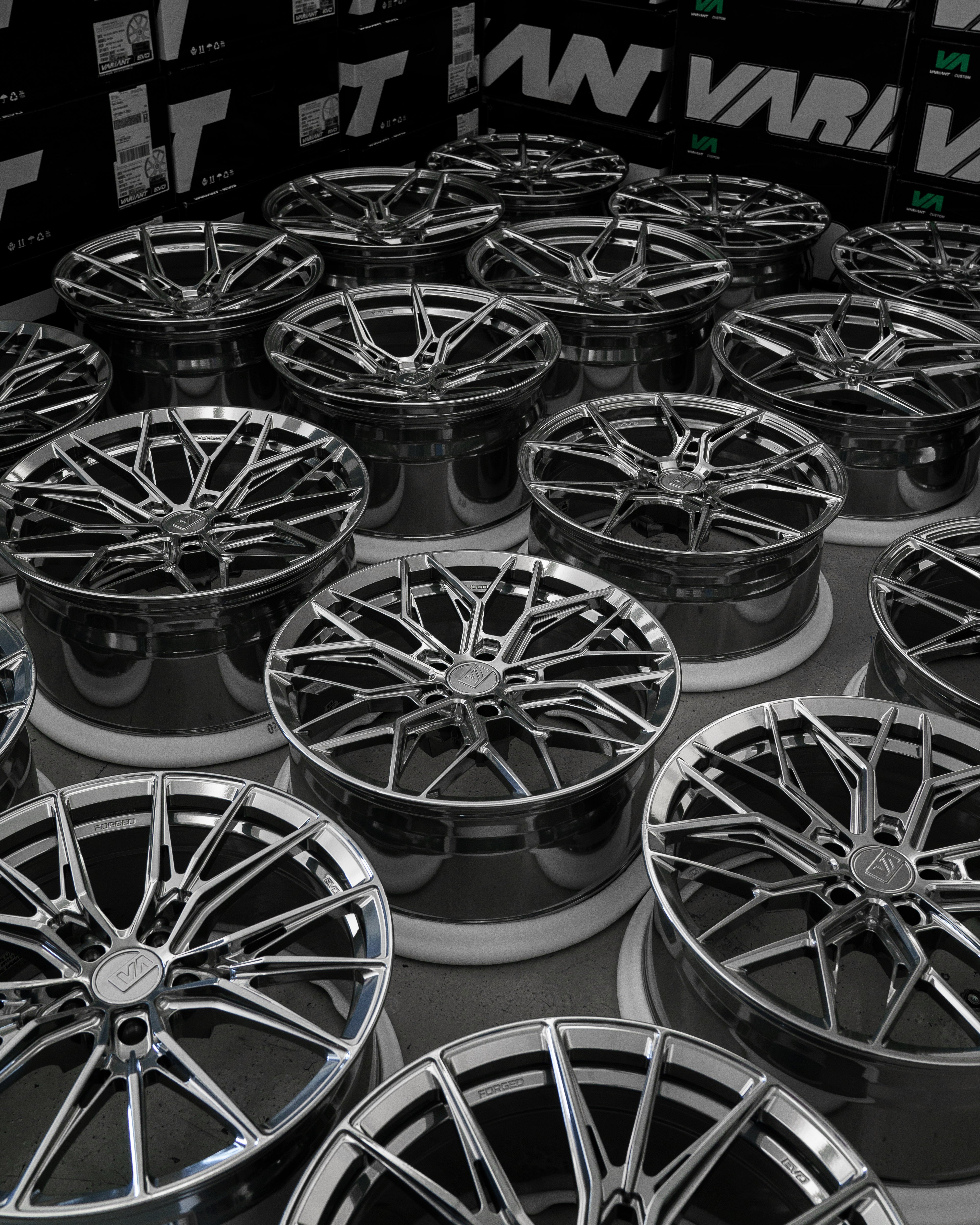
The lightest forged wheels are true forged monoblock designs built from a single billet of aluminum, and they generally undercut a same-size cast wheel by about 25 to 30 percent. In real numbers, a forged wheel is often 10 to 20 pounds lighter per wheel than a comparable cast one. Across a set of four, that is roughly 40 to 80 pounds removed from the car. As a rough reference point, a 20-inch forged wheel can land near 20 pounds where a cast equivalent might sit at 24 to 31 pounds, though exact figures depend on the specific design.
The reason forging wins on weight is structural. Squeezing a solid billet under pressure aligns the aluminum's grain and increases density, so the wheel reaches its strength target with less material. Casting pours molten metal into a mold, which can leave microscopic voids, so a cast wheel usually has to be bulkier to be as strong. We cover the full comparison in forged vs. flow-formed vs. cast wheels.
What makes one forged wheel lighter than another?
Even among forged wheels, weight varies. Four factors drive it:
- Diameter and width: A bigger, wider wheel needs more material. A 22x11 will always outweigh a 19x9 in the same design. Going up in diameter for looks costs weight.
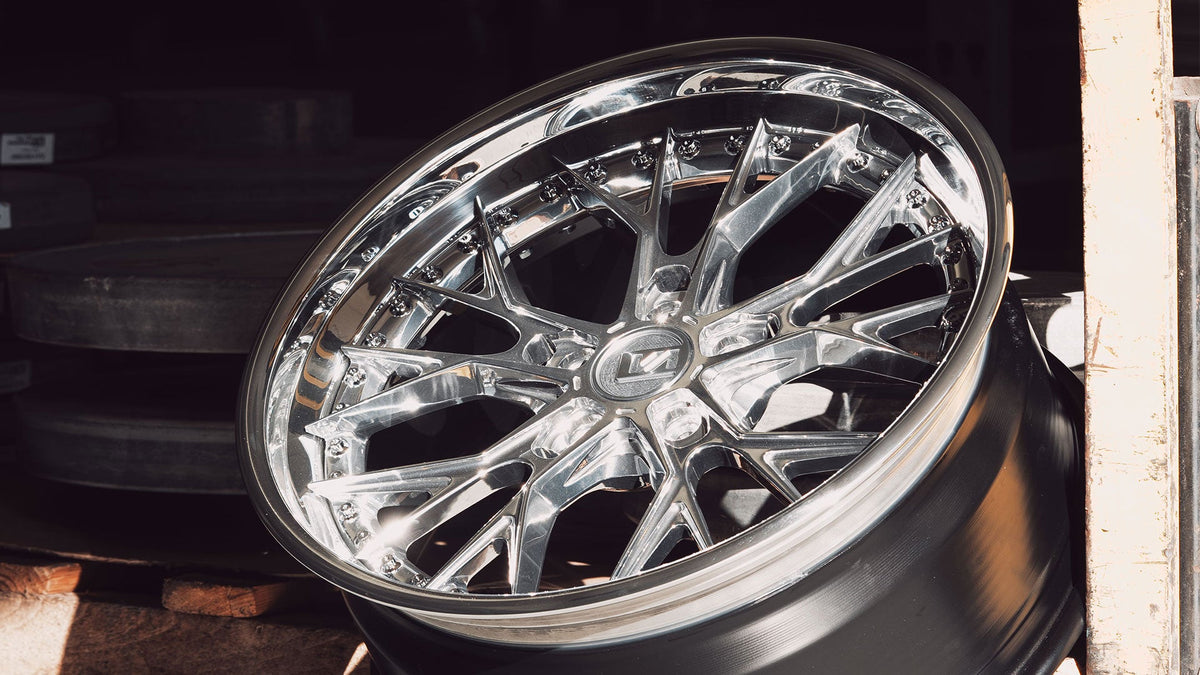
- Construction type: A forged monoblock is usually the lightest option because it is one piece. Multi-piece forged wheels (two- and three-piece) add hardware and barrel sections, which can add weight but unlock custom widths and lip depths. See monoblock vs. 2-piece vs. 3-piece.
- Spoke design and machining: Thoughtful pocketing and thinner, well-engineered spokes remove mass where the wheel does not need it, without giving up the load rating.
- Finish and extras: Heavy over-builds, thick coatings, or oversized hardware add grams. Good design keeps them in check.
| Factor | Lighter choice | Trade-off |
|---|---|---|
| Construction | Forged monoblock | Fixed widths vs. multi-piece |
| Diameter | Smallest that clears brakes | Larger looks more aggressive |
| Width | Only as wide as fitment needs | Wider adds grip and stance |
| Spoke design | Machined, pocketed spokes | Must still meet load rating |
Why does lighter matter? Unsprung and rotational weight
Wheels are unsprung weight, meaning weight the suspension does not carry, and they also rotate. Reducing rotating, unsprung mass has an outsized effect compared with trimming weight elsewhere in the car, because the engine and brakes have to accelerate and slow that mass every time the wheel speeds up or stops. The payoff shows up as quicker acceleration, shorter braking, and steering that feels more immediate. For the physics in plain terms, read what is unsprung weight, and for background, unsprung mass is well documented, as is its handling impact in outlets like Car and Driver.
How do you shop for the lightest wheels for your car?
Chasing the lowest number on a spec sheet is the wrong move if the wheel does not fit. Do it in this order:
- Lock in fitment first. Confirm bolt pattern, center bore, offset, and clearance for your exact model. A light wheel that rubs or sits wrong is useless. Start from a vehicle-specific fitment.
- Compare weights at your real size. A brand's lightest headline weight is often a small, narrow size. Ask for the weight at the exact diameter, width, and offset you are ordering.
- Pick the lightest construction that fits your goals. If you want the outright lightest, a forged monoblock from the EVO Collection is usually the answer. If you want custom widths or a deep lip, a multi-piece design from the Corsa Collection trades a little weight for that flexibility.
- Do not sacrifice the load rating. The lightest wheel still has to be rated for your car. Forged construction is what lets you have both.
This matters most on cars where cutting rotating mass transforms the drive: a track-focused Corvette C8, a canyon-carving Toyota GR Supra, or a heavy, powerful EV like the Tesla Model S Plaid, where lighter forged wheels help offset battery weight.
Is the lightest wheel always the right wheel?
Not automatically. The right wheel is the lightest one that still meets your fitment, load rating, and how you actually use the car. Every Variant wheel is true forged, so you are choosing among genuinely light options rather than paying a weight penalty for a cast design. If you are weighing the overall value of going forged, our honest breakdown of whether forged wheels are worth it lays out the trade-offs.
Frequently asked questions
How much lighter are forged wheels than cast wheels?
Forged wheels are typically about 25 to 30 percent lighter than a comparable cast wheel, often 10 to 20 pounds less per wheel, which can total 40 to 80 pounds across a full set of four.
Are monoblock or multi-piece forged wheels lighter?
A forged monoblock is usually the lightest because it is a single piece with no barrel hardware. Multi-piece forged wheels add some weight for the extra sections and fasteners, but they allow custom widths and deeper lips.
Does a lighter wheel actually improve performance?
Yes. Wheels are unsprung and rotating mass, so reducing their weight improves acceleration, braking, and steering response more noticeably than removing the same weight from elsewhere in the car.
How do I find the lightest wheel that fits my car?
Confirm your fitment first (bolt pattern, center bore, offset, clearance), then compare published weights at the exact diameter, width, and offset you need, and choose the lightest forged construction that still meets your load rating.
Written by Taylor Smith, co-founder of Variant Alloy Wheels, who has spent nearly two decades in the automotive aftermarket.
Share:
What Is a Wheel Load Rating, and How Much Weight Can a Wheel Hold?
What Are the Best Wheels for the BMW 3 Series (G20)?