


Key takeaways: Forged wheels are worth it when you want the best strength-to-weight ratio available, the lowest unsprung weight, and a wheel built to last on a powerful or heavy car. They cost more than cast or flow-formed wheels (often two to several times more), so for a mild daily driver that never sees a track, a well-engineered flow-formed wheel can be enough. The catch worth knowing: "forged" describes a manufacturing process, not an automatic strength rating, so engineering and load rating still matter.
The question "are forged wheels worth it" comes up constantly, and the honest answer is: it depends on the car, how you drive, and what you value. Below we break down what forging actually does, when it pays off, and when it doesn't, so you can decide for yourself.
What does "forged" actually mean?
A forged wheel is shaped from a solid billet of aluminum (usually 6061-T6 alloy) that is compressed under thousands of tons of pressure. That pressure aligns the metal's grain structure, which is what gives a forged wheel its high strength-to-weight ratio. Because the material is denser and the grain runs continuously, a forged wheel can use less aluminum to carry the same load as a cast wheel, which is why forged wheels tend to be both lighter and tougher.
For context, a cast wheel is made by pouring molten aluminum into a mold. It is the cheapest method, but the metal can hold tiny pockets of porosity, so the wheel needs more material (and more weight) to hit a given strength target. A flow-formed wheel starts as a cast center, then the barrel is spun and stretched under heat and pressure to compress and strengthen just the barrel. It splits the difference: lighter and stronger than cast, more affordable than forged. We cover this in depth in our guide to forged vs. flow-formed vs. cast wheels.
Are forged wheels worth it for a daily driver?
For a stock-power commuter that never sees a track or rough roads, forged wheels are a want, not a need. A quality flow-formed wheel that is correctly load-rated for your car will handle daily driving without drama. If your priority is simply a new look on a budget, you do not have to spend forged money to get it.
Where the math changes is when you start caring about how the car feels. Forged wheels usually shave meaningful weight off each corner, and that weight is unsprung weight, the mass the suspension has to control. Cutting unsprung weight sharpens steering response, improves ride quality over bumps, and reduces the rotating mass the engine and brakes have to manage. On an enthusiast car, that difference is felt, not just measured.
When are forged wheels worth the money?
Forged wheels earn their price in a few clear situations:
- High-power or heavy cars: More torque and more mass put more load through the wheel. A forged wheel carries that load with less material and a bigger safety margin.
- Track and spirited driving: Repeated hard cornering, curbs, and heat cycling reward a wheel with aligned grain structure and high fatigue strength.
- Aggressive or specific sizing: Forging supports thinner, stronger spokes and custom widths, offsets, and concavity that cast tooling cannot easily produce.
- Longevity and resale: A well-built forged wheel is designed to outlast several sets of tires, and many forged designs can be refinished rather than replaced.
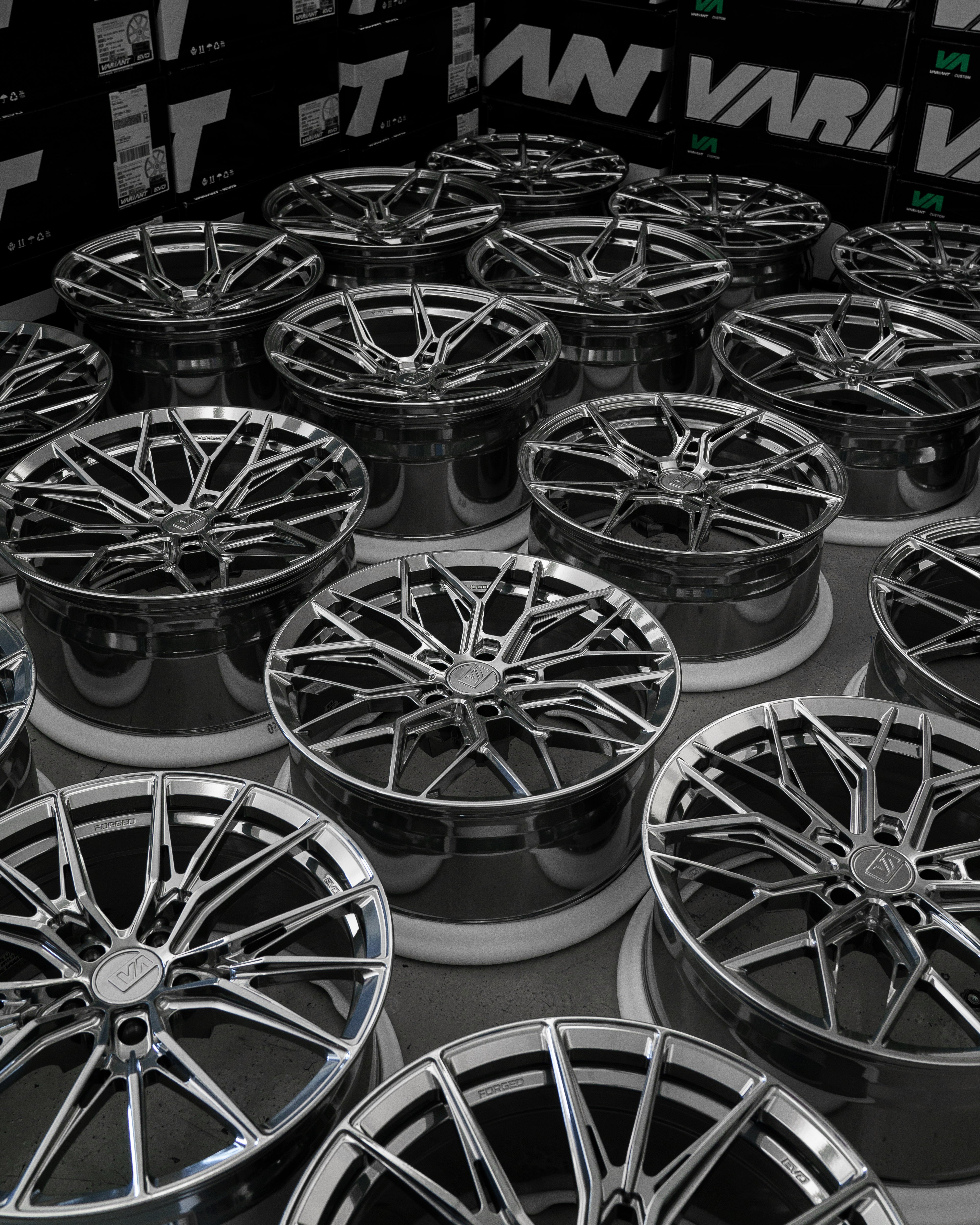
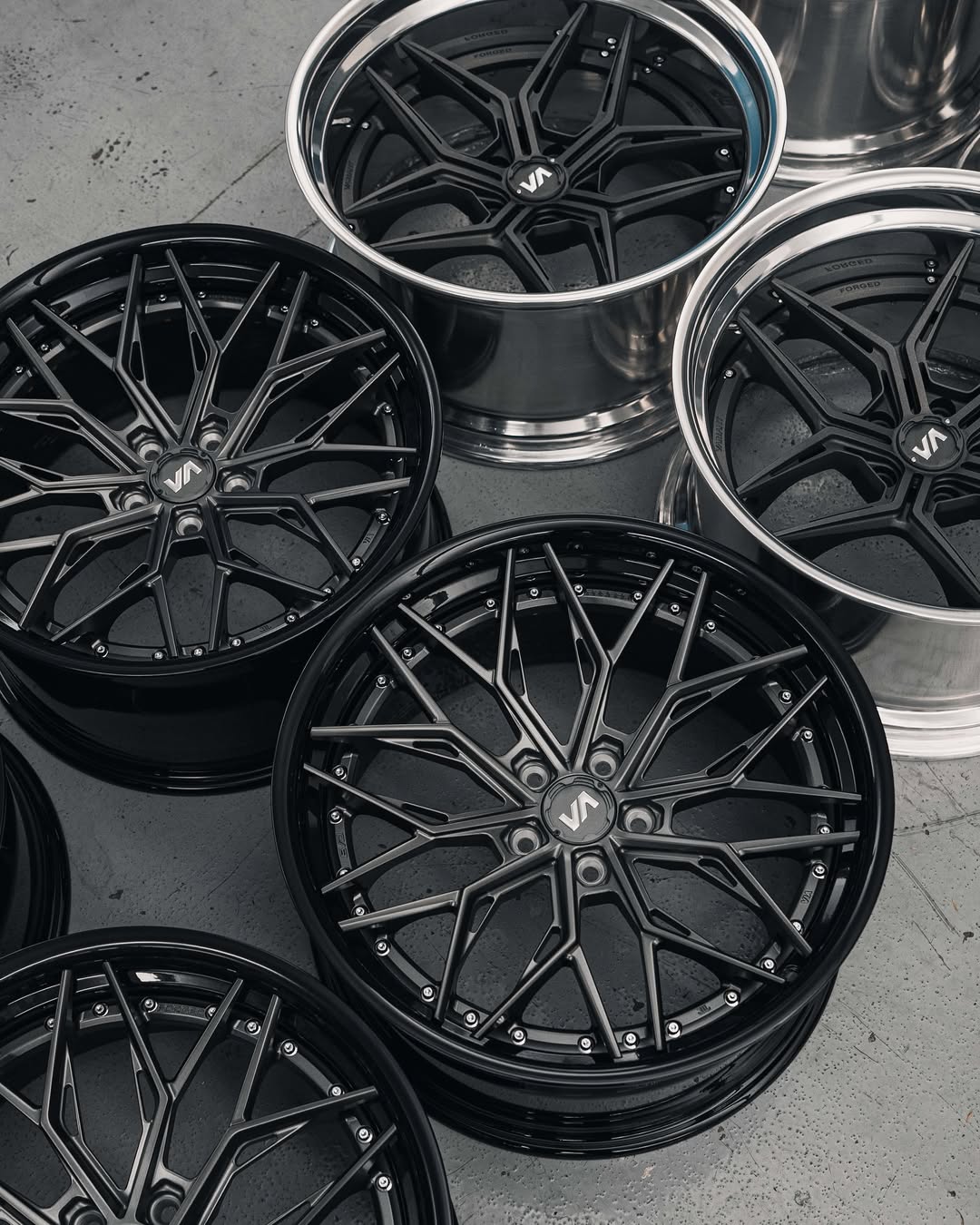
Variant builds only true forged wheels for exactly these reasons. You can browse the full lineup in our forged wheel collection, the monoblock EVO Collection, or the multi-piece Corsa Collection.
How much more do forged wheels cost?
Forged wheels typically cost more than cast or flow-formed wheels because the process uses more raw material, more machine time, and more expensive tooling. The exact premium varies by size, finish, and construction, but a forged set is generally a multiple of an entry-level cast set. Here is how the three constructions compare at a glance:
| Construction | Relative weight | Relative strength | Relative cost | Best for |
|---|---|---|---|---|
| Cast | Heaviest | Lowest (for the weight) | Lowest | Budget OEM-style replacement |
| Flow-formed | Medium | Medium | Medium | Street and light performance use |
| Forged | Lightest | Highest (for the weight) | Highest | Performance, heavy/powerful cars, custom sizing |
Independent retailers such as Tire Rack describe the same trade-off: forging delivers the best strength-to-weight at the highest price.
Does "forged" always mean stronger?
No, and this is the part marketing tends to skip. Forging is a process, not a guarantee. A poorly engineered forged wheel with an inadequate load rating can be weaker in the real world than a thoughtfully engineered flow-formed wheel sized correctly for the car. What actually keeps you safe is the wheel's load rating, its tested fatigue strength, and a design matched to your vehicle's weight and power. Forging gives a good engineer more headroom to work with; it does not replace the engineering. When you shop, look at the load rating and intended fitment, not just the word on the box.
Frequently asked questions
Are forged wheels worth it for a street car?
For a stock-power street car, forged wheels are optional. A correctly load-rated flow-formed wheel handles daily driving fine. Forged becomes worth it when you want the lightest possible wheel, the sharpest handling, or maximum durability on a powerful or heavy car.
How much lighter are forged wheels?
It depends on size and design, but forged wheels are typically the lightest construction available because the aligned grain structure lets them carry the same load with less aluminum. The savings come off unsprung and rotating mass, which is where weight matters most for handling and ride.
Do forged wheels ride harsher?
No. Lighter wheels generally improve ride quality because the suspension controls less unsprung mass over bumps. Ride harshness is driven mainly by tire sidewall height and tire pressure, not by the wheel's construction method.
Are forged wheels stronger than cast wheels?
For a given weight, forged wheels offer the best strength because forging aligns the metal's grain and removes the porosity cast wheels can have. That said, real-world strength still depends on the specific wheel's load rating and engineering, not the word "forged" alone.
How long do forged wheels last?
A quality forged wheel is built to outlast multiple sets of tires and, with proper care, the life of the car. Many forged designs can also be refinished rather than scrapped, which helps both longevity and resale value.
Written by Taylor Smith, co-founder of Variant Alloy Wheels, who has spent nearly two decades in the automotive aftermarket.
Share:
What Are Forged Wheels Made Of? 6061-T6 Aluminum Explained
What Are the Best Wheels for the Audi R8?