


Key takeaways: A wheel load rating is the maximum weight a single wheel is certified to carry, usually stamped on the back of the wheel as a "MAX LOAD" figure in pounds or kilograms. Certification standards like Japan's JWL and VIA, plus SAE J2530 in the United States, verify that rating through fatigue and impact testing. As a rule, the combined load rating of your four wheels should meet or exceed your vehicle's gross axle weight ratings, and never fall below the factory (OEM) wheel spec. Because forging aligns the aluminum's grain structure, a true forged wheel can hit a given load rating at noticeably lower weight than a cast wheel.
What is a wheel load rating?
A wheel load rating is the maximum static weight one wheel is engineered and certified to support. It is a per-wheel number, so a wheel rated at 1,600 lbs means that single wheel is validated to carry up to 1,600 lbs under standardized test conditions. You will usually find it cast or stamped into the back of the wheel near the spokes or bolt circle, printed as "MAX LOAD 1600 LBS" or an equivalent figure in kilograms.
One important distinction: a wheel load rating is not the same as a tire's load index. The tire load index is a coded number on the tire sidewall that corresponds to the tire's maximum load. The wheel load rating is a separate figure for the wheel itself. Both need to be adequate for your vehicle, and they are measured and marked independently.
How do you find a wheel's load rating?
Look at the back (inboard) face of the wheel. Certified wheels typically carry a group of stampings that can include the manufacturer, size, offset, a date code, and the load rating. The load rating appears as a "MAX LOAD" value. On wheels certified to Japanese standards, you will also see "JWL" and often "VIA" cast into the wheel, which indicates the wheel was designed and tested to those benchmarks.
If a wheel carries no load rating and no recognizable certification marks, treat that as a red flag. Reputable forged manufacturers publish or stamp their ratings because the number is a core safety spec, not a marketing detail.
What do JWL, VIA, and SAE mean?
These are the certification standards that give a load rating credibility. Each defines a battery of tests a wheel must survive before it can wear the mark.
- JWL (Japan Light Alloy Wheel): A standard set by Japan's transport ministry for light alloy wheels on passenger vehicles. It is mandatory for wheels sold for road use in Japan and is widely recognized elsewhere as a baseline of structural competence.
- VIA: A registration and inspection mark administered through the Vehicle Inspection Association in Japan. A VIA mark signals that a third party verified the wheel meets JWL through independent testing, rather than the manufacturer simply self-declaring.
- SAE J2530: The SAE International standard for aftermarket passenger car and light truck wheels in North America, covering comparable fatigue and impact requirements.
The tests behind these standards generally include a dynamic cornering fatigue test (simulating side loads through corners), a radial fatigue test (simulating the rolling load of the car's weight), and an impact test (simulating a curb or pothole strike). Passing all three is what lets a wheel claim its rating. You can read more about how wheel and tire specifications are tested and marked through resources like Tire Rack's wheel tech pages and general references on alloy wheels.
How much load rating do you actually need?
Start with your vehicle's gross axle weight rating (GAWR), listed on the door-jamb placard. The load rating of the two wheels on an axle should comfortably cover that axle's GAWR, with margin. In practice, the simplest safe rule is to match or exceed the load rating of your original equipment wheels. Dropping below OEM is never worth it on a safety-critical part.
A common misconception is that a "690 kg" JWL figure means your car can pile 690 kg onto that corner in daily use. It does not. That number is the load the wheel survived under test, which builds in a safety factor. Your real-world target is simpler: rated capacity at or above what the factory wheel carried, and above the share of vehicle weight, passengers, and cargo that corner will see.
| Vehicle type | Typical per-wheel load rating range | What to check |
|---|---|---|
| Sports car / sedan | ~1,500-1,800 lbs | Meet or exceed OEM wheel rating |
| Performance / heavier EV | ~1,800-2,200 lbs | Account for battery curb weight |
| SUV / light truck | ~2,000-2,500+ lbs | Match GAWR with margin |
Ranges are illustrative; always confirm against your specific vehicle placard and the wheel's stamped rating.
Why do forged wheels reach load ratings at lower weight?
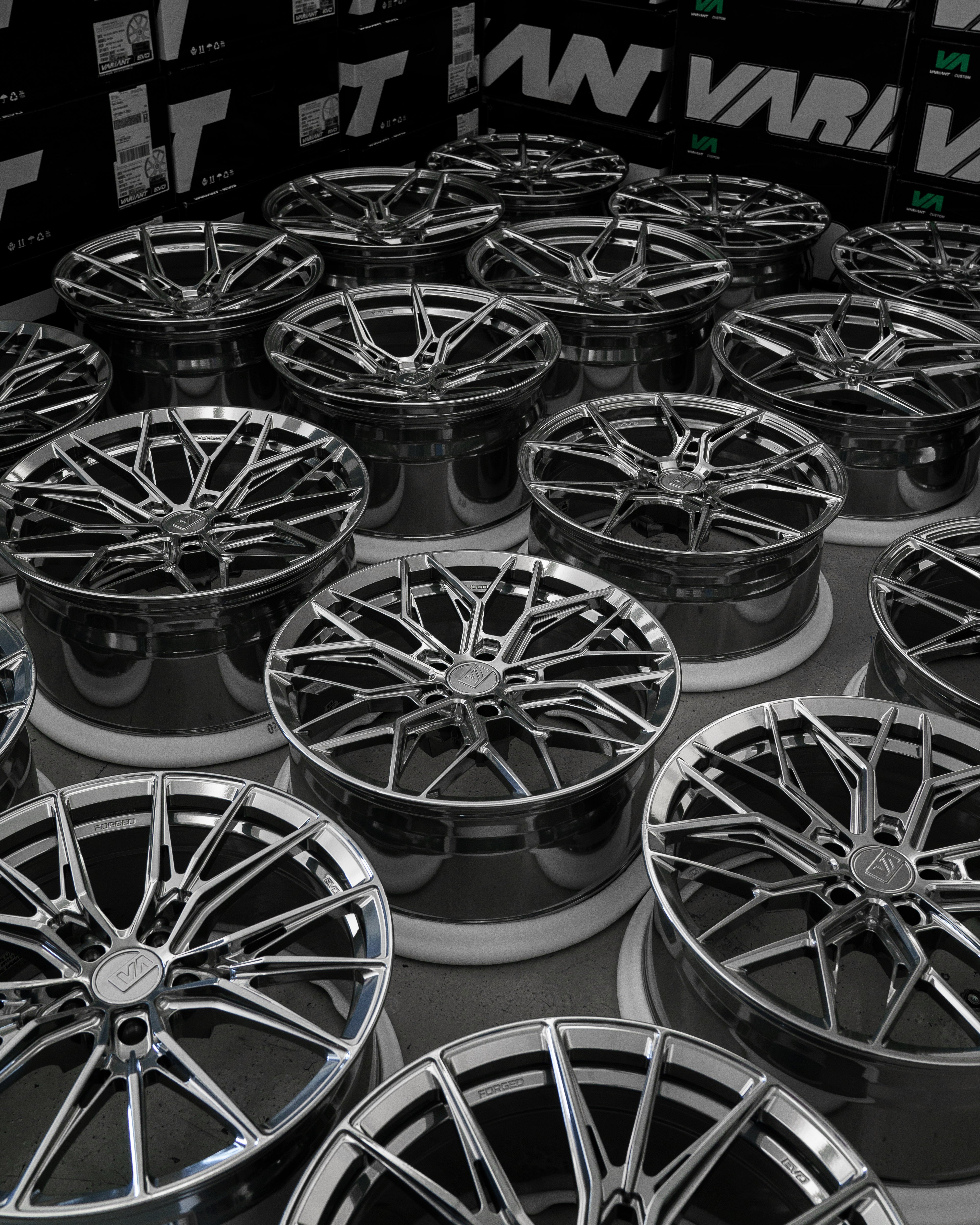
This is where construction matters. A forged wheel starts as a solid billet of aluminum (Variant uses aerospace-grade 6061-T6 aluminum) that is squeezed under enormous pressure. That process aligns the metal's grain flow and increases density, producing a stronger, less porous material than casting, where molten aluminum is poured into a mold and can trap tiny voids.
The practical result: a forged wheel can meet or exceed a target load rating using less material, which means less weight. A cast wheel often has to be bulkier to reach the same strength. That is the core reason forged wheels are prized for both strength and light weight at once. For the full picture of how these processes differ, see our guides on forged vs. flow-formed vs. cast wheels and how forged wheels are made.
Every wheel in the Variant lineup is a true forged wheel, engineered so that hitting a strong load rating never requires carrying dead weight. Whether you are looking at a monoblock from the EVO Collection or a multi-piece design from the Corsa Collection, the load rating is validated, not guessed.
Load rating and unsprung weight: the payoff
Getting a strong rating at low weight is not just an engineering brag. Wheels are unsprung weight, and reducing it improves how a car rides, turns, and stops. A forged wheel that carries a proper load rating while shedding pounds gives you the safety margin without the sluggishness. We break that trade-off down in what is unsprung weight.
Frequently asked questions
Where is the load rating on a wheel?
It is stamped or cast into the back (inboard) face of the wheel, usually near the spokes or bolt circle, shown as a "MAX LOAD" value in pounds or kilograms alongside marks like JWL and VIA.
Is a wheel load rating the same as a tire load index?
No. The wheel load rating is the maximum weight the wheel itself is certified to carry. The tire load index is a separate coded number on the tire sidewall for the tire's maximum load. Both must be adequate for your vehicle.
What load rating do I need for my car?
Match or exceed the load rating of your factory wheels, and make sure the two wheels on each axle comfortably cover that axle's gross axle weight rating (GAWR) from your door-jamb placard. Never go below OEM.
Do forged wheels have higher load ratings than cast wheels?
Forged wheels reach a given load rating at lower weight because forging aligns the aluminum grain and increases density. For the same strength target, a forged wheel can use less material, so you get the rating without the extra mass.
Written by Taylor Smith, co-founder of Variant Alloy Wheels, who has spent nearly two decades in the automotive aftermarket.
Share:
What Are the Lightest Forged Wheels for Your Car?
What Are the Best Wheels for the BMW 3 Series (G20)?