


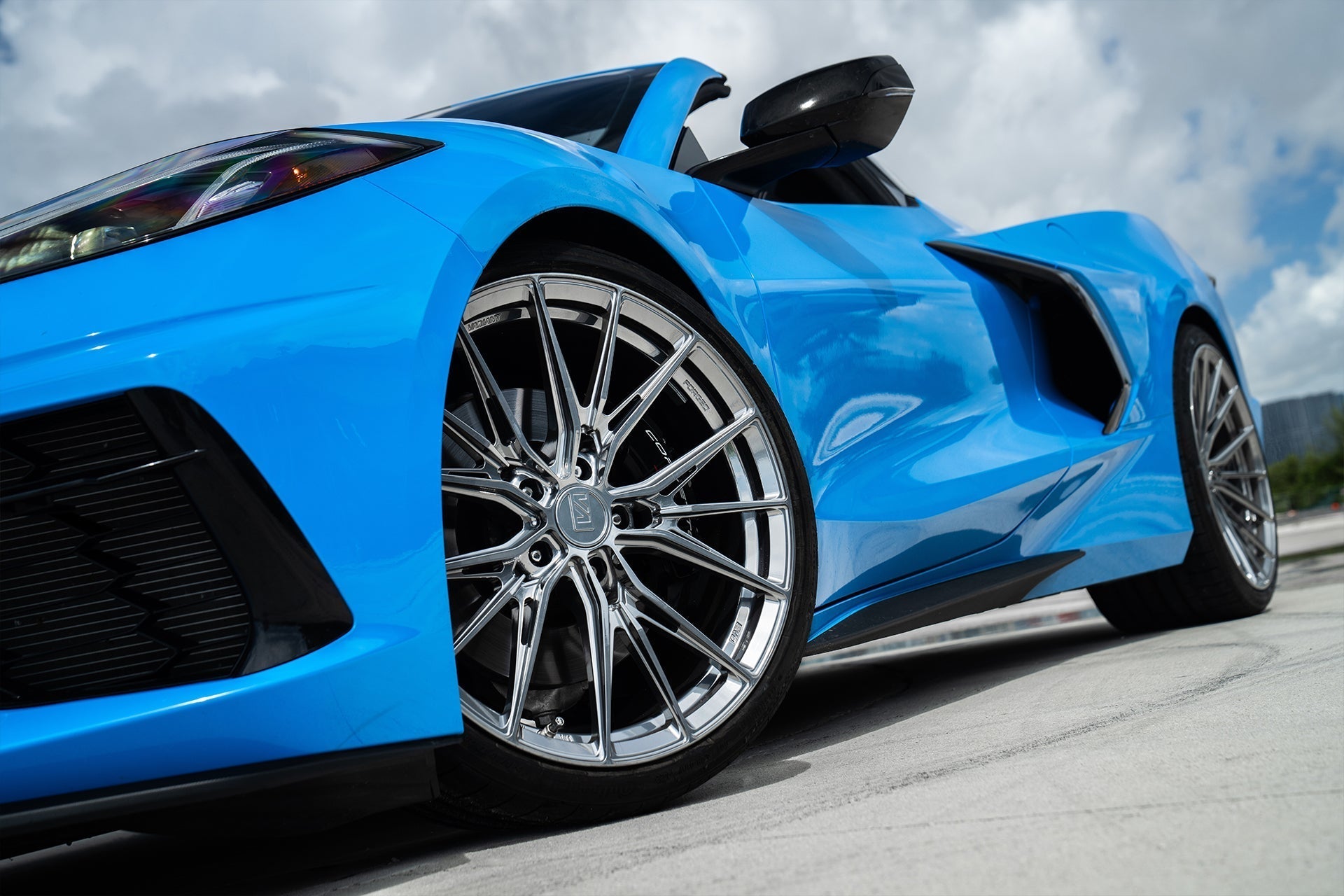
Key takeaways: The Corvette C8 runs a staggered 19-inch front / 20-inch rear setup, so the best wheels for it are lightweight forged wheels in the correct staggered fitment with proper brake clearance. Forged construction cuts unsprung weight to sharpen handling and braking while resisting impact damage.
The mid-engine Corvette C8 changed what a Corvette is, and it's no surprise owners want wheels that match the car's supercar-adjacent ambitions. If you're shopping for the best wheels for the Corvette C8, the goal isn't just a different look—it's getting a lighter, stronger setup that suits the C8's aggressive footprint and big brakes without compromising how the car drives. Here's what actually matters.
Why the C8 is particular about wheels
The C8 runs a staggered setup from the factory—19-inch front, 20-inch rear—with wide rear rubber to put the mid-mounted V8's power down. That means any wheel package has to respect the staggered sizing and the car's specific offsets, or you'll end up with rubbing, poke, or a stance that looks off. The C8 also carries serious brake hardware, so wheel designs need enough spoke clearance and the right barrel shape to clear the calipers.
Forged is the right call here
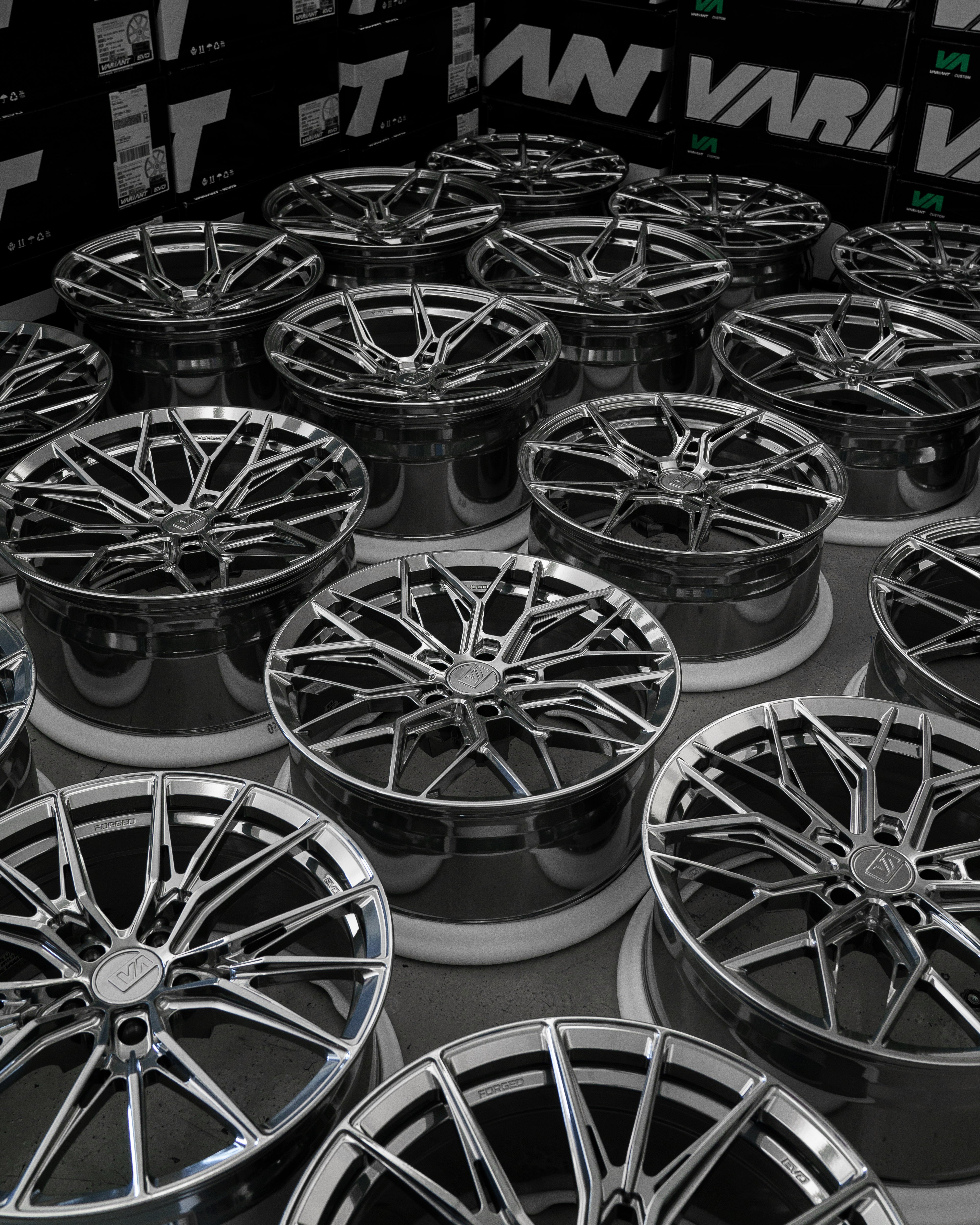
On a car this capable, unsprung weight is the enemy. Every pound you remove from the wheels improves ride, steering response, braking, and acceleration more than weight removed almost anywhere else. Forged wheels—pressed from a solid billet of aircraft-grade aluminum rather than poured into a mold—are the lightest and strongest option, and they bend rather than shatter in a hard impact. To understand the construction differences in depth, see our guide to forged vs. flow-formed vs. cast wheels. You can see Variant's forged options built specifically for this car in our Corvette C8 fitment collection.
What to look for
- Correct staggered fitment. Match the front and rear widths and offsets to the C8's geometry. A fitment built for the car removes the guesswork—browse vehicle-specific fitments rather than generic sizing.
- Brake clearance. Confirm the wheel clears the C8's calipers, especially if you've upgraded brakes.
- Lightweight construction. Forged monoblock or multi-piece designs keep weight down while supporting the loads a C8 generates.
- A finish that fits the car. The C8's surfaces are sculpted and modern; a clean concave face in satin or a custom color complements it without shouting.
Sizing: stick staggered, or go wider?
Most C8 owners keep the staggered layout because it's how the car was engineered to put power down. Some go a touch wider in the rear for more presence and grip, but go too far and you invite rubbing and tire-cost headaches. If you're unsure, a fitment designed for the C8 keeps you in the safe zone while still letting you choose diameter and finish. For broader vehicle data, Car and Driver's C8 Corvette coverage is a useful reference.
Frequently asked questions
What size wheels does the Corvette C8 use?
From the factory the C8 runs a staggered 19-inch front and 20-inch rear setup with wide rear tires. Aftermarket packages typically keep that staggered relationship, sometimes stepping up diameter or rear width for a more aggressive look.
Are forged wheels worth it on a C8?
For a performance car like the C8, yes. Forged wheels shave unsprung weight—improving handling, braking, and ride—and are far less likely to crack in a hard impact than cast or flow-formed wheels.
Will aftermarket wheels rub on a C8?
Not if you run the correct fitment. Rubbing comes from the wrong width or offset. Choosing wheels built specifically for the C8 keeps clearance correct front and rear.
Can I get a custom finish for my C8 wheels?
Yes. Because forged wheels are machined from billet, finishes and even sizing can be tailored to your car rather than pulled from a fixed catalog.
Ready to spec a set? Start with the C8 collection or explore the full forged wheel lineup.
Written by Taylor Smith, co-founder of Variant Alloy Wheels, who has spent nearly two decades in the automotive aftermarket.
Share:
Forged vs. Flow-Formed vs. Cast Wheels: Which Should You Actually Buy?
Wheel Offset Explained: How to Get the Right Fitment