


Key takeaways: The best wheels for the BMW 3 Series (G20) are true forged wheels in an 18 to 20 inch diameter that match the chassis's 5x112 bolt pattern and 66.6 mm center bore, with a positive offset roughly in the ET25 to ET40 range. A square 18 or 19 inch setup keeps handling neutral and lets you rotate tires; a staggered 19 or 20 inch setup adds rear grip and a more aggressive stance. Forged construction matters most here because it cuts unsprung weight, which the G20's chassis rewards with sharper response.
If you are hunting for the best wheels for the BMW 3 Series, the G20 generation gives you a lot of room to work with and a few hard constraints you cannot ignore. Get the fitment right and a forged wheel transforms how the car turns in and rides. Get it wrong and you are chasing rubbing, vibration, or a stance that fights the car's natural balance. Here is the honest breakdown.
What size wheels fit the BMW 3 Series (G20)?
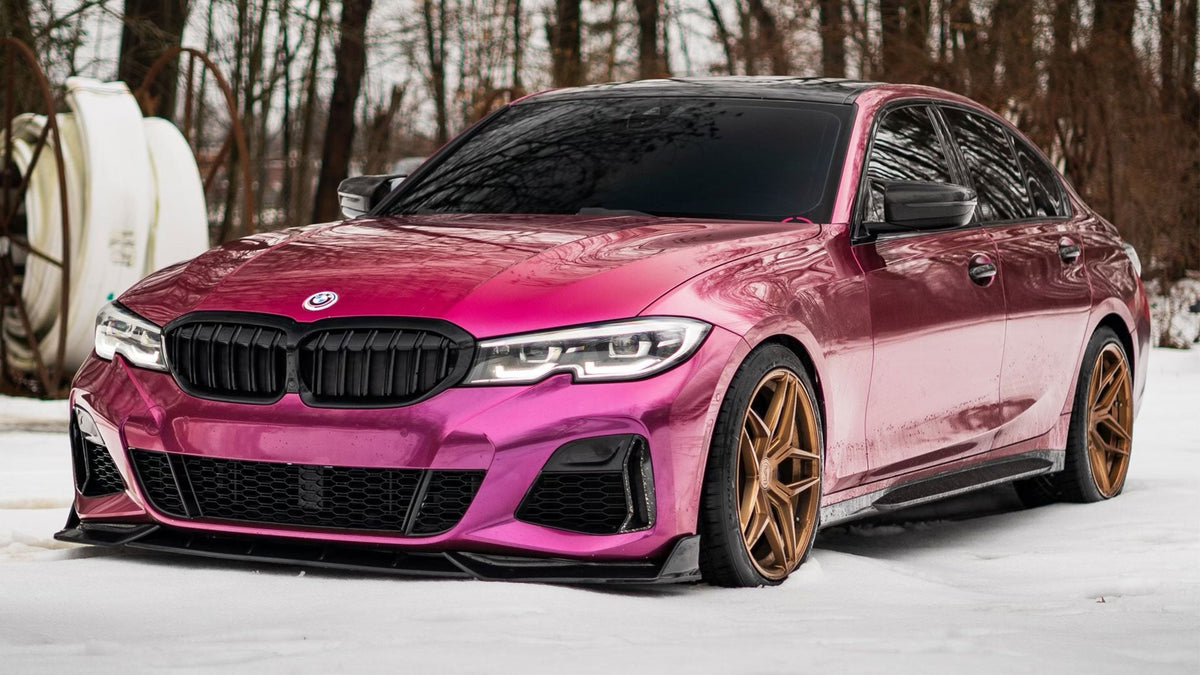
The G20 3 Series (including the 330i and M340i) accepts 18, 19, and 20 inch diameters comfortably, with widths typically between 8.0 and 10.0 inches. Most owners land on 19 inches as the sweet spot: large enough to fill the arches and clear the brakes, small enough to preserve ride quality and tire choice. Eighteens are the move if you track the car or live with rough roads and want more sidewall; twenties look the most aggressive but trade away ride comfort and cost more in tires.
What is the bolt pattern and offset for the G20?
The G20 uses a 5x112 bolt pattern with a 66.6 mm center bore and M14x1.25 lug bolts. This is the newer BMW standard; older BMWs used 5x120, so wheels from an E or F chassis car will not directly fit. Factory offsets sit in the high-positive range, and most aftermarket fitments work well between roughly ET25 and ET40 depending on width. If bolt pattern, center bore, and offset are new terms, our wheel offset guide walks through how offset changes where the wheel sits and whether it rubs.
A practical, well-tested 19 inch staggered example looks like this: front 19x8.5 around ET26 with a 225/40R19 tire, and rear 19x9.5 around ET32 with a 255/35R19 tire. Always confirm your exact fitment against your specific model and suspension, since M Sport and M340i variants can differ from a base 330i.
Should you run a square or staggered setup?
Both work on the G20, and the right answer depends on how you use the car.
| Setup | Best for | Trade-off |
|---|---|---|
| Square (same size all four) | Daily driving, tracking, tire rotation, neutral balance | Slightly less rear grip and a subtler stance |
| Staggered (wider rear) | Street stance, rear-drive traction, aggressive look | No tire rotation, can add mild understeer |
A square setup is the enthusiast's choice if you value rotation and balance; a staggered setup is the stance-and-grip choice for rear-wheel-drive cars. We go deeper on the trade-offs in our staggered vs. square guide. Note that xDrive (all-wheel-drive) G20s are typically run square.
Why do forged wheels matter on the 3 Series?
The single biggest performance reason to upgrade is unsprung weight. A true forged wheel is made by compressing a solid billet of 6061-T6 aluminum under enormous pressure, which aligns the grain structure and produces a part that is stronger for its weight than a cast wheel. Less weight at each corner means the suspension controls the wheel more easily over bumps, steering feels quicker, and braking and acceleration improve marginally. On a chassis as communicative as the G20, you feel it. If you are weighing whether the upgrade is worth the spend, read our honest breakdown of whether forged wheels are worth it.
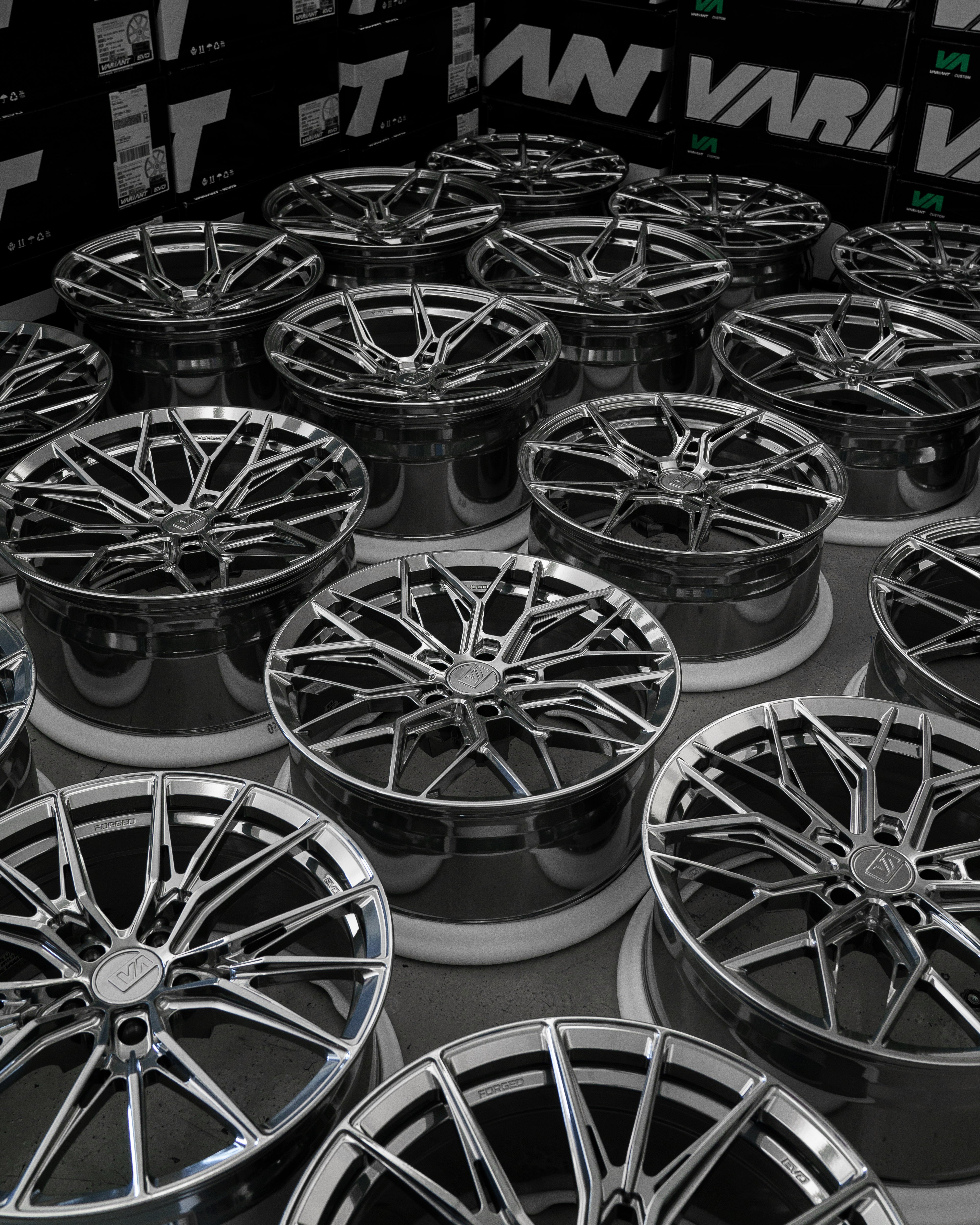
To be clear about what we sell: Variant builds only true forged wheels, not cast or flow-formed products. That is the construction the 3 Series benefits from most.
Which Variant wheels are best for the BMW 3 Series?
For most G20 owners, a forged monoblock is the ideal balance of strength, weight, and price. Our EVO Collection covers exactly that, with finishes and sizes configurable to the 3 Series, while the Corsa Collection steps up to multi-piece forged construction if you want a deeper concave profile and custom lip. You can browse everything cut to your car under our BMW 3 Series wheels. If you also own an M3 or M4, our M3 and M4 wheel guide covers those wider fitments. Whichever you choose, confirm the 5x112 pattern, 66.6 mm bore, and an offset suited to your width, and you will end up with a setup that fits clean and drives sharp.
Frequently asked questions
What is the bolt pattern on a BMW 3 Series G20?
The G20 3 Series uses a 5x112 bolt pattern with a 66.6 mm center bore and M14x1.25 lug bolts. This differs from older BMWs, which used 5x120.
What wheel size is best for the BMW 3 Series?
Nineteen inches is the most popular all-around choice, balancing looks, ride quality, and tire availability. Eighteens favor ride comfort and track use; twenties give the most aggressive look at the cost of ride and tire price.
Can you run a staggered setup on the G20?
Yes. Rear-wheel-drive G20s like the 330i and M340i run staggered setups well for added rear grip and stance. xDrive all-wheel-drive models are typically run square.
Are forged wheels worth it on a 3 Series?
For most owners, yes. Forged wheels reduce unsprung weight, which sharpens steering response and ride control on the G20's already-communicative chassis, and they are stronger for their weight than cast wheels.
Written by Taylor Smith, co-founder of Variant Alloy Wheels, who has spent nearly two decades in the automotive aftermarket.
For independent specs and reviews, see Car and Driver's BMW 3 Series coverage and Tire Rack's wheel fitment resources.
Share:
What Are the Lightest Forged Wheels for Your Car?
What Is Center Bore, and Do You Need Hub-Centric Rings?