


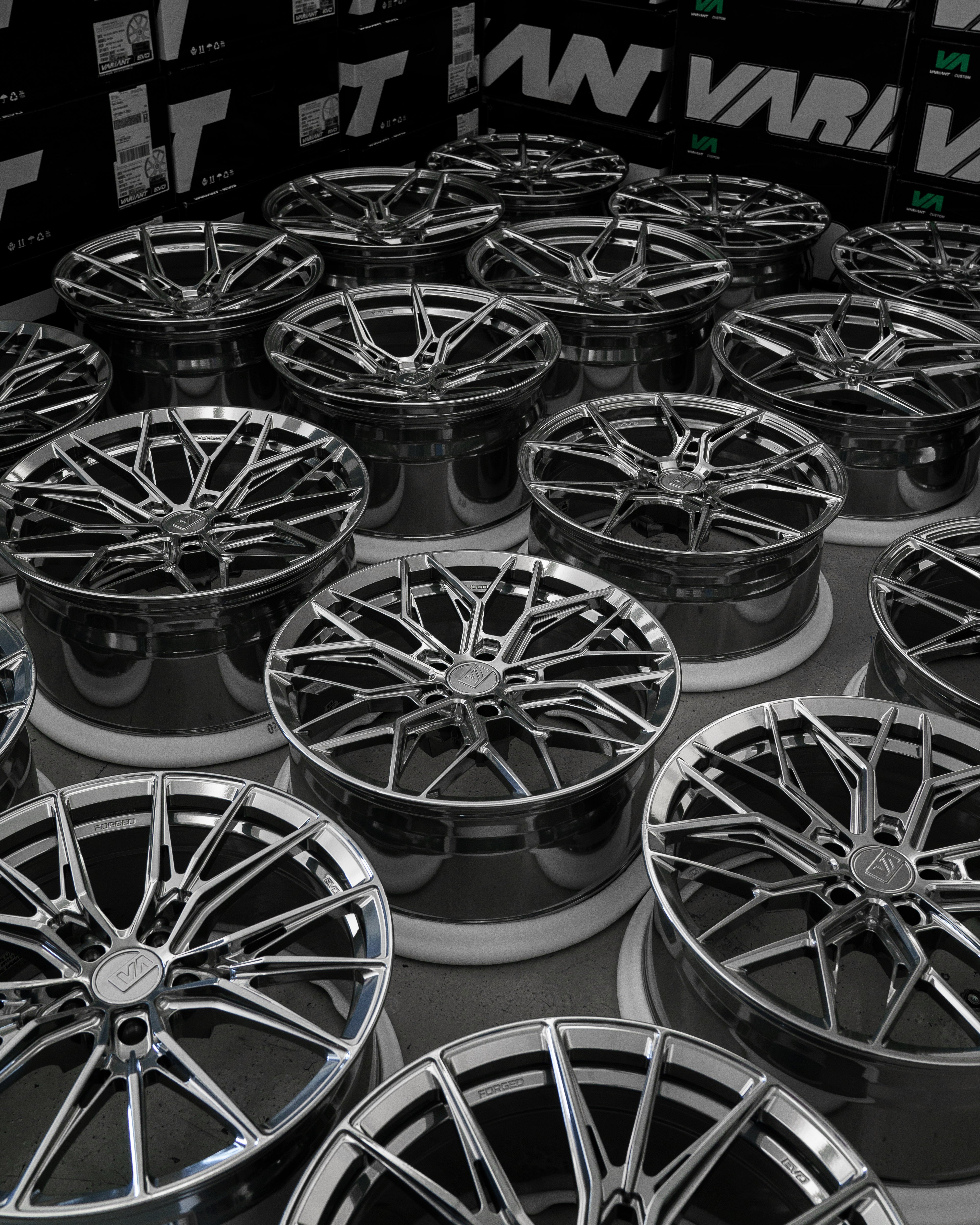
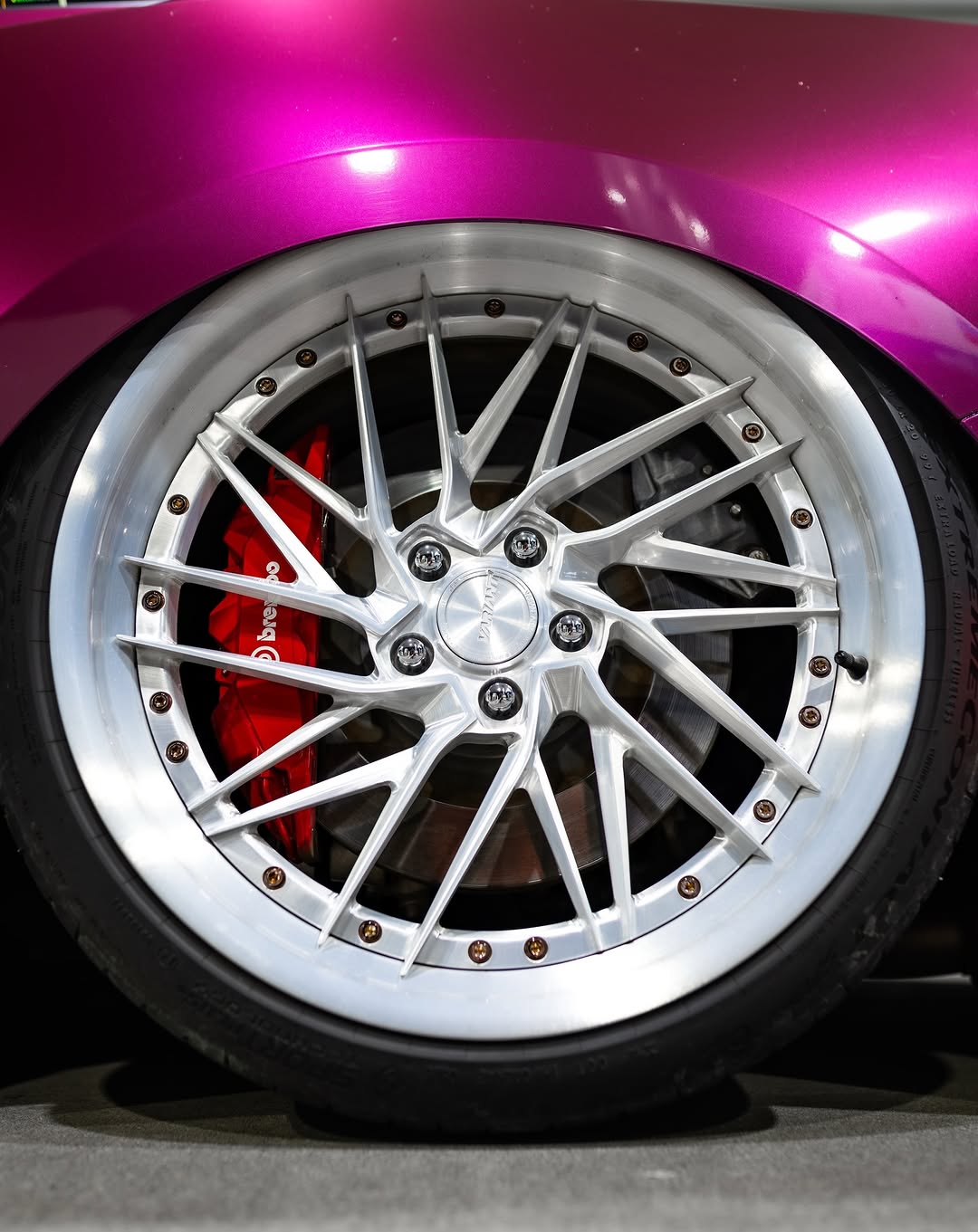
Key takeaways: Forged wheels are worth it when you value strength-to-weight, repairability, and fitment you can't get off a shelf. Expect to pay roughly two to three times what a comparable cast wheel costs. In exchange you typically get a wheel 15-25% lighter at the same size and diameter, with far better resistance to cracking. If you drive a stock-sized commuter, never see a track or a canyon road, and don't care about a specific offset or finish, that premium is genuinely harder to justify.
The question "are forged wheels worth it" comes up constantly, and it usually gets answered badly in both directions. One camp says forged wheels are jewelry with a markup. The other says anything cast is a liability. Neither is true. What's actually going on is a specific engineering trade: you're paying more money for a better strength-to-weight ratio and more control over the wheel's specification. Whether that trade pays off depends entirely on what you drive and how you drive it.
What does "forged" actually mean?
A forged wheel starts as a solid billet of aluminum, most often 6061-T6, which is squeezed under enormous pressure, often several thousand tons, into the rough shape of a wheel before being machined to final form. Forging compresses and aligns the metal's grain structure and closes off the microscopic porosity that molten metal leaves behind as it cools.
A cast wheel, by contrast, is made by pouring molten aluminum into a mold. It's fast, inexpensive, and allows complex shapes, but the resulting grain structure is random and the material contains small voids. Flow-forming (also sold as rotary forging or flow-forged) starts with a cast center and then spins and rolls the barrel under pressure, work-hardening the barrel only. It's a real improvement over plain casting, but the center of the wheel is still cast. We cover that distinction in detail in our guide to forged vs. flow-formed wheels.
Variant only builds true forged wheels. That's not a marketing position so much as a manufacturing one: every wheel we make starts as billet.
How much do forged wheels cost compared to cast and flow-formed?
Prices move with size, finish, and construction, but the market generally sorts itself like this:
| Construction | Typical price per wheel | Relative weight | Typical failure mode | Best for |
|---|---|---|---|---|
| Cast | $200-$600 | Heaviest | Cracks, often unrepairable | Budget replacements, OE-style looks |
| Flow-formed | $350-$800 | Middle | Cracks at the cast center | Street cars wanting some weight savings |
| Forged (monoblock) | $700-$2,000+ | Lightest | Bends before it cracks | Performance driving, custom fitment, big brakes |
So a set of four forged wheels commonly lands somewhere between $3,000 and $8,000, against $1,000-$2,400 for a decent cast set. That's the number people are really asking about when they ask whether forged is worth it.
What do you actually get for the money?
Lower unsprung weight
At the same size and a similar design, a forged wheel is usually 15-25% lighter than its cast equivalent, because the stronger material lets the designer remove metal from the spokes, hub face, and barrel without dropping below the required load rating. On a 20-inch wheel that often means 4-7 pounds per corner.
That weight is unsprung and rotating, which is the most valuable place on the car to remove mass. Less unsprung weight means the damper has less inertia to control over bumps, so the tire stays in better contact with the road. Less rotating mass means slightly less energy needed to spin the wheel up and slow it down. Be realistic about the scale, though: saving 20 pounds across four corners on a 4,000-pound car is a handling and ride-quality change you can feel, not a stopwatch change you'll reliably measure.
Higher strength and a better failure mode
Forged 6061-T6 has meaningfully higher tensile and yield strength than the A356 aluminum most cast wheels use. The practical consequence matters more than the numbers: when a forged wheel is overloaded by a pothole, it tends to deform rather than fracture. A bent forged wheel is often straightenable by a qualified shop. A cracked cast wheel is usually scrap. We go deeper on this in how durable forged wheels really are.
None of that makes a forged wheel invincible. Hit a sharp enough edge hard enough and you'll damage any wheel. What forging buys you is a wider margin and a repair path.
Fitment you can't buy off the shelf
This is the benefit people underrate. Because forged wheels are machined from billet rather than poured into a fixed mold, widths, offsets, and center bores can be specified rather than accepted. If you're running a big brake kit, a wide-body kit, coilovers, or an aggressive tire, the ability to order a 20x11 at a specific ET instead of settling for whatever the mold produced is often the entire reason to go forged. If you're unsure what you need, start with our guide to wheel offset.
Concave and deep-lip designs also depend on forging. You can't reliably cast the thin, deeply dished spokes that give a wheel real depth without adding weight back in for safety margin.
When are forged wheels not worth it?
Honest answer: more often than a wheel company usually admits.
- You're keeping stock sizes and stock power. If you want an OE-plus look on a comfortable daily driver, a good flow-formed wheel gets you a large share of the benefit for a fraction of the cost.
- You park on the street in a city. Curb rash on a $1,500 wheel hurts substantially more than curb rash on a $350 one, even though forged wheels are usually repairable.
- You're chasing lap times on a tight budget. Dollar for dollar, tires, brake fluid, pads, and seat time return more than wheels do. Buy the wheels once the rest is sorted.
- You're planning to sell the car soon. Forged wheels hold value comparatively well, but you'll rarely recover the full spend through the car's sale price.
How do you tell a real forged wheel from marketing language?
The word "forged" gets stretched. "Rotary forged," "flow forged," and "hybrid forged" all describe flow-formed wheels with a cast center. That's not fraud, but it isn't the same product. Ask three questions before you buy:
- Is the entire wheel forged, or just the barrel? A true monoblock forged wheel is machined from a single forged billet, center and barrel together.
- What's the actual weight in the size you're ordering? A real manufacturer publishes it. Compare against your OE wheel, not against a competitor's marketing.
- What standard was it tested to? Radial fatigue, cornering fatigue, and impact testing are the baseline. Testing standards are the difference between engineering and guessing.
If you've decided the premium makes sense for your car, our Corsa, EVO, and Designer lines are all true monoblock forged, and you can browse the full forged wheel range or check vehicle-specific fitments for your car. For a broader look at how construction affects the driving experience, Tire Rack's wheel tech section is a useful independent reference.
Frequently asked questions
Are forged wheels stronger than cast wheels?
Yes. Forging aligns the aluminum's grain structure and eliminates the porosity left by casting, which raises tensile and yield strength. The practical benefit is that a forged wheel typically bends under an impact that would crack a cast wheel, which usually means it can be repaired instead of replaced.
How much lighter are forged wheels?
At the same diameter, width, and comparable design, forged wheels are generally 15-25% lighter than cast wheels, which often works out to 4-7 pounds per wheel on 20-inch sizes. Exact savings depend on the design, so compare published weights for the specific size you're ordering.
Do forged wheels ride better?
Often, yes, but indirectly. Lower unsprung weight lets the suspension control wheel movement more easily over bumps, which improves impact absorption and keeps the tire loaded more consistently. Tire sidewall height and pressure still have a far larger effect on ride quality than wheel construction does.
Are forged wheels worth it for a daily driver?
It depends on the car and the roads. On a heavy performance car with rough local roads, the weight savings and the bend-not-crack failure mode are genuinely useful. On a stock-sized commuter driven gently on smooth roads, a quality flow-formed wheel is usually the better value.
How long do forged wheels last?
With no impact damage, a forged wheel's structural life typically outlasts the car. Finish life is the real variable: clear coat and paint degrade with brake dust, road salt, and harsh cleaners, so regular cleaning and protection matter more than the aluminum ever will.
Written by Taylor Smith, co-founder of Variant Alloy Wheels, who has spent nearly two decades in the automotive aftermarket.
Share:
What Are the Best Wheels for the Dodge Challenger and Charger Hellcat?
What Are the Best Wheels for the BMW 4 Series (G22)?