


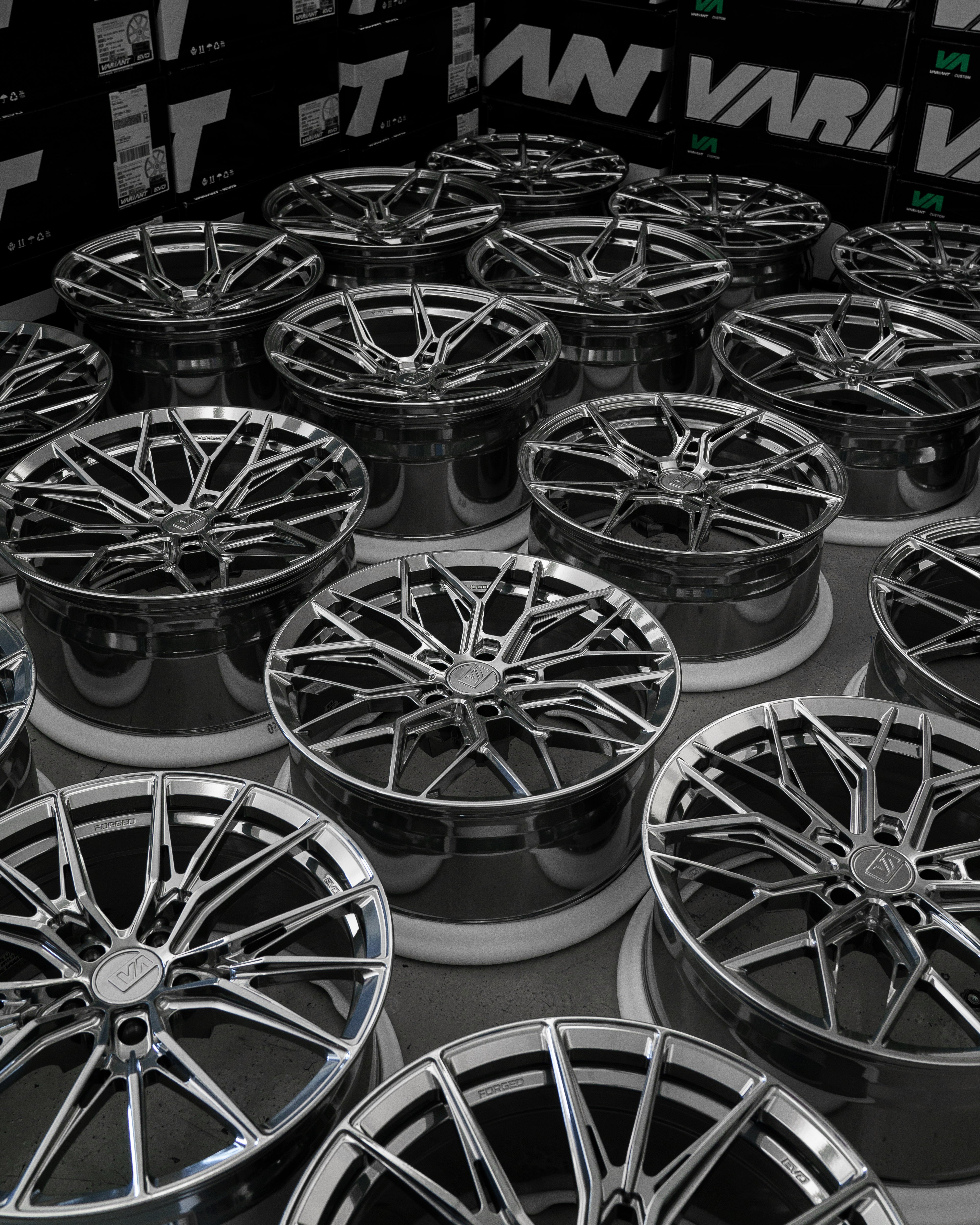
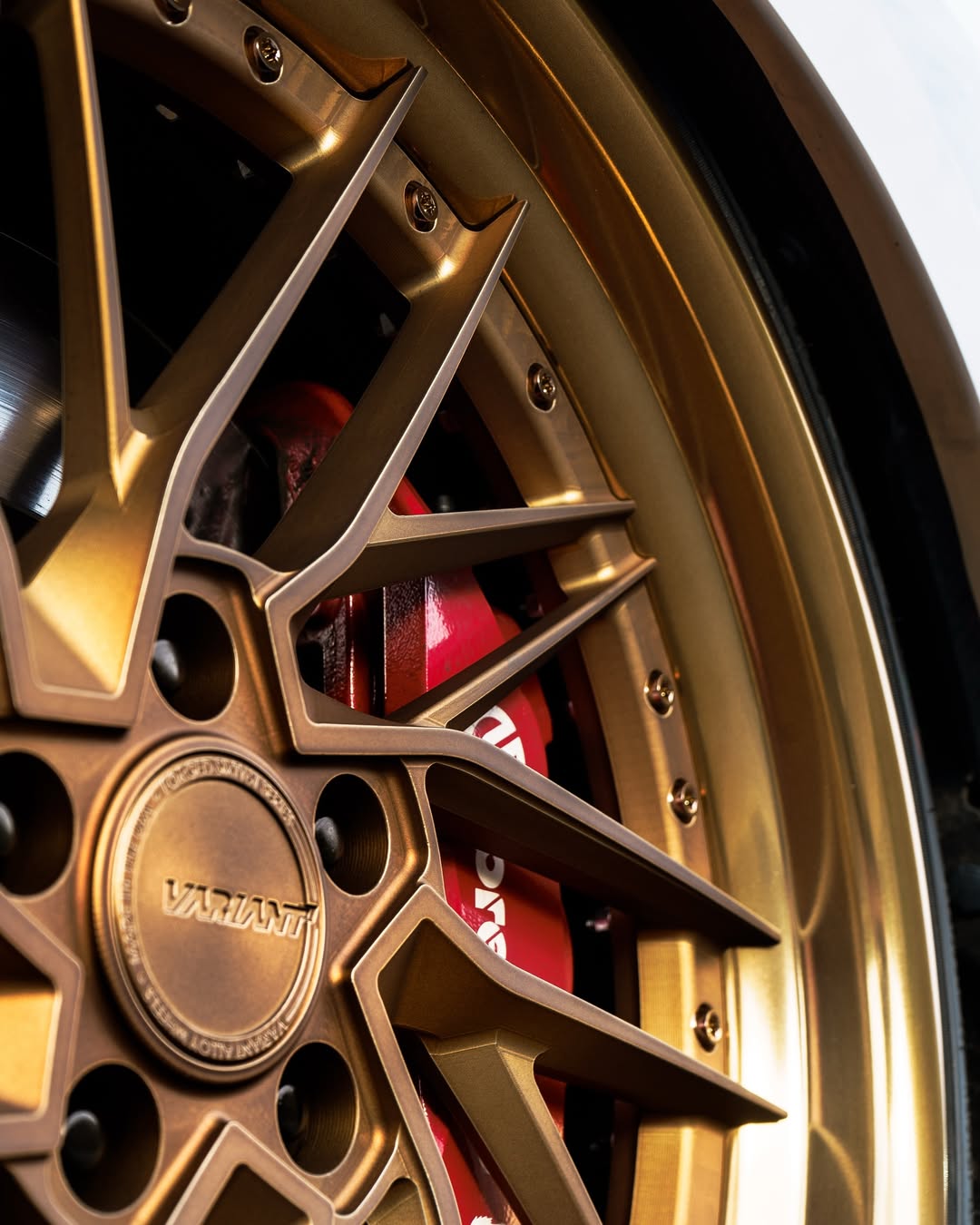
Key takeaways: The best wheels for the BMW 4 Series (G22) are forged, 19 or 20 inches in diameter, and built to the G22 fitment standard: a 5x112 bolt pattern, a 66.6 mm center bore, and M14 x 1.25 wheel bolts. A staggered setup of roughly 19x8.5 or 20x8.5 front and 19x9.5 or 20x10 rear is the sweet spot for most 430i and M440i owners. Prioritize a low weight per wheel over headline diameter, and confirm your offsets before you order, because a 20 mm error is the difference between flush and rubbing.
The G22 4 Series is one of the better-proportioned cars BMW builds right now, and it responds well to a wheel change. It also arrives from the factory with wheels that are heavier than they need to be, which is the single easiest thing to improve. This guide covers what actually fits, what sizes work, and how to decide between a square and a staggered setup on the 4 Series.
What wheel specs does the BMW 4 Series (G22) use?
Every G22 coupe shares one fitment standard, and so do the G23 convertible and G26 Gran Coupe. That is unusually convenient: a wheel that fits a 430i fits an M440i xDrive.
| Specification | BMW 4 Series (G22 / G23 / G26) |
|---|---|
| Bolt pattern (PCD) | 5x112 |
| Center bore | 66.6 mm |
| Hardware | M14 x 1.25 wheel bolts, ball seat |
| Typical bolt torque | Around 103 Nm (roughly 76 lb-ft), confirm in your owner manual |
| Common factory sizes | 18 to 19 inch, square on base trims, staggered on M Sport and M440i |
| Practical aftermarket range | 19 to 20 inch |
Two details trip people up. First, BMW moved to 5x112 with a 66.6 mm bore on this generation, so wheels from an older 5x120 F32 4 Series do not fit. Second, the G22 uses bolts rather than studs, which means the wheel has to be held in position while the first bolt starts. A guide pin makes the job far easier and prevents you from dragging the wheel bore across the hub.
If you want the full background on why the bore matters, read our explainer on wheel center bore and hub-centric rings. Variant wheels for this chassis are machined to the 66.6 mm bore directly, so no rings are needed.
What wheel sizes fit the BMW 4 Series?
Nineteen and twenty inches are the working range for a G22 on stock or lightly lowered suspension. Eighteens fit and clear the brakes on most trims, but they leave the arches looking empty on a car with these proportions. Twenty-ones are possible on air suspension or a show build, but ride quality falls off sharply and pothole risk climbs.
- 19x8.5 front / 19x9.5 rear: the safest daily-driver upgrade. Fits stock ride height, tolerates winter roads, and gives real tire options in 235/35R19 and 275/30R19.
- 20x8.5 front / 20x10 rear: the most common enthusiast spec. Fills the arches properly, works well on a modest drop, and pairs with 245/30R20 and 285/25R20.
- 20x9 front / 20x10.5 rear: aggressive. Expect to need camber adjustment or a small fender roll, particularly on a lowered car.
Going wider changes more than looks. A wider wheel and a wider tire add unsprung mass and rotational inertia, which is the exact thing a forged wheel is trying to claw back. Our guide to choosing wheel width walks through matching tire section width to rim width so the sidewall sits the way it should.
Should you run staggered or square on a G22?
It depends on drivetrain and how you use the car, and there is a genuine trade-off either way.
Staggered (wider rear) suits rear-wheel-drive 430i and M440i cars. It looks correct on this body, puts more rubber where the power goes, and matches how BMW specifies the M Sport package from the factory. The downside is you cannot rotate tires front to rear, so fronts and rears wear at different rates and you buy tires in pairs.
Square (same size all around) suits xDrive cars driven hard, track days, and anyone who values tire rotation and a spare that fits any corner. Square setups also tend to give more neutral, predictable handling balance because you are not building understeer into the car with a narrow front.
One xDrive-specific caution worth taking seriously: on an all-wheel-drive G22, front and rear rolling diameters need to stay closely matched. A significant mismatch makes the transfer case work continuously to reconcile different wheel speeds, and that is an expensive thing to be wrong about. Calculate overall diameter for both ends before ordering, not after. More on the general question in staggered vs. square wheel setups.
What offset works on the BMW 4 Series?
Offset is the distance from the wheel mounting face to its centerline. Higher positive offset pulls the wheel inboard toward the suspension; lower offset pushes it outward toward the fender. On a G22 running 20 inch wheels, most owners land somewhere around ET33 to ET40 up front and ET30 to ET38 at the rear, with the exact number depending on width and ride height.
The reason a fitment guide cannot hand you one universal number is that offset and width move together. A 20x9 at ET40 and a 20x10 at ET33 can sit at nearly the same point relative to the fender, but their inner clearance to the strut and control arm is completely different. That inner side is where G22 fitments actually fail, not the fender.
Read our guide to wheel offset if the positive and negative language is new, and why wheels rub before you commit to an aggressive spec. If you are cross-shopping the sedan, the same logic applies in our BMW 3 Series (G20) wheel guide, since the two chassis share fitment.
Why forged wheels on a 4 Series?
The honest answer is weight and margin, not badge value. A forged wheel is pressed from a solid billet of 6061-T6 aluminum under thousands of tons of force, then CNC machined to final shape. The grain structure of the metal follows the contours of the finished part instead of being frozen in place as it cools in a mold, which yields a higher strength-to-weight ratio. In practice that means an engineer can remove material from a forged wheel in places where a cast wheel would need to keep it.
On a G22 the payoff is measurable. Factory 19 inch wheels commonly land in the high 20s to low 30s of pounds per wheel. A well-designed forged 20 inch can come in lighter than the stock 19, which is a rare case of going bigger and lighter at the same time. Cutting unsprung weight improves how quickly the suspension can react to road inputs and reduces the rotational inertia the brakes and drivetrain have to manage. Our article on unsprung weight covers why that matters more than the same weight saved anywhere else on the car.
The trade-off is cost. Forging is a more expensive process with more machining time, and a forged set costs meaningfully more than a mass-produced casting. If your priority is the cheapest way to change the look of the car, forged is not the value play. If you want to reduce weight and keep structural margin, it is the only construction that delivers both.
How do you spec a set for your 4 Series?
- Confirm your exact model and ride height, including whether you have M Sport brakes, xDrive, or aftermarket suspension.
- Pick diameter first. Nineteen for ride comfort and winter duty, twenty for looks and dry-road feel.
- Choose square or staggered based on drivetrain and whether you want to rotate tires.
- Set width and offset together, and check inner clearance to the strut, not just the fender.
- Match tire sizes so overall rolling diameter stays close to factory, within about one percent, which keeps the speedometer and stability systems honest.
- Confirm the wheel is bored to 66.6 mm and uses ball seat hardware.
- Have the assemblies road force balanced at install, and re-torque the bolts after 50 to 100 miles.
You can browse verified G22 fitments in our BMW 4 Series collection, or start from the model list in vehicle-specific fitments. The Corsa and EVO lines are both monoblock forged designs that suit this chassis well. For factory reference specs, BMW publishes trim-level wheel and tire data on the official BMW 4 Series page, and the G22 generation overview is useful for confirming which chassis code you own.
Frequently asked questions
What is the bolt pattern on a BMW 4 Series G22?
The G22 4 Series uses a 5x112 bolt pattern with a 66.6 mm center bore and M14 x 1.25 ball seat wheel bolts. This is the same fitment used by the G20 3 Series, the G23 convertible, and the G26 Gran Coupe. Wheels from the previous F32 4 Series, which used 5x120, will not fit.
Will 20 inch wheels fit a BMW 4 Series without modification?
Yes, in most cases. A 20x8.5 front and 20x10 rear on appropriate offsets and low-profile tires typically clears on a stock-height G22 without fender work. Aggressive widths, low offsets, or a lowered ride height can require camber adjustment or a fender roll, so verify your specific combination before ordering.
Are staggered wheels a problem on an M440i xDrive?
Not by itself. BMW ships staggered setups on xDrive M Sport cars from the factory. What matters is that front and rear overall rolling diameters stay closely matched, ideally within about one percent, so the all-wheel-drive system is not constantly correcting for different wheel speeds. Check the calculated diameters of both tire sizes before you buy.
How much weight can you save with forged wheels on a 4 Series?
It depends on the size and design, but savings of several pounds per corner over the factory wheel are common, and a forged 20 inch can weigh less than a factory 19 inch. Because this is unsprung and rotating mass, the improvement in suspension response and braking feel is more noticeable than the same weight removed from the body of the car.
Do I need hub-centric rings for aftermarket wheels on a G22?
Only if the wheel is machined with a bore larger than 66.6 mm. Wheels made specifically for this chassis are bored to fit the hub directly and need no rings. If you buy a multi-fit wheel with an oversized bore, a correctly sized hub-centric ring is not optional, because the hub lip is what centers the wheel.
Written by Taylor Smith, co-founder of Variant Alloy Wheels, who has spent nearly two decades in the automotive aftermarket.
Share:
What Are the Best Wheels for the Dodge Challenger and Charger Hellcat?
Are Aftermarket Wheels Safe? Testing Standards Explained