


Key takeaways: The best wheels for the Chevrolet Corvette C8 Stingray are lightweight, true-forged, staggered sets that respect the car's mid-engine 5x120 bolt pattern. Factory Stingray sizing is roughly 19x8.5 front and 20x11 rear, and the two proven upgrade paths are a matching 19x8.5 / 20x11 set for an OEM-plus look or a wider 20x9 / 21x12 set for a more aggressive, Z06-style stance. Because the C8 carries most of its weight over the rear axle, dropping unsprung weight with forged wheels pays off in sharper steering response and better ride quality.
What wheels are best for the Corvette C8 Stingray?
The best wheels for the Corvette C8 Stingray are forged, staggered, and sized to the platform's factory geometry. The C8 is mid-engine, so it runs a narrower front wheel and a much wider rear to put power down, and it uses a 5x120 bolt pattern shared with a handful of GM and BMW applications. Any wheel you fit needs to match that bolt pattern, use the correct center bore, and hold offsets that clear the Stingray's brakes up front and fill the rear arches without rubbing.
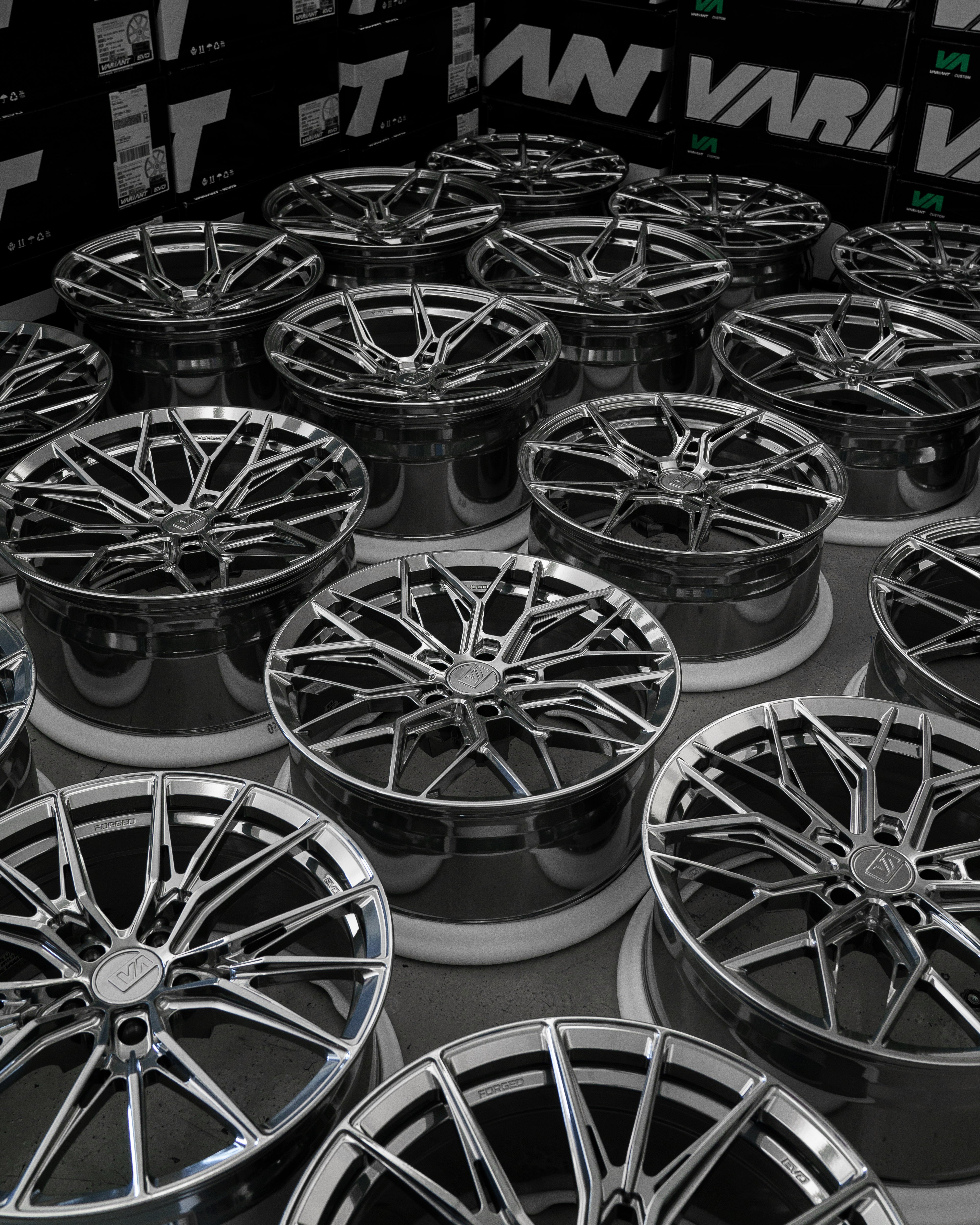
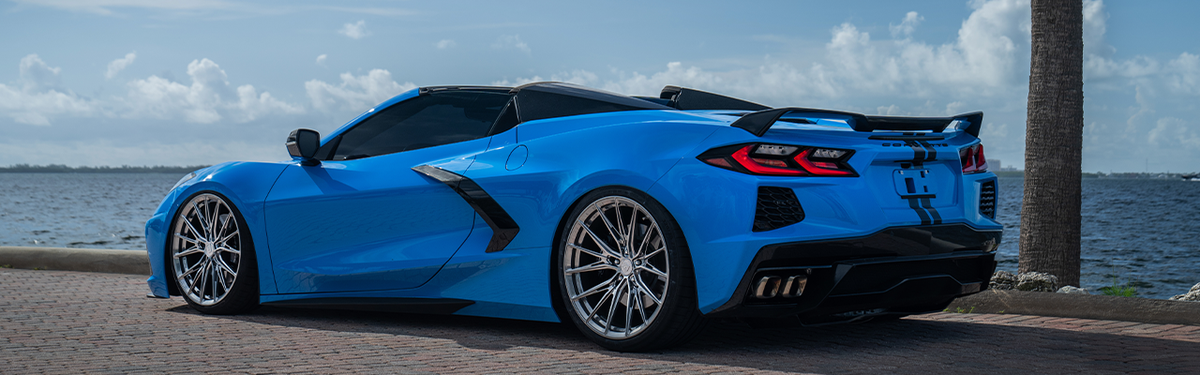
Variant builds true-forged wheels for the C8 in two proven fitments: a factory-matched 19x8.5 front / 20x11 rear for a clean OEM-plus look, and a more aggressive 20x9 front / 21x12 rear that mirrors the wider Z06-style stance. Both are forged from 6061-T6 aluminum, so you get the strength to handle the Stingray's grip without the weight penalty of a cast wheel.
What is the factory wheel size and bolt pattern on a C8 Stingray?
The C8 Stingray ships with a staggered wheel setup: approximately 19x8.5 inches up front and 20x11 inches in the rear, wrapped in Michelin Pilot Sport rubber (Z51-package cars get a summer tire). The bolt pattern is 5x120. This front-narrow, rear-wide layout is fundamental to how a mid-engine car balances traction and steering, which is why a square setup (same size all four corners) generally isn't recommended on the C8.
Typical aftermarket offsets for the C8 land near +35mm in front and roughly +42mm to +45mm in the rear, though the exact numbers change with wheel width. If you're not sure how those numbers translate to real-world clearance, our guide to offset and backspacing explains what each figure actually does.
Why do forged wheels matter on a mid-engine Corvette?
Forged wheels matter on the C8 because reducing unsprung weight has an outsized effect on how the car rides and responds. Every pound you remove from a wheel is a pound the suspension no longer has to control over bumps, and it's rotating mass the drivetrain no longer has to spin up. On a car as sharp as the C8, lighter wheels translate to quicker steering turn-in, better bump compliance, and less strain on the brakes.
True forging is what makes a wheel both light and strong. The process compresses a solid billet of 6061-T6 aluminum under enormous pressure, aligning the metal's grain structure so the finished wheel resists cracking and bending better than a cast wheel of the same weight. Variant only sells true-forged wheels, never cast or flow-formed, so the C8 sets are engineered on the strong side of that trade-off. For the deeper dive, see our honest breakdown of whether forged wheels are worth it and what the lightest forged wheels can save you.
Should you run a staggered or square setup on the C8?
Run staggered. The C8's mid-engine weight distribution and rear-drive layout are designed around a wider rear contact patch, and going square would compromise both traction and the factory handling balance. Staggered fitment keeps the front responsive while giving the rear the grip it needs to put down the LT2 V8's torque. We cover the reasoning in more detail in staggered vs. square wheel setups.
What sizes and setups work on the C8 Stingray?
| Setup | Front | Rear | Best for |
|---|---|---|---|
| Factory-matched | 19x8.5 | 20x11 | OEM-plus look, easy tire choices, daily driving |
| Aggressive / Z06-style | 20x9 | 21x12 | Wider stance, bigger rear contact patch, track presence |
The factory-matched setup is the easiest to live with because tire sizing and clearance mirror what the car left the factory with. The wider 20x9 / 21x12 setup delivers a more aggressive footprint and stance closer to the Z06, at the cost of pricier tires and less sidewall. If you drive a Z06 specifically, we have a separate C8 Z06 wheel guide for that car's wider factory fitment.
How do you choose the right C8 wheels?
Match the platform first, then choose the look. Confirm the 5x120 bolt pattern, the correct center bore, and offsets verified for the C8 before you think about finish or spoke design. Because those dimensions are unforgiving on a mid-engine car, we spec Variant's C8 wheels to verified fitments rather than generic sizes. You can see the full range on the Corvette C8 collection, explore other vehicle-specific fitments, or browse forged designs in the Corsa lineup.
Frequently asked questions about C8 Corvette wheels
What is the bolt pattern on a Corvette C8?
The Corvette C8 uses a 5x120 bolt pattern (five lugs on a 120mm circle). Any wheel you fit must match this pattern and use the correct center bore for a hub-centric fit.
What size wheels come on a C8 Stingray from the factory?
The C8 Stingray runs a staggered factory setup of roughly 19x8.5 inches in front and 20x11 inches in the rear, on Michelin Pilot Sport tires. This front-narrow, rear-wide layout suits the car's mid-engine balance.
Can you put a square wheel setup on a C8?
It's not recommended. The C8 is engineered around a staggered setup with a wider rear, and running square would reduce rear traction and upset the factory handling balance. A staggered fitment is the right call for this platform.
Are forged wheels worth it on a Corvette C8?
Yes, especially on a performance car like the C8. Forged wheels cut unsprung and rotating weight, which sharpens steering response, improves ride quality over bumps, and reduces load on the brakes and bearings, all while offering more strength than a cast wheel of the same weight.
For factory specifications and performance figures on the C8, Chevrolet's own materials and independent testing from outlets like Car and Driver are reliable references.
Written by Taylor Smith, co-founder of Variant Alloy Wheels, who has spent nearly two decades in the automotive aftermarket.
Share:
What Are the Best Wheels for the Tesla Model S Plaid?
What Is Unsprung Weight, and Why Does It Matter for Your Wheels?