


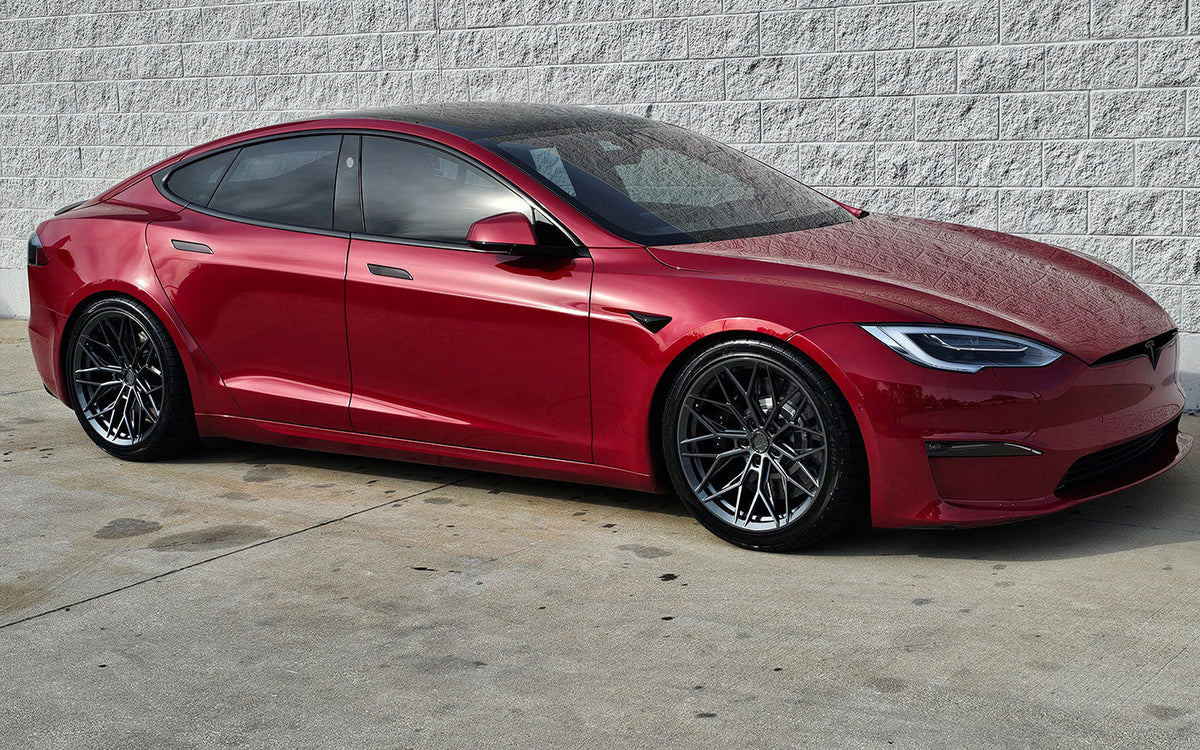
Key takeaways: The best wheels for the Tesla Model S Plaid are lightweight forged wheels in a 5x120 bolt pattern, sized 19 to 21 inches, with a load rating high enough for the Plaid's roughly 4,800-pound curb weight and a load-appropriate, EV-friendly tire. Because the Plaid makes about 1,020 horsepower and reaches 60 mph in around two seconds, cutting unsprung weight with forged wheels sharpens handling and helps recover the range that heavy wheels cost you.
What wheel specs does the Tesla Model S Plaid need?
The Tesla Model S Plaid uses a 5x120 bolt pattern with a 64.1 mm center bore and requires TPMS sensors. From the factory it ships in one of two setups: a 19-inch wheel running a staggered 255/45R19 front and 285/40R19 rear, or the optional 21-inch Arachnid wheel wearing 265/35R21 up front and 295/30R21 out back. Any aftermarket wheel you choose has to match the bolt pattern and center bore, clear the large front brakes, and carry a load rating suited to a car this heavy and this fast.
Two numbers deserve extra attention on a Plaid. First, load rating: at roughly 4,800 pounds plus passengers, this is not a car to under-spec. Second, offset, which controls how the wheel sits in the fender. If offset is new to you, our guide to wheel offset explains how positive and negative offset change fitment. You can confirm exact factory sizes on Tesla's own Model S specifications page, and cross-check tire fitment through a reference like Tire Rack.
Why do forged wheels suit the Model S Plaid so well?
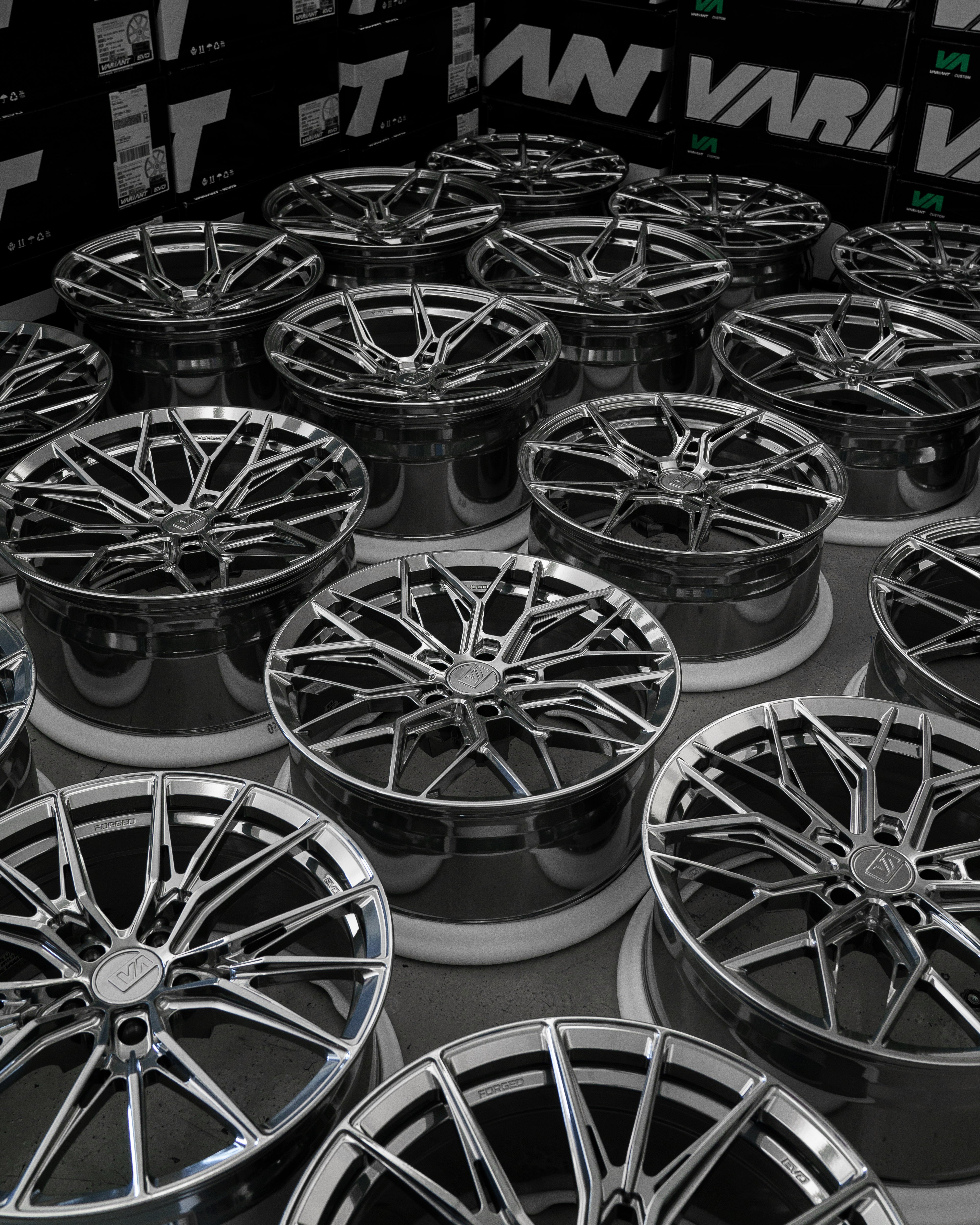
Forged wheels suit the Plaid because they are the lightest way to add strength, and the Plaid punishes both weight and weakness. A forged wheel is pressed from a solid billet of 6061-T6 aluminum under enormous pressure, which aligns the metal's grain and yields a much better strength-to-weight ratio than cast or flow-formed wheels. On a nearly 4,800-pound EV that puts down instant torque, that matters in three ways:
- Range. Wheels are unsprung, rotating mass, so shaving pounds per corner reduces the energy needed to spin them up and can help offset the range hit that heavy wheels cause.
- Handling. Lighter unsprung weight lets the suspension keep the tires planted, which a heavy performance sedan needs to feel composed. Our primer on the lightest forged wheels for your car covers why that helps.
- Durability. Instant torque and heavy curb weight are hard on wheels. Forged construction resists bending and cracking better than cast for a given weight.
Variant builds only true forged wheels, never cast or flow-formed, which is why they are a natural fit for a car like the Plaid. You can see the fitments we stock in the Tesla Model S Plaid collection.
What size wheels are best for the Model S Plaid?
The best size depends on how you weigh ride comfort, range, and looks. Here is how the common options compare:
| Wheel size | Best for | Trade-offs |
|---|---|---|
| 19" | Ride comfort and maximum range | Least aggressive look; taller sidewall |
| 20" | Balance of looks, ride, and range | Slightly firmer ride than 19" |
| 21" | Most aggressive stance and steering response | Firmer ride, small range cost, more curb risk |
Most Plaid owners land on a 20 or 21-inch forged wheel in a staggered setup, wider at the rear, to fill the arches and put more tire under the power. If you want the sharpest look and steering feel and accept a firmer ride, go 21. If range and comfort come first, a lighter 19 or 20-inch forged wheel is the smarter buy. A staggered fitment is standard on this car, and our staggered vs. square setup guide explains when each makes sense.
What should you avoid when choosing Plaid wheels?
- Under-rated wheels. Never fit a wheel whose load rating is below what the Plaid's weight demands. This is a safety spec, not a suggestion.
- Wrong center bore. The Plaid is 64.1 mm hub-centric; a mismatched bore can cause vibration. Use hub-centric wheels or proper hub rings.
- Ignoring TPMS. The Model S needs functioning TPMS sensors, so plan for compatible sensors when you change wheels. See our post on TPMS sensors for aftermarket wheels.
- Too-cheap tires. A 1,020-horsepower car needs a capable tire; pair the wheels with a quality performance or EV-specific tire in the correct load index.
How do Plaid wheels compare to other Teslas?
The Plaid shares Tesla's performance-EV priorities with the rest of the lineup, but its weight and power raise the stakes on load rating and forged strength. If you are cross-shopping the family, our guides to the best wheels for the Tesla Model 3 Performance and the Tesla Model Y walk through the same trade-offs for lighter cars. For fitments across other vehicles, browse our vehicle-specific fitments or the full forged wheel range.
Frequently asked questions
What is the bolt pattern on a Tesla Model S Plaid?
The Model S Plaid uses a 5x120 bolt pattern with a 64.1 mm center bore. Any wheel you fit must match both, and should be hub-centric or use correctly sized hub rings to avoid vibration.
What size wheels come on the Model S Plaid from the factory?
The Plaid ships with either a 19-inch wheel (255/45R19 front, 285/40R19 rear) or the optional 21-inch Arachnid wheel (265/35R21 front, 295/30R21 rear). Aftermarket forged wheels are commonly offered in 19, 20, and 21-inch sizes.
Do lighter wheels improve the Model S Plaid's range?
They can help. Wheels are unsprung, rotating mass, so a lighter forged wheel reduces the energy needed to spin it and can offset some of the range penalty heavy wheels create. Tire choice and diameter also affect range.
Are 21-inch wheels too big for the Model S Plaid?
No, 21-inch wheels are a factory option and give the most aggressive look and steering response. The trade-off is a firmer ride, a small range cost, and more curb risk. A lighter 19 or 20-inch forged wheel is the better pick if comfort and range come first.
Written by Taylor Smith, co-founder of Variant Alloy Wheels, who has spent nearly two decades in the automotive aftermarket.
Share:
What Is Unsprung Weight, and Why Does It Matter for Your Wheels?
What Are the Best Wheels for the Chevrolet Corvette C8 Stingray?