


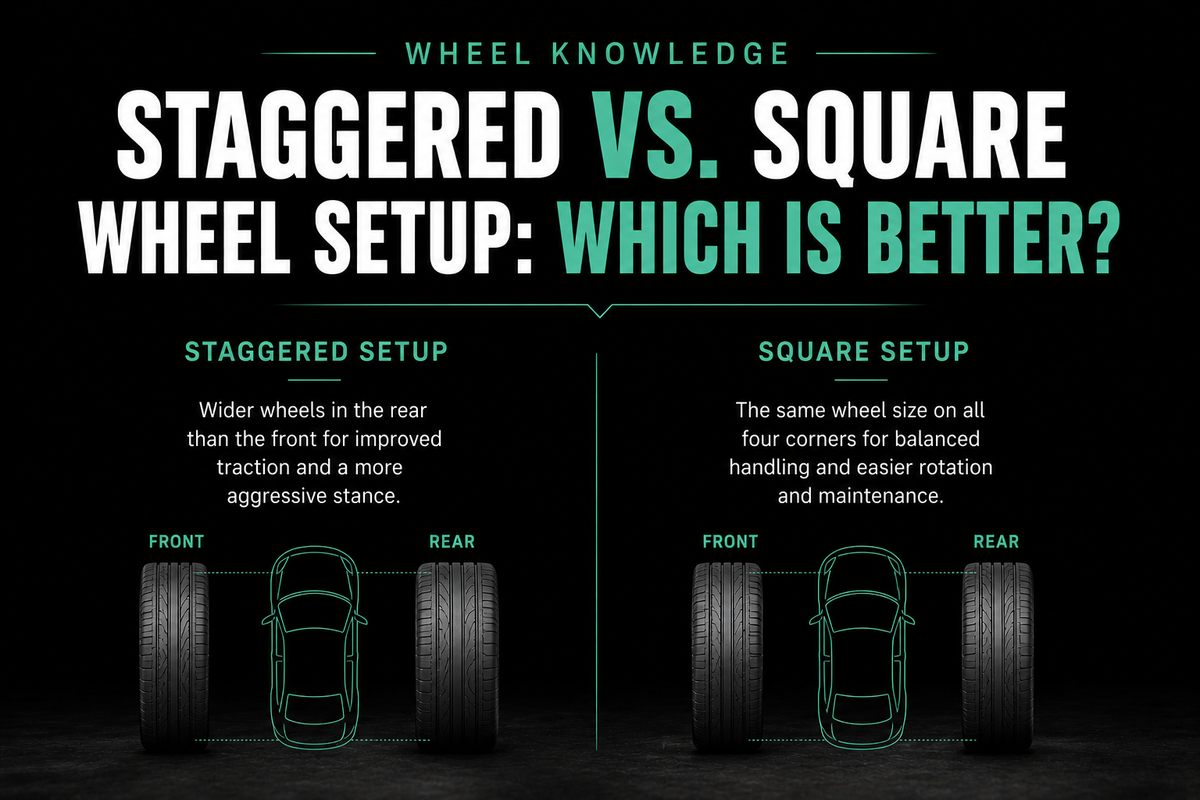
Key takeaways: A staggered vs. square wheel setup comes down to one question: should your rear wheels be wider than your fronts, or all four the same size? A staggered setup runs wider rear wheels and tires for extra rear traction and an aggressive stance, while a square setup keeps every corner identical so you can rotate tires and often enjoy more balanced handling. For most daily drivers a square setup is the smarter, cheaper choice; staggered makes the most sense on powerful rear-wheel-drive cars where rear grip and looks matter most.
What is a staggered vs. square wheel setup?
A staggered setup uses wider wheels and tires on the rear axle than on the front. A square setup uses the same wheel width, diameter, and tire size at all four corners. The difference is purely about sizing, not the wheel design itself — you can order most forged models, including monoblock and multi-piece options, in either configuration.
Offset matters here too. Offset — the distance between a wheel's mounting face and its centerline, measured in millimeters — usually changes between front and rear on a staggered car to keep both tires sitting correctly in the fenders.
Is a staggered or square setup better for handling?
It depends on the car. On a rear-wheel-drive (RWD) performance car, a staggered setup puts more rubber where the power goes down, improving rear traction and reducing wheelspin out of corners. The trade-off is a tendency toward understeer — the front washing out before the rear — because the front tires are comparatively narrower.
A square setup gives a more neutral, predictable balance and is easier to fine-tune with alignment and tire pressure. That is why many track-focused drivers, even in RWD cars, choose a square setup: it is more tunable and lets you swap tires front-to-rear to even out wear.
Staggered vs. square: quick comparison
| Factor | Staggered setup | Square setup |
|---|---|---|
| Rear traction (RWD) | Better | Good |
| Handling balance | More understeer | More neutral |
| Tire rotation | Not possible (different sizes) | Yes, front-to-rear |
| Tire cost over time | Higher | Lower |
| Stance / looks | Aggressive | Subtler |
| Best for | Powerful RWD street cars | Daily drivers, track, FWD/AWD |
Can you rotate tires on a staggered setup?
No — not front-to-rear. Because the front and rear tires are different sizes, you cannot rotate them across axles, so they wear at different rates and you replace them more often. With a square setup you can rotate all four tires to spread wear evenly and extend tire life, which lowers your long-term cost of ownership.
Which setup is right for your car?
- Rear-wheel-drive sports cars (BMW M3/M4, Chevrolet Corvette C8, Toyota GR Supra): staggered is popular for traction and looks, but a square setup is a legitimate choice for track use.
- Front-wheel-drive cars: almost always run square. A staggered FWD setup adds rolling resistance and tramlining (the tires following grooves in the road) with little benefit.
- All-wheel-drive cars: usually square so the drivetrain sees matched rolling diameters; check your manufacturer's guidance before going staggered.
- Daily drivers: square wins on cost and tire flexibility.
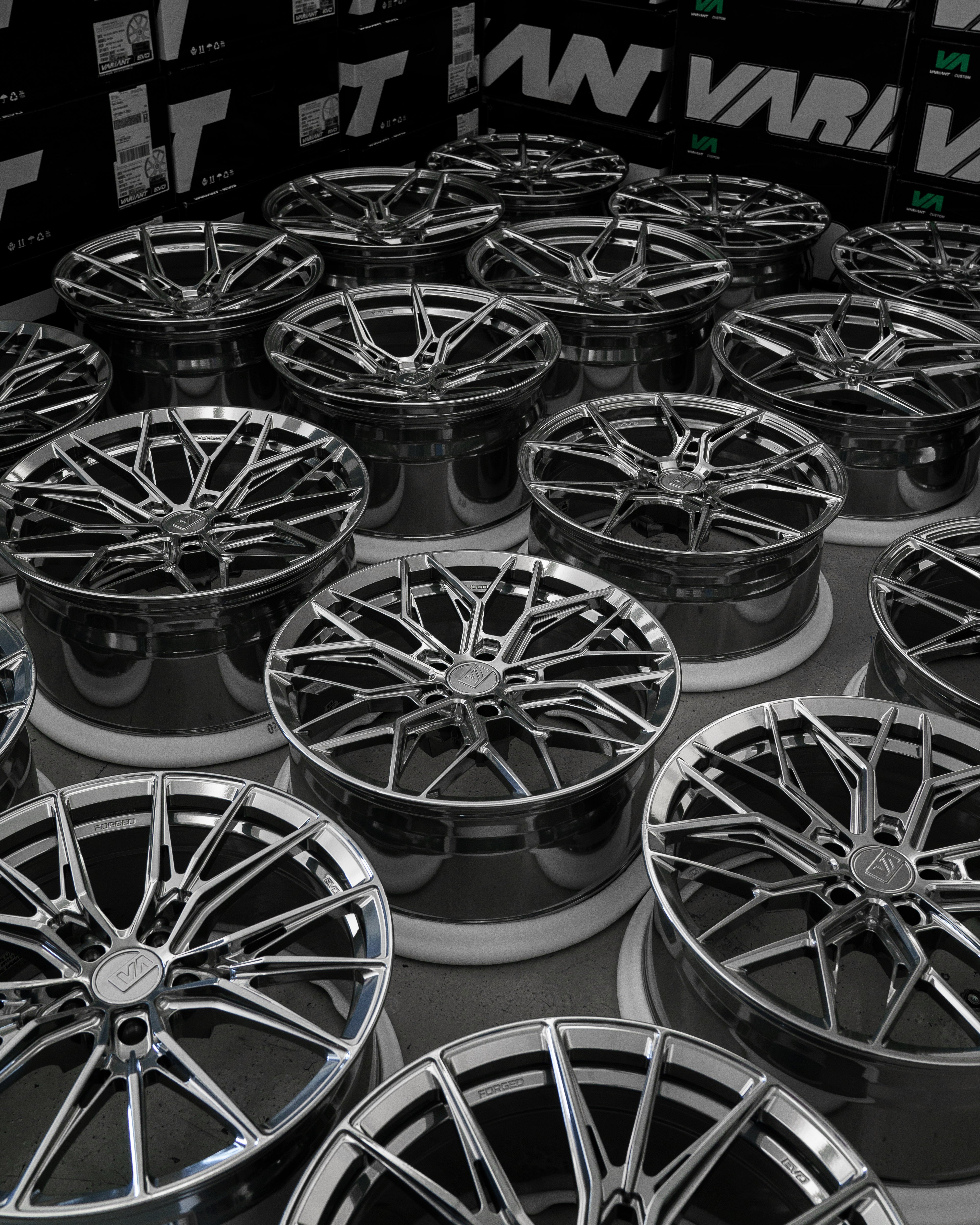
Whichever direction you choose, fitment is what makes it work. Variant builds true forged wheels in custom widths and offsets, so you can spec a staggered or square setup that clears your brakes and fills your fenders. Browse our full forged wheel lineup or jump straight to vehicle-specific fitments to see verified sizing for your car. If you want to understand the construction behind the numbers, our guide to forged vs. flow-formed vs. cast wheels breaks it down.
For independent tire-sizing reference, Tire Rack and Car and Driver both publish helpful fitment and handling explainers.
Frequently asked questions
Does a staggered setup make a car faster?
Not directly. A staggered setup can improve rear traction on a powerful RWD car, which helps put power down out of corners, but it does not add horsepower and can slightly increase understeer.
Is a square setup bad for looks?
No. A square setup can still look aggressive with the right width, offset, and concavity. It simply uses the same size at all four corners instead of wider rears.
Can I convert a staggered car to a square setup?
Often yes, as long as the square width clears the brakes and suspension and the offset keeps the tire inside the fender. Confirm fitment for your specific model before ordering.
Why is a staggered setup more expensive over time?
Because you cannot rotate tires front-to-rear, the drive tires wear faster and get replaced more often, raising your long-term tire costs.
Written by Taylor Smith, co-founder of Variant Alloy Wheels, who has spent nearly two decades in the automotive aftermarket.
Share:
What Are the Best Wheels for the BMW M3 and M4?
What Is Unsprung Weight, and Why Do Lighter Wheels Matter?