


What Are the Best Wheels for the BMW 6 Series?
Key takeaways: The best wheels for the BMW 6 Series are lightweight forged 20-inch staggered sets that respect the chassis's factory geometry. For the F06, F12, and F13 generations, that means a 5x120 mm bolt pattern with a 72.56 mm center bore and offsets generally in the +25 mm to +35 mm range. The G32 6 Series Gran Turismo is a different animal entirely: it uses a 5x112 mm pattern and will not accept F13 wheels. Because the 6 Series is a heavy grand tourer, curb weight between 4,000 and 4,500 lb depending on model, dropping unsprung weight is the single most effective change you can make.
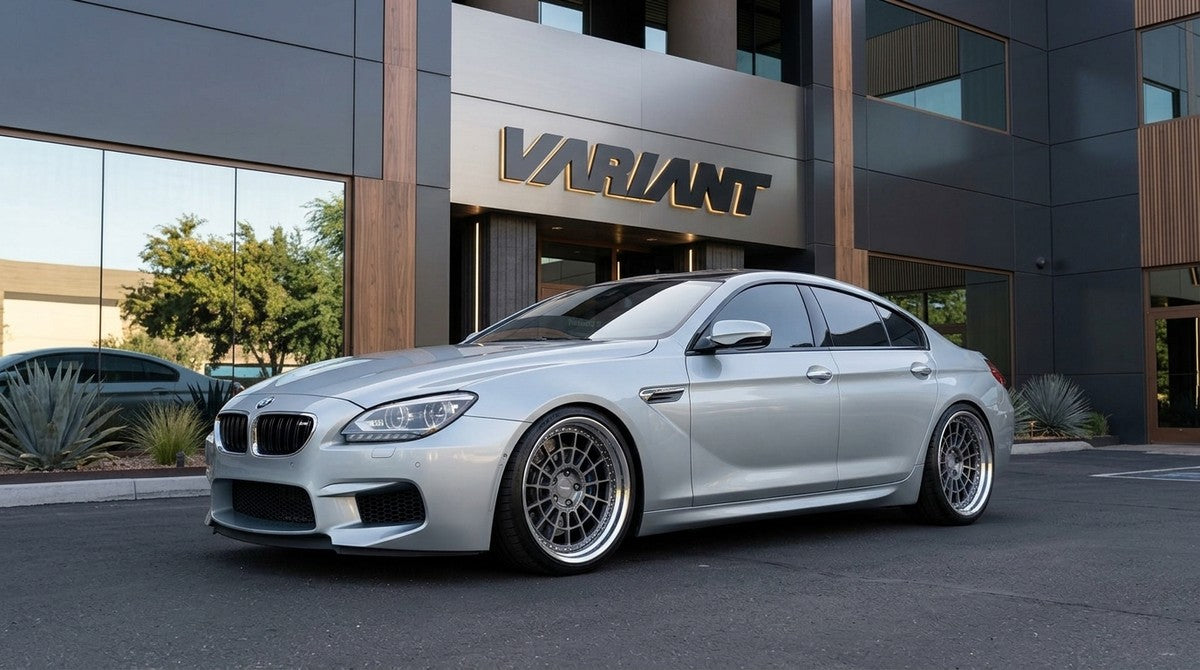
The 6 Series has always been BMW's big, comfortable, fast coupe rather than its sharpest one. That character shapes the wheel decision. You are not chasing the last tenth around a circuit. You are trying to make a heavy GT car feel more alert without ruining the ride quality that is the whole point of the car. Our BMW 6 Series wheel fitments are built around exactly that balance.
Which BMW 6 Series do you have?
This matters more than anything else on this page, because two of these generations do not share a bolt pattern.
| Generation | Years | Body | Bolt pattern | Center bore |
|---|---|---|---|---|
| E63 / E64 | 2004–2010 | Coupe / Convertible | 5x120 mm | 72.56 mm |
| F12 / F13 / F06 | 2011–2019 | Convertible / Coupe / Gran Coupe | 5x120 mm | 72.56 mm |
| G32 (6 Series GT) | 2017–2023 | Gran Turismo | 5x112 mm | ~66.5 mm |
The F-chassis cars share BMW's long-running 5x120 mm pattern. The G32 moved to the 5x112 mm pattern BMW adopted across the CLAR platform. Wheels are not interchangeable between them, and no adapter should be treated as a shortcut here. If you are unsure how to confirm what you have, our guide on measuring a bolt pattern walks through it properly.
What wheel sizes work best on the F13 6 Series and M6?
Factory 6 Series coupes shipped on 18- and 19-inch wheels, while the F13 M6 came on a 20-inch staggered setup running 265/35R20 up front and 295/30R20 at the rear. That gives you a clear, proven envelope to work within.
- 20x9.0 front / 20x10.5 rear is the sweet spot for most F12/F13/F06 owners. It fills the arches, clears the brakes, and keeps tire options plentiful.
- Offsets around +30 mm front and +25 mm rear land close to the factory geometry. Going much lower without fender work invites rubbing at full compression.
- 21-inch is achievable and looks appropriate on a car this size, but sidewall drops sharply and ride quality suffers on broken pavement. On a GT car, think hard about it.
- Square setups are worth considering if you want tire rotation and a more neutral balance. See our breakdown of staggered vs. square setups.
Offset is where most 6 Series fitment projects go wrong. If the term is fuzzy, read wheel offset explained before you order anything. A 10 mm error is the difference between a flush fitment and a wheel that contacts the strut.
Why does unsprung weight matter so much on a 6 Series?
The F13 M6 coupe weighs roughly 4,070 lb, and a 650i Gran Coupe is heavier still. Heavy cars are exactly where lighter wheels pay off most, because every pound removed from a wheel is a pound the dampers no longer have to control over a bump.
Factory 20-inch BMW wheels in this class routinely weigh 28 to 32 lb each. A true forged monoblock in the same size can land in the low-to-mid 20s. Across four corners that is a meaningful reduction in rotating and unsprung mass, and unlike most modifications you feel it immediately: steering response sharpens, the car settles faster over expansion joints, and brake feel improves. We go deeper into the physics in what is unsprung weight.
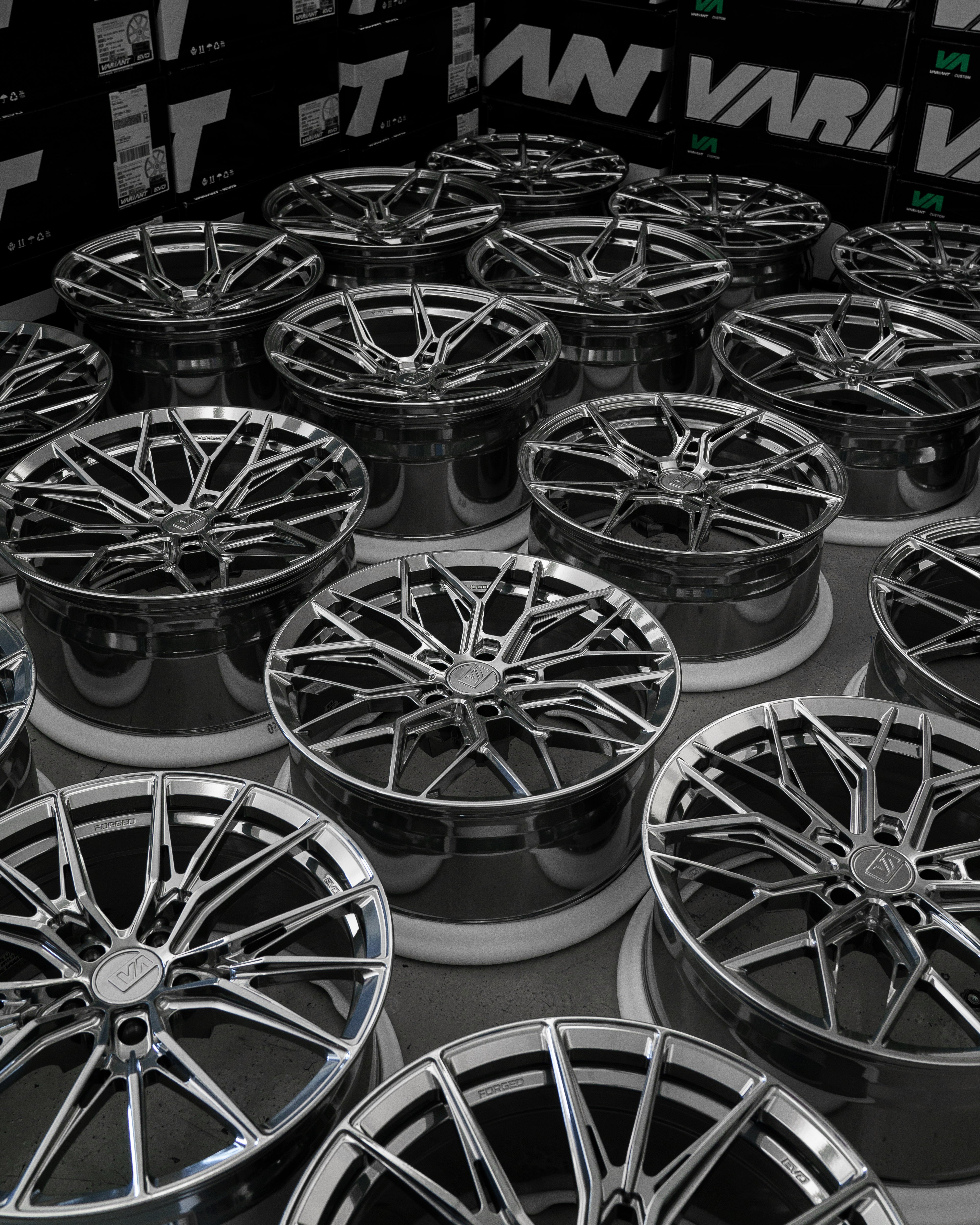
This is also why construction method matters. Every wheel Variant builds is true forged, which is what allows a wheel to be both lighter and stronger than a cast equivalent rather than trading one for the other.
Which Variant collections suit the 6 Series?
- EVO — forged monoblock. The lightest option and the most direct answer if reducing unsprung weight is your priority. Clean, restrained designs that suit the 6 Series's proportions.
- Corsa — multi-piece forged with exposed hardware and deep-lip options. This is the collection for owners who want the wheel to be a visual centerpiece.
- EX2 — 2-piece forged. A middle path: more lip and finish flexibility than monoblock, less complexity than a full 3-piece. If you are weighing the differences, see monoblock vs. 2-piece vs. 3-piece.
- Designer — for owners who want something less common than the usual mesh or split-spoke.
Finish choice matters on this car. The 6 Series has a lot of visual mass and long, smooth flanks. Darker finishes (satin bronze, gunmetal, brushed graphite) tend to recede and make the body look leaner, while bright silver and polished faces emphasize the wheel itself. Neither is wrong; they solve different problems. Our custom finish options cover both directions.
What mistakes should you avoid on a 6 Series wheel setup?
- Ignoring center bore. The F-chassis cars need a 72.56 mm bore or properly sized hub-centric rings. Hanging a wheel on the lug bolts alone is a vibration complaint waiting to happen. See center bore and hub-centric rings.
- Assuming G32 and F13 wheels swap. They do not. Different bolt pattern, different bore.
- Chasing maximum width. A 295-section rear tire is already substantial. Going wider usually costs you tire selection and ride quality for a difference nobody notices.
- Forgetting brake clearance. M6 models with the larger front rotors need spoke geometry that clears the caliper. Confirm before ordering.
- Using generic offset advice. Convertible (F12), coupe (F13), and Gran Coupe (F06) bodies do not have identical clearances despite sharing a platform.
For background on the platform itself, the F12/F13 6 Series overview and BMW M6 specifications are useful references for weights and factory equipment by model year.
How do you confirm fitment before ordering?
Start with the exact chassis code and model year, then your suspension setup. Lowering springs, coilovers, or adaptive dampers each change the amount of clearance you have at full compression. From there, check our vehicle-specific fitments and, if anything is ambiguous, send us the details. We would rather spend ten minutes confirming a spec than have you receive a wheel that rubs.
Frequently asked questions
What is the bolt pattern on a BMW 6 Series?
The E63/E64, F12, F13, and F06 generations all use a 5x120 mm bolt pattern with a 72.56 mm center bore. The G32 6 Series Gran Turismo uses a 5x112 mm pattern with a center bore of approximately 66.5 mm, so wheels are not interchangeable between the G32 and the earlier cars.
What size wheels fit a BMW 6 Series?
Factory sizes ranged from 18 to 20 inches depending on model and trim. For the F12/F13/F06, a 20x9.0 front and 20x10.5 rear staggered setup with offsets near +30 mm front and +25 mm rear is the most common well-sorted aftermarket fitment. The F13 M6 came from the factory on 20-inch wheels with 265/35R20 and 295/30R20 tires.
Are lighter wheels really worth it on a car this heavy?
Yes, and arguably more so. Reducing unsprung and rotating mass improves how quickly the suspension can respond to road inputs, which matters most on heavy vehicles. Moving from a 30 lb factory 20-inch wheel to a low-20s forged wheel produces a noticeable change in steering response and ride composure.
Will 21-inch wheels fit a BMW 6 Series?
They will fit with the correct width and offset, and they suit the car's proportions. The trade-off is a much shorter sidewall, which reduces impact absorption and increases the risk of wheel and tire damage on rough roads. On a grand tourer, 20 inch is usually the better compromise.
Do I need wheel spacers on a BMW 6 Series?
Generally no, if you order the correct offset from the start. Spacers are a corrective tool for wheels that were specified too conservatively. Choosing the right offset up front is always the better path.
Written by Taylor Smith, co-founder of Variant Alloy Wheels, who has spent nearly two decades in the automotive aftermarket.
Share:
What Are the Lightest Forged Wheels for Your Car?
What Are the Best Wheels for the BMW 3 Series (G20)?