


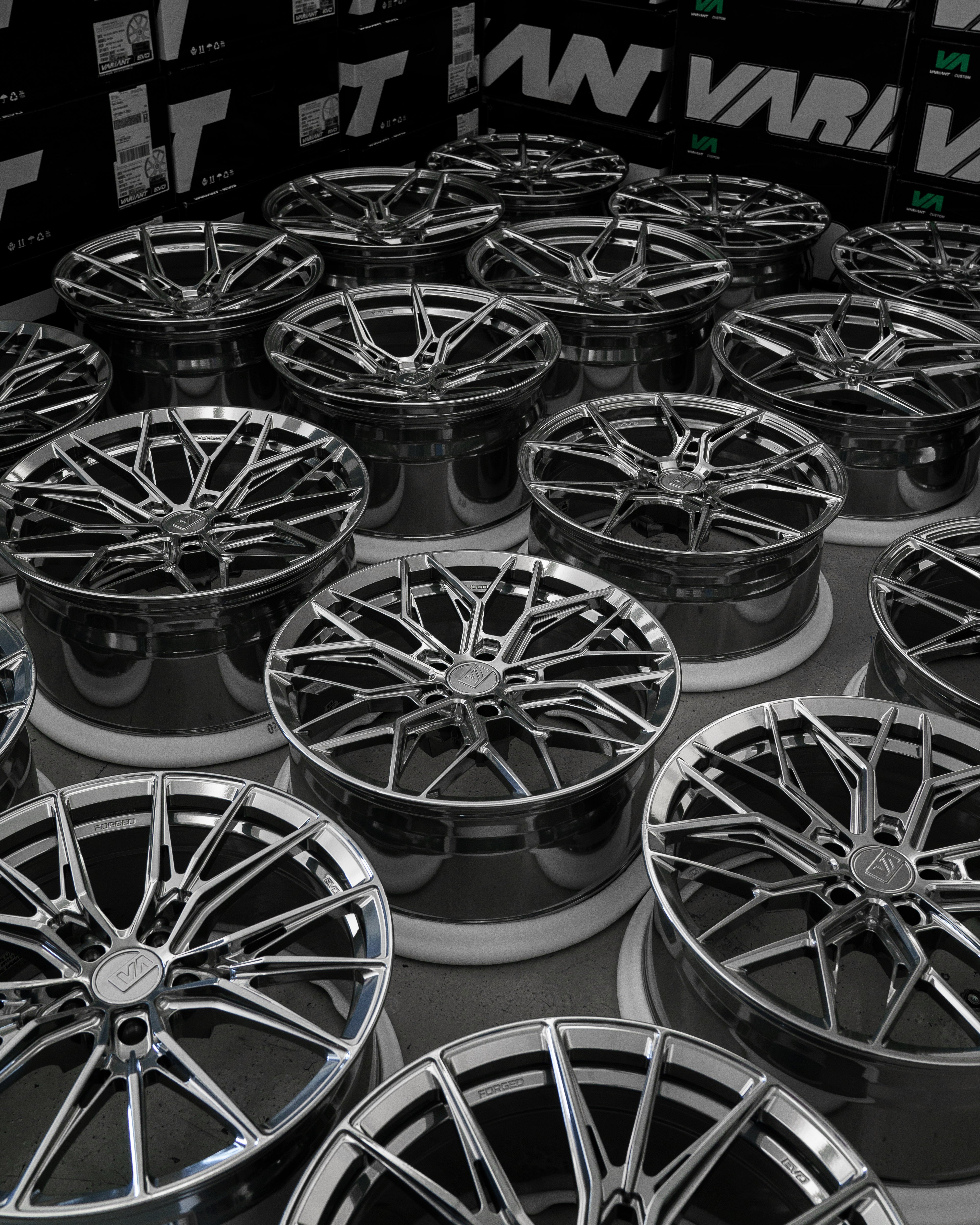

Key takeaways: Wheel width, not diameter, decides which tire sizes will fit your car. It is measured in inches between the two bead seats and stamped on the wheel as a "J" number (for example, 9J x 19 is a 9.0-inch-wide wheel). Every tire size has an approved rim width range, so the goal is to match your wheel width to a tire in that range for safe handling, even wear, and the stance you want.
When people shop for wheels, they fixate on diameter, 18s, 19s, 20s, and forget the spec that actually governs fitment: wheel width. Width sets how much tire you can run, how the car sits, and whether the setup rubs. Get it right and the tire seats correctly and wears evenly; get it wrong and you distort the tire, hurt handling, and shorten its life. Here is how wheel width works and how to choose it.
What is wheel width, and how is it measured?
Wheel width is the distance between the two bead seats, the inner ledges where the tire's beads lock against the rim. It is not the outer lip-to-lip measurement, which is roughly an inch wider. Width is expressed in inches alongside a "J," a letter that describes the flange shape. A wheel stamped 9J x 19 ET35 is 9.0 inches wide, 19 inches in diameter, with a 35 mm offset.
You will usually find these numbers stamped on the back of a spoke or on the barrel. If you are buying forged wheels made to order, width is one of the core numbers you specify, right next to diameter and offset. For a full walk-through of every number, see our guide on wheel offset and fitment.
Why does wheel width matter more than diameter for fitment?
Diameter has to match your tire's diameter, that part is simple. Width is where the real decisions happen, because it controls the tire's shape once mounted. Every tire size carries an approved rim width range from the manufacturer. Mount a tire on a wheel inside that range and the casing takes its designed shape. Go outside it and problems start:
- Too wide: the sidewalls get pulled flat and the tread stretches, a "stretched" look that reduces sidewall protection and can unseat the bead at low pressure.
- Too narrow: the casing bulges into a rounded profile, the contact patch narrows, and the tire is more prone to rolling onto its shoulder during hard cornering.
Either extreme costs you grip, even wear, and stability. Reputable tire resources like Tire Rack's wheel tech pages publish the measuring rim and approved width range for each tire size, and the basics of rim and tire sizing are covered on Wikipedia's rim article.
How do you find the right wheel width for a tire?
Start from the tire size you want, then confirm your wheel width falls inside its range. As a rough rule, a tire's section width changes about 0.2 inches (5 mm) for every 0.5 inch of rim width, measured from the tire's specified measuring rim. A quick reference for common sizes:
| Tire section width | Approved rim width range | Ideal wheel width |
|---|---|---|
| 225 mm | 7.0"–8.5" | 7.5"–8.0" |
| 245 mm | 8.0"–9.5" | 8.5" |
| 265 mm | 8.5"–10.0" | 9.0"–9.5" |
| 295 mm | 9.5"–11.0" | 10.0"–10.5" |
These are general ranges; always check the specific tire model, since a max-performance summer tire and a touring tire in the same size can differ. If you run a staggered setup, each axle gets its own width and tire size, which is exactly why width is specified per corner.
How does wheel width affect how the car looks and drives?
Width changes both stance and behavior. A wider wheel widens the contact patch, which can sharpen turn-in and add grip, up to the point where the tire is too stretched or the wheel rubs. Because a wider wheel usually changes where the tire sits relative to the fender, width and offset have to be chosen together. Add an inch of width without adjusting offset and you move the tire's shoulders both inward and outward, which is a common cause of wheel rub at the fender or suspension.
Does a wider wheel weigh more?
Generally yes, more material means more mass, but construction matters more than width alone. A true forged wheel, machined from a single billet of 6061-T6 aluminum, can be made wider while staying lighter and stronger than a comparable cast wheel, because forging aligns the metal's grain and lets engineers remove material where it is not needed. That is why enthusiasts running wide, staggered fitments tend to favor forged construction. You can see the range of widths and fitments across our forged wheel lineup or browse by car in our vehicle-specific fitments.
Frequently asked questions about wheel width
What does the "J" mean in a wheel size like 9J?
The "J" describes the shape and height of the wheel's flange, the lip the tire bead seats against. For passenger cars it is the most common flange code, so in practice "9J" simply tells you the wheel is 9.0 inches wide with a standard flange.
Can I put a wider tire on my existing wheels?
Sometimes. Check the wider tire's approved rim width range; if your current wheel width falls within it, the tire can work. If your wheel is too narrow for that tire, the casing will bulge and wear unevenly, so it is better to match the wheel to the tire.
Is a half-inch of wheel width noticeable?
Yes. A half-inch (for example, 9.0" versus 9.5") shifts the tire's section width by roughly 5 mm and moves the tire closer to the fender, which is enough to change clearance and the look. On tight fitments, half an inch is the difference between clearing and rubbing.
How do I measure the width of a wheel I already own?
Measure between the two bead seats, not lip to lip; the bead-seat measurement is the stated width. The easiest method is to read the stamping on the barrel or spoke, which lists width, diameter, and offset together.
Written by Taylor Smith, co-founder of Variant Alloy Wheels, who has spent nearly two decades in the automotive aftermarket.
Share:
Do Bigger Wheels Affect Ride Quality?
Why Do My Wheels Rub, and How Do You Fix It?