


Key takeaways: The best wheels for the Audi RS3 are lightweight 19-inch forged wheels in a 5x112 bolt pattern with a 57.1 mm center bore, specced to respect the car's factory reverse-staggered setup. The current 8Y RS3 leaves the factory with a wider, lower-offset 19x9 ET25 front and a narrower, higher-offset 19x8 ET46 rear, which is the opposite of what most performance cars run. Get the offsets right and you keep the handling balance Audi engineered; get them wrong and you either need spacers or you give up front grip.
Choosing the best wheels for the Audi RS3 is unusually specification-driven, because this is one of the few performance cars where the factory fitment is reverse-staggered. Copy a generic "square 19-inch" spec off a forum and you will end up with either poke, rub, or a stack of spacers. Here is how the car is actually set up and what that means for your wheel order.
What wheel specs does the Audi RS3 use from the factory?
The 8Y RS3, launched for 2022 in the U.S. with a 401-horsepower 2.5-liter turbocharged five-cylinder, runs the following:
| Spec | Front | Rear |
|---|---|---|
| Wheel size | 19 x 9.0 in | 19 x 8.0 in |
| Offset | ET25 | ET46 |
| Tire size | 265/30R19 | 245/35R19 |
| Bolt pattern | 5x112 | |
| Center bore | 57.1 mm | |
| Seat type | Ball seat (bolts, not studs) | |
Two details catch people out. First, the RS3 uses lug bolts rather than studs, so wheel changes and spacer installs behave differently than on a Japanese or American car. Second, the 57.1 mm center bore is small, which limits how much material sits between the bore and the bolt circle. That makes hub-centric fitment non-optional. Full year-by-year fitment data is catalogued at Wheel-Size.com's RS3 8Y reference, and Audi publishes the chassis and drivetrain figures on the Audi MediaCenter RS 3 Sedan technical data page.
Why does the RS3 run a reverse-staggered setup?
Because the car is nose-heavy and Audi wanted to fight understeer at the source. The transverse 2.5-liter inline-five sits ahead of the front axle, which loads the front tires hard on corner entry. Putting a wider 265-section tire up front and a narrower 245 in the rear rebalances grip toward the end of the car that needs it, and the 8Y's rear torque splitter, which replaced the conventional rear differential, does the rest by overdriving the outside rear wheel.
This is why a naive square setup can make the RS3 handle worse, not better. If you narrow the front to match the rear, you are removing exactly the grip Audi added on purpose. Our broader breakdown of staggered versus square setups covers the general trade-offs; the RS3 is the case where the usual "square is better" advice needs a second look.
Can you run a square setup on the RS3?
You can, and plenty of owners do, but understand what you are trading. A square setup lets you rotate tires front to rear, which meaningfully extends tread life on a car that eats front tires. It also gives more neutral behavior at the limit for track use.
The complication is offset. Because the factory front is ET25 and the rear is ET46, a single offset cannot sit flush at both ends of a cast or off-the-shelf wheel: run the rear offset up front and the front tucks badly, run the front offset in the rear and it pokes. Owners solve this with 20 mm or larger front spacers, which works but adds stacked tolerances and requires extended bolts.
The cleaner solution on a made-to-order forged wheel is to build the same width and design in two different offsets, front and rear, so the track widths match without a spacer in the load path. That is the version we would recommend. If offset math is unfamiliar territory, start with our guide to wheel offset explained.
What aftermarket wheel sizes work on the Audi RS3?
General direction, to be confirmed against your exact model year, ride height, and tire choice:
- 19x9.0 to 19x9.5 front in roughly ET25 to ET35, with a 255 or 265-section tire. This is the safest way to preserve or slightly widen the factory front footprint.
- 19x9.0 to 19x9.5 rear in roughly ET40 to ET48 to match the front track width without spacers. Widening the rear beyond the factory 245 is a look-driven choice, not a grip-driven one.
- 20-inch fitments are possible and increasingly popular, but on a car with this short a wheelbase the ride penalty is real. We wrote about the trade-off in do bigger wheels affect ride quality.
- 18-inch is the right call for a dedicated track or winter set if brake caliper clearance allows, since it opens up more tire sidewall options.
Whatever you choose, confirm clearance against the front strut, the rear damper, and the fender liner at full lock and full compression. If the car is lowered on coilovers or springs, assume less clearance than the numbers above suggest and read our notes on why wheels rub and how to fix it.
How much weight can you actually save on an RS3?
Less than the marketing usually implies, but it still matters. The RS3's factory 19-inch wheels are cast and land in the high-20-pound range depending on style. A well-specced 19x9 forged monoblock typically comes in several pounds lighter per corner at the same width, and the savings grow if you are replacing an aftermarket 20-inch cast wheel.
The reason a few pounds per corner is worth talking about is that wheel mass is unsprung and rotating, so it works against the suspension and the brakes twice over. That is why the effect is more noticeable in steering response and ride compliance over broken pavement than it is on a stopwatch. We covered the physics in what is unsprung weight. If your priority is the lowest possible number, see the lightest forged wheels for your car.
Which Variant wheels fit the Audi RS3?
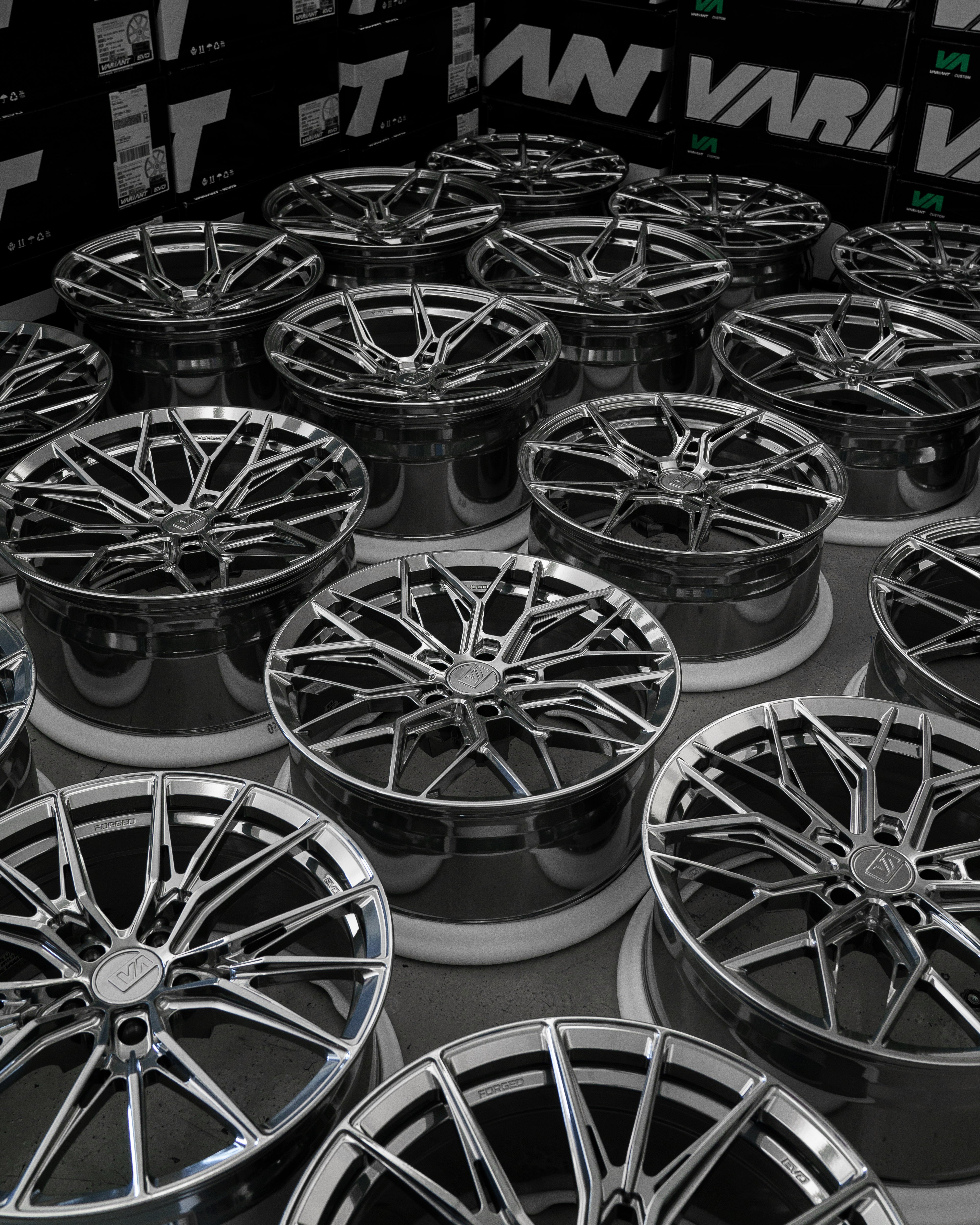
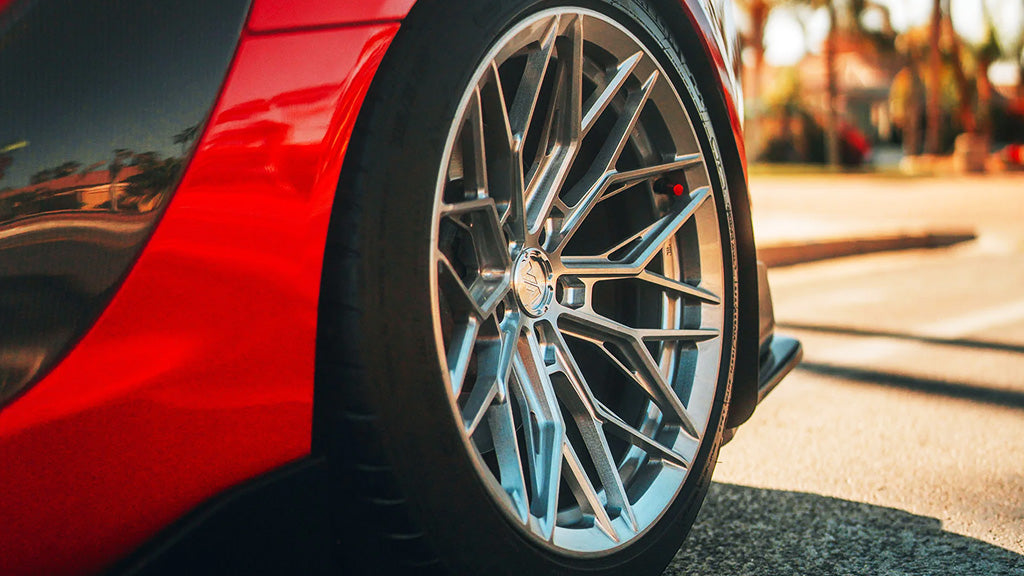
Every Variant wheel is true forged, and because the wheels are built to order we can set front and rear offsets independently rather than forcing you into a spacer. Three places to start:
- The Audi RS3 fitment collection, filtered to verified RS3 specs.
- The EVO collection for forged monoblock designs, which is where most RS3 owners land for a street car.
- The Corsa collection for multi-piece builds when you want a specific lip depth or a two-tone finish.
If your car is not an RS3, the same fitment logic applies across our vehicle-specific fitments. And before you place any order, it is worth spending five minutes on how to read a wheel spec sheet.
Frequently asked questions
What is the bolt pattern on an Audi RS3?
The Audi RS3 uses a 5x112 bolt pattern with a 57.1 mm center bore, shared with most of the modern Audi and Volkswagen MQB lineup. It uses lug bolts rather than studs, so any spacer thicker than about 5 mm requires longer bolts or a bolt-on spacer with its own studs.
Do I need spacers with aftermarket wheels on an RS3?
Only if the wheel offsets do not account for the factory reverse stagger. If you order wheels with a lower front offset and a higher rear offset, as Audi did, you do not need spacers at all. Spacers become necessary when you run a single square offset and need to push the front out to match the rear track width.
Can I run the same wheel and tire size on all four corners of an RS3?
Yes, and it lets you rotate tires, which is a genuine benefit on a car that wears front tires quickly. The trade-off is that narrowing the front from the factory 265 reduces front grip and can add understeer. If you go square, keep the width at 265 rather than dropping to 245.
Will 20-inch wheels fit an Audi RS3?
Yes, with appropriate tire sizes to maintain roughly the factory overall diameter. Expect a firmer ride and more vulnerability to pothole damage, since a 20-inch wheel on this chassis leaves very little sidewall. For a daily-driven RS3, 19 inches remains the better engineering compromise.
Are forged wheels worth it on an RS3?
If you are buying wheels anyway, forged is the more durable choice for the same size, and it lets you order offsets built around the RS3's unusual factory fitment rather than working around a stock spec. If your current wheels are undamaged and you are happy with how the car drives, the honest answer is that this is an appearance and durability upgrade, not a performance transformation.
Written by Taylor Smith, co-founder of Variant Alloy Wheels, who has spent nearly two decades in the automotive aftermarket.
Share:
What Are the Best Wheels for the Dodge Challenger and Charger Hellcat?
What Are the Best Wheels for the BMW 4 Series (G22)?