


Key takeaways: Flush fitment means the outer face of your wheel and tire sits nearly even with the fender lip, not sunk inside the arch (tuck) and not sticking out past it (poke). You dial it in with the right mix of wheel width, offset (the distance from the wheel's mounting face to its centerline, measured in millimeters), and ride height. Flush is the most popular fitment because it fills the wheel arch cleanly while keeping steering feel, clearance, and tire wear closer to factory than an aggressive poke setup.
What does flush fitment actually mean?
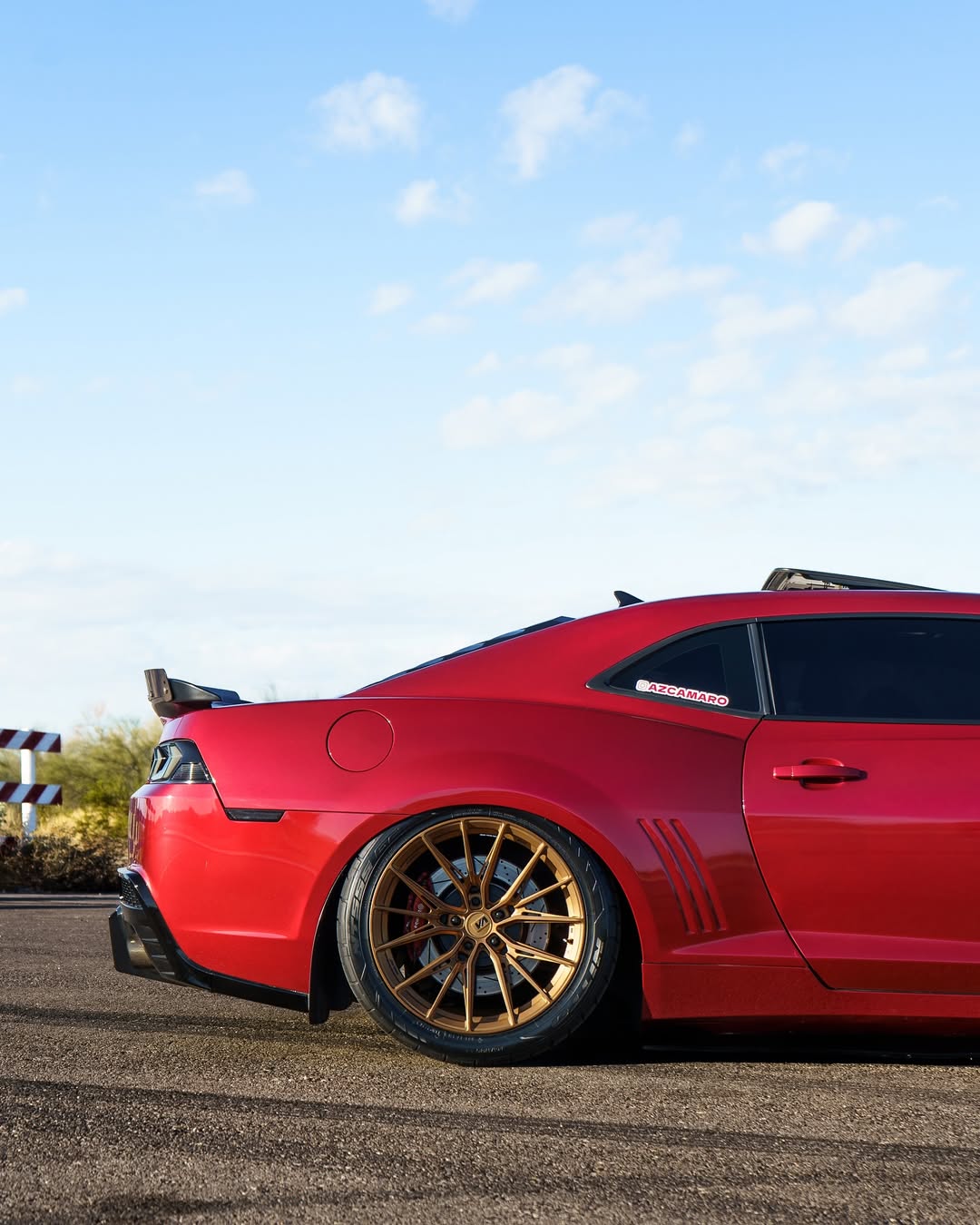
Flush fitment describes a wheel and tire that sit almost perfectly even with the outer edge of the fender. Look down at the top of the tire and it lines up with the bodywork: no gap where the wheel hides inside the arch, and no lip hanging out into the wind. It is the middle ground between two other looks: tuck (the wheel pulled inside the fender) and poke (the wheel pushed outside it).
Three measurements decide where your wheel ends up: width, offset, and how low the car sits. Offset is the big one. A higher (more positive) offset pulls the wheel inward toward the suspension; a lower or negative offset pushes it outward toward the fender. Getting flush is really about choosing a width and offset that place the wheel face right at the fender line for your specific car.
Flush vs. poke vs. tuck: what's the difference?
All three terms describe where the wheel sits relative to the fender. Here's a quick comparison:
| Fitment | Where the wheel sits | Typical offset trend | Trade-off |
|---|---|---|---|
| Tuck | Inside the fender, hidden in the arch | Higher / more positive | Most clearance, but a sunken, gappy look |
| Flush | Even with the fender lip | Moderate, often near stock | Clean look with near-stock manners |
| Poke | Outside the fender line | Lower / more negative | Aggressive stance, more rub and scrub risk |
Most people who say they want an aggressive look are really after flush or a very slight poke. True poke, where the tire sits proud of the fender, turns heads in the stance scene but adds stress to wheel bearings and can throw water and debris onto the paint.
How do offset and width create a flush fit?
Width and offset work together, so you can't judge one without the other. Adding an inch of wheel width pushes the wheel outward on both the inside and outside edges unless you change offset to compensate. That's why a wider wheel usually needs a slightly higher offset to keep the outer face in the same place while the extra width tucks toward the suspension.
Backspacing is the same idea measured differently: it's the distance from the mounting face to the back lip of the wheel. If you want to go deeper on how these numbers relate, our wheel offset guide and backspacing explainer break down the math with examples. For choosing how wide to go in the first place, see our wheel width guide.
How do you figure out the right offset for a flush setup?
There's no single magic offset number, because it depends on your car's fenders, suspension, and the wheel width you choose. Use this process:
- Start from your factory wheel specs (width and offset) as a baseline.
- Decide your target width. Wider fills the arch but eats clearance.
- Adjust offset to keep the outer face at the fender: going wider generally means raising offset a few millimeters per half-inch of added width.
- Account for ride height, because lowering a car moves the tire toward the fender's narrower upper section and changes what sits flush.
- Confirm against a verified fitment for your exact model before buying.
This is exactly why we build wheels to model-specific specs rather than selling one offset for everything. You can browse setups engineered for your car in our vehicle-specific fitments, or start from the full forged wheel lineup.
Is flush fitment bad for your car?
Done right, flush fitment is close to factory in how it drives, and that's the whole appeal. Problems start when people chase the look past what the car's geometry allows. Too much width or too little offset causes the tire to rub the fender or suspension at full lock or over bumps. Extreme setups also add scrub radius and load the wheel bearings in ways the factory never intended.
If your wheels rub, it's usually a fitment mismatch rather than bad luck; our guide on why wheels rub and how to fix it walks through the causes. Offset is a core fitment concept covered well by outside references too, including Wikipedia's wheel sizing overview and Tire Rack's wheel offset explainer.
How do you fine-tune fitment without buying new wheels?
If your current wheels sit a touch too far inboard, a hub-centric wheel spacer can push them outward to sit flush, effectively reducing offset by the spacer's thickness. It's a common, workable fix when the change you need is small, but it has to be done with the right hardware and proper torque. Read our honest take in are wheel spacers safe before you go that route. For staggered cars, also weigh whether a wider rear changes your flush target front to rear; our staggered vs. square guide covers that balance.
Frequently asked questions
Is flush fitment the same as stance?
No. Flush aims for the wheel sitting even with the fender while keeping the car fully functional. Stance builds often push further into aggressive poke and heavy negative camber purely for looks, trading away ride quality and tire life.
What offset gives a flush fit?
There's no universal number. Flush usually comes from matching or slightly adjusting your factory offset while choosing the right width for your fenders. Always confirm against a verified fitment for your exact make, model, and year.
Does flush fitment cause rubbing?
It can if the width or offset is too aggressive, or if the car is lowered. Correct offset, an appropriate tire size, and sometimes a light fender roll usually prevent it.
Is flush or poke better for performance?
Flush is generally better for daily and performance driving because it keeps track width and steering geometry closer to how the car was designed. Extreme poke adds scrub and stress without a handling benefit.
Written by Taylor Smith, co-founder of Variant Alloy Wheels, who has spent nearly two decades in the automotive aftermarket.
Share:
How Much Should You Torque Aftermarket Wheels?
How Do You Get Rid of Brake Dust on Wheels?