


How Do You Get Rid of Brake Dust on Wheels?
Key takeaways: To get rid of brake dust on wheels, wash them while they are cool, rinse first to flush grit, then spray a pH-neutral (non-acidic) wheel cleaner, agitate with a soft brush, rinse thoroughly, and dry with a microfiber towel. Brake dust is a mix of iron from your rotors and friction material from your pads, and it bakes onto the finish with heat, so the sooner you remove it the better. To keep it from coming back, seal the wheel with a coating and consider low-dust brake pads.
Brake dust is the gray-black film that coats your wheels within days of cleaning them, and on a nice set of forged wheels it is both an eyesore and a slow threat to the finish. This guide covers what brake dust actually is, how to remove it safely without damaging the clear coat, and how to prevent it from building up in the first place.
What is brake dust and why does it stick to wheels?
Brake dust is the residue created every time you brake. As the brake pad presses against the spinning rotor, friction wears tiny particles off both surfaces. That dust is a mix of iron shed from the cast-iron rotor and friction material and carbon from the brake pad. The iron content is the reason it clings so stubbornly and can corrode: hot iron particles land on the wheel, and heat from braking helps them bond to the surface. Left alone, that combination can etch or pit the clear coat over time, which is why brake dust is worth removing regularly rather than once a season. You can read more about the composition of brake friction material in this overview of the brake pad.
How do you safely remove brake dust from wheels?
The safe method is a cool wheel, a pre-rinse, a pH-neutral cleaner, and a soft brush, in that order. Skipping the rinse or reaching for a harsh acidic cleaner is how people scratch or dull an otherwise perfect finish. Here is the sequence that works on forged wheels and factory finishes alike:
- Wait until the wheels are cool. Never spray cleaner on hot wheels straight off a drive. Product flash-dries and streaks, and thermal shock is bad for the finish.
- Pre-rinse to remove loose grit. Blast the wheel and barrel with a hose or pressure washer first. This flushes away sharp road grit so your brush does not drag it across the finish and leave swirl marks.
- Apply a pH-neutral wheel cleaner. Spray a dedicated, non-acidic wheel cleaner across the face, spokes, and inner barrel. A pH-neutral formula lifts brake dust without attacking clear coat, polished lips, or brushed surfaces. Let it dwell for the time the label specifies, but do not let it dry.
- Agitate with a soft brush. Use a soft-bristle wheel brush for the face and a long, soft brush for the barrel. Work gently; the chemistry does the lifting, not aggressive scrubbing.
- Rinse thoroughly. Rinse every trace of product from the face, spokes, lug seats, and barrel so nothing dries on the surface.
- Dry with a microfiber towel. Drying prevents water spots and lets you spot any dust you missed. A quick blow-dry of the barrel helps on multi-spoke designs.
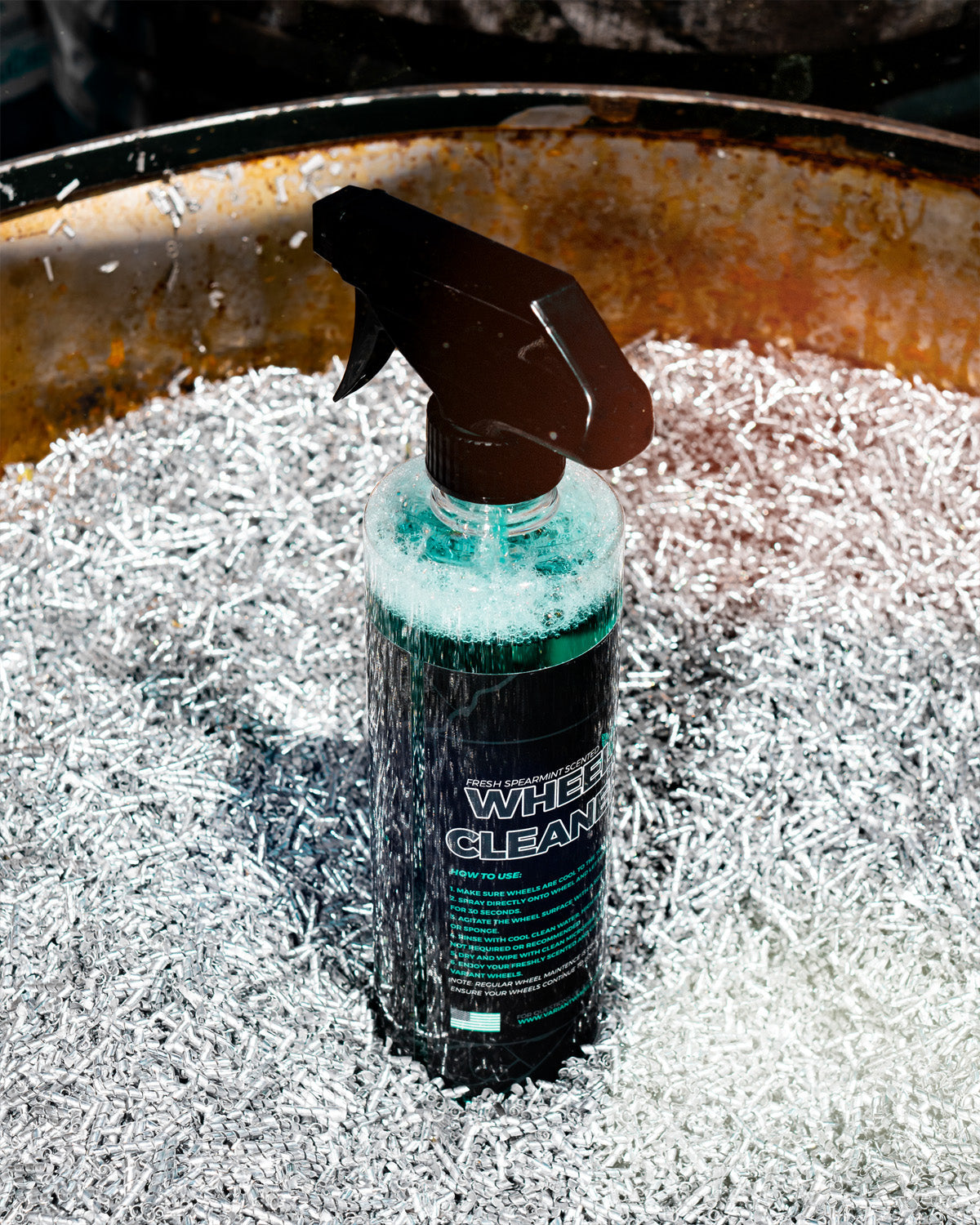
A dedicated, pH-balanced product like our forged wheel cleaner is the safest choice, especially on delicate finishes. For a full walkthrough that covers polished lips, brushed faces, and matte finishes, see our guide on how to clean forged wheels without damaging the finish.
What should you avoid when cleaning brake dust?
Avoid acidic or strongly alkaline cleaners, stiff brushes, and letting product dry on the wheel. Cheap acid-based cleaners can strip and stain clear coat, dull a polished lip, or discolor a brushed finish permanently. Steel wool and hard brushes leave scratches that trap even more dust later. And if a cleaner dries in the sun before you rinse, it can etch the surface. When in doubt, pH-neutral and gentle wins every time on a quality wheel.
| Do | Avoid |
|---|---|
| Clean cool wheels in the shade | Spraying hot wheels or in direct sun |
| Pre-rinse to flush grit | Dry-scrubbing dusty wheels |
| pH-neutral wheel cleaner | Acidic or harsh alkaline cleaners |
| Soft-bristle wheel and barrel brushes | Steel wool or stiff brushes |
| Rinse fully and dry with microfiber | Letting product dry on the finish |
How do you prevent brake dust from building up?
You cannot stop brake dust entirely, but you can make it far easier to remove and slow how fast it accumulates. Two things do most of the work: a protective coating and lower-dust pads.
- Seal the wheel. A wheel sealant or ceramic coating leaves a slick, hydrophobic barrier so brake dust and road grime cannot bond directly to the finish. Dust sits on top and rinses off with far less effort, and the coating adds a layer of protection against etching. Our ceramic coating is made for this, and we cover the payoff in is ceramic coating worth it for wheels.
- Consider low-dust brake pads. Ceramic-compound pads generally produce less visible dust than aggressive metallic pads. If your car dusts heavily and you are not tracking it, a lower-dust pad can noticeably cut buildup.
- Wash more often, not harder. A quick rinse and pH-neutral wash every week or two keeps dust from ever baking on, which means you never need harsh chemicals to catch up.
Protecting the finish is part of protecting the investment, particularly on true forged wheels where the finish quality is a big part of what you paid for. Browse the full forged wheel collection to see the finishes worth taking care of. For more background on what brake dust is and why regular cleaning matters, brake manufacturer PowerStop has a useful primer on brake dust causes, cleaning, and prevention.
Frequently asked questions
Can brake dust permanently damage wheels?
Yes, if it is left on the finish. Brake dust contains hot iron particles that can bond to and slowly etch or pit the clear coat over time. Removing it regularly and sealing the wheel with a coating prevents this kind of lasting damage.
What is the best cleaner for brake dust?
A pH-neutral, non-acidic wheel cleaner is the safest and most effective choice for regular brake dust. It lifts the iron and friction residue without attacking clear coat, polished lips, or brushed finishes the way acidic cleaners can.
How often should I clean brake dust off my wheels?
Every one to two weeks is ideal for most drivers. Frequent light cleaning stops dust from baking on, so you never need harsh chemicals or hard scrubbing to remove built-up grime.
Does ceramic coating stop brake dust?
It does not stop dust from forming, but it keeps it from bonding to the wheel. A ceramic coating leaves a slick barrier so brake dust sits on top and rinses away much more easily, and it adds protection against etching.
Do forged wheels need special care for brake dust?
They need gentle, pH-neutral care to protect the finish, but no exotic products. Avoid acidic cleaners and stiff brushes on polished, brushed, or matte forged finishes, and a coating makes ongoing maintenance easy.
Written by Taylor Smith, co-founder of Variant Alloy Wheels, who has spent nearly two decades in the automotive aftermarket.
Share:
How Much Should You Torque Aftermarket Wheels?
Do Forged Wheels Bend or Crack? How Durable They Really Are