


Key takeaways: Wheel spacers are safe when they are hub-centric, made from quality forged aluminum, sized correctly for your car, and installed with proper thread engagement and torque. They fail when they are cheap, lug-centric, too thick for the available studs, or installed without re-torquing. In most cases, buying wheels with the correct offset for your vehicle is a cleaner, more reliable way to get the fitment you want than stacking a spacer behind an ill-fitting wheel.
What does a wheel spacer actually do?
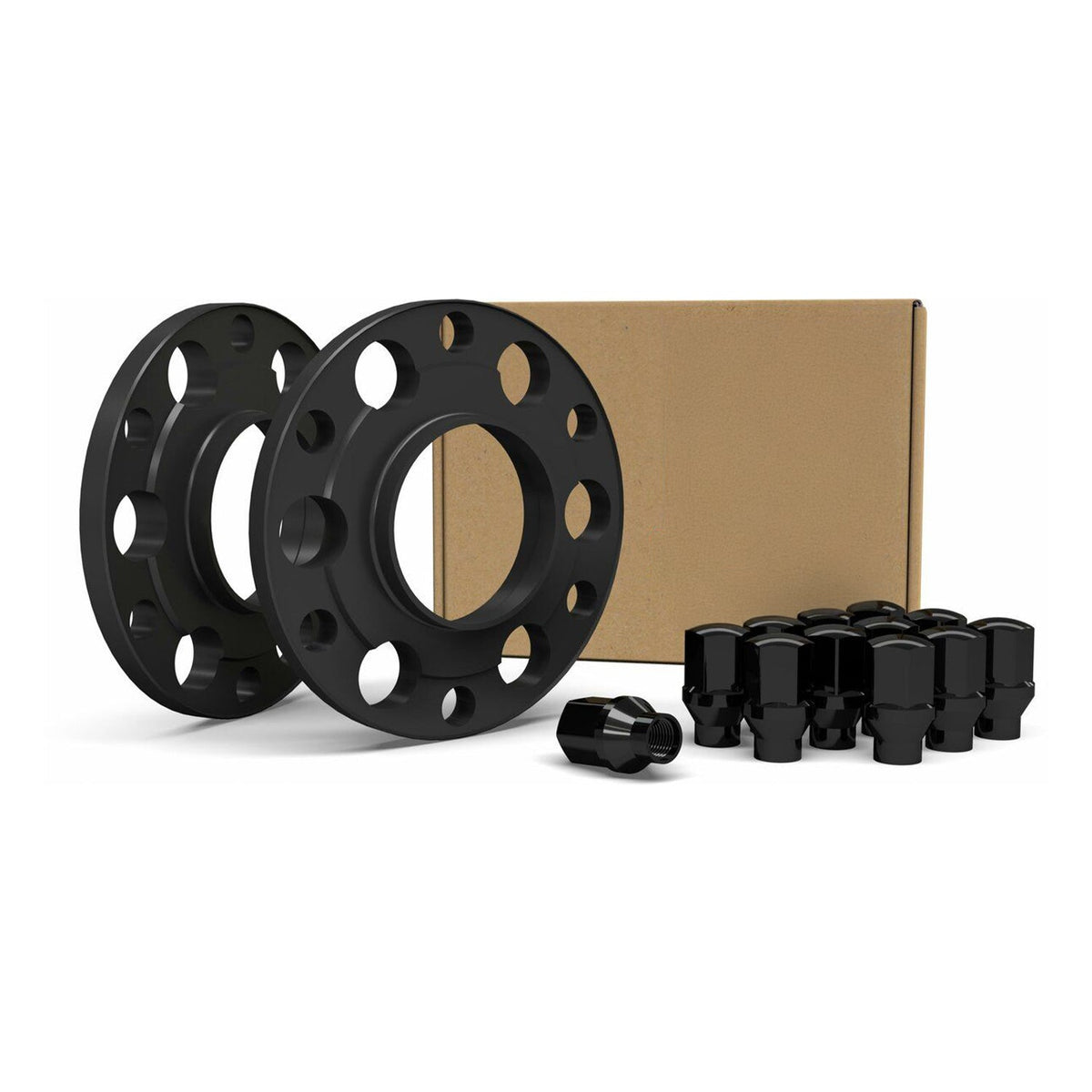
A wheel spacer is a machined ring that sits between your hub and your wheel, pushing the wheel outward from the car. That single change affects fitment, handling geometry, and clearance all at once. Because a spacer moves the wheel away from the hub, it effectively reduces the wheel's offset. Offset (marked as "ET" in millimeters) is the distance between a wheel's mounting face and its centerline. A 15mm spacer reduces your effective offset by 15mm, which is why spacers are usually used to fix a wheel that sits too far inward or to widen a car's track for a more aggressive stance. If you want the full picture on offset first, our wheel offset guide covers how the number is measured and why it matters.
Are wheel spacers safe?
Yes, wheel spacers are safe when three conditions are met: they are hub-centric, they are the correct thickness for your studs or bolts, and they are torqued to specification. Spacers are used on race cars, OEM applications, and daily drivers without issue when they are engineered and installed correctly. The danger comes from cutting corners. A cheap cast spacer, a spacer that leaves too few threads engaged, or a hardware store part that is not centered on the hub can cause vibration, wheel wobble, or in a worst case a wheel that loosens. None of those are the spacer concept failing. They are an installation or quality failure.
Hub-centric vs. lug-centric: the single most important detail
A hub-centric spacer has a machined bore that fits snugly over your car's hub, and a matching lip that centers the wheel on the spacer. This means the vehicle's hub, not the lug bolts, carries the load of centering the wheel, exactly as the factory intended. A lug-centric spacer (one with an oversized center hole) forces the lug bolts to center the wheel, which invites vibration and uneven clamping load. Always choose hub-centric. If you are new to the concept of hubs carrying load, our explainer on center bore and hub-centric rings makes the geometry clear.
Slip-on vs. bolt-on spacers: which type do you need?
There are two main designs, and the right one depends on how thick a spacer you need.
- Slip-on (thin) spacers sit over the existing studs or use the factory hub, and you reuse or extend the original lug hardware. These are typically 3mm to roughly 15mm. Because they use the factory studs, you must have longer bolts or studs so the wheel still gets full thread engagement.
- Bolt-on (hub adapter) spacers bolt to the hub with their own hardware and then present a fresh set of studs for the wheel. These are used for thicker applications, generally 20mm and up, and they restore full stud length for the wheel. They are the safer choice once you get past about 15mm.
How thick can a wheel spacer be before it is unsafe?
Spacer thickness is not the real limit. Thread engagement is. The governing rule is that your lug bolt or stud must have enough threads engaged in the hub or spacer to safely clamp the wheel. A common guideline is thread engagement at least equal to the bolt's diameter, so an M14 bolt should have at least 14mm of thread engaged. On a stud-based setup, aim for the full length of the stud through the nut. As long as that engagement is preserved (through longer bolts on slip-on spacers, or the dedicated studs on a bolt-on adapter), a properly made spacer does its job. Once a spacer is thick enough that you cannot maintain safe engagement, you have crossed into unsafe territory, regardless of the number stamped on the part.
How do you install wheel spacers correctly?
Correct installation is what separates a safe spacer from a dangerous one. Follow these steps:
- Confirm the spacer is hub-centric and matches your bolt pattern and center bore. Not sure how to read those numbers? See our guide on measuring a bolt pattern.
- Clean the hub face and spacer mating surfaces so nothing sits between the metal contact points.
- For bolt-on adapters, torque the spacer to the hub to the manufacturer's spec before mounting the wheel.
- Mount the wheel and torque the lug bolts or nuts to your vehicle's factory specification in a star pattern.
- Re-torque after roughly 50 to 100 miles of driving, then check periodically. This one step catches the settling that causes most spacer complaints.
Spacers vs. correct offset: the honest answer
Here is the trade-off we will always be straight about: a spacer is a correction, not a first choice. If you need to add 10mm or 15mm of spacer to make a wheel sit right, that usually means the wheel's offset was wrong for your car in the first place. Every spacer adds one more clamped interface to maintain and re-torque, and a thick spacer changes scrub radius and adds a small amount of leverage on the wheel bearing. The cleaner path is to buy a wheel built with the correct offset and width for your specific vehicle so it bolts straight to the hub with no spacer at all. That is the entire reason we build vehicle-specific fitments: the offset is engineered for the car, so the wheel sits flush without a stack of hardware behind it. Because every Variant wheel is true forged from 6061-T6 aluminum, you also get the strength and low weight that make correct fitment worth the effort. There are legitimate reasons to run spacers (dialing in a track stance, clearing a big-brake kit), but "the wheels do not fit right" should be solved at the wheel, not behind it.
Do spacers hurt performance or ride quality?
Used correctly, quality hub-centric spacers have a negligible effect on ride quality and can slightly widen your track for a marginally more planted feel. The performance risk comes from the added unsprung and rotating mass of a heavy cast spacer and from the extra leverage a thick spacer places on the bearing over time. This is another argument for keeping spacers thin and high quality, or avoiding them by choosing the right wheel. If you care about how rotating mass affects handling, our piece on unsprung weight explains why lighter is better. For general fitment and torque best practices, the reference material at Tire Rack and vehicle-safety guidance from the NHTSA are worth a read.
Frequently asked questions
Are wheel spacers safe on a daily driver?
Yes. Hub-centric spacers made from forged aluminum, sized to preserve full thread engagement and torqued to spec, are safe for daily driving. Re-torque them after the first 50 to 100 miles and check them periodically like any other fastener.
Are hub-centric spacers better than lug-centric?
Yes, and it is not close. Hub-centric spacers let the car's hub center the wheel exactly as the factory designed, which prevents vibration and uneven clamping. Lug-centric spacers force the bolts to center the wheel and are far more prone to wobble. Always choose hub-centric.
How much offset does a wheel spacer change?
A spacer reduces your effective offset by its thickness. A 15mm spacer lowers effective offset by 15mm and pushes the wheel 15mm further out from the hub. That is the same as running a wheel with 15mm less offset.
Is it better to use a spacer or buy wheels with the right offset?
For most street cars, buying a wheel with the correct offset is better. It removes an extra clamped interface, avoids added mass, and keeps the wheel bolted directly to the hub. Spacers make sense for specific goals like track stance or brake clearance, not for fixing a wheel that was the wrong offset to begin with.
Do I need longer bolts or studs with spacers?
With slip-on spacers, yes. Because the spacer moves the wheel outward, you need longer lug bolts or extended studs so the wheel still achieves full, safe thread engagement. Bolt-on adapter spacers supply their own studs and solve this by design.
Written by Taylor Smith, co-founder of Variant Alloy Wheels, who has spent nearly two decades in the automotive aftermarket.
Share:
What Are the Lightest Forged Wheels for Your Car?
What Are the Best Wheels for the BMW 3 Series (G20)?