


Key takeaways: The best wheels for the BMW M2 are lightweight, true-forged wheels sized to the car's generation. The first-generation F87 M2 (2016-2021) uses a 5x120 bolt pattern with a 72.5 mm center bore, and a staggered setup around 20x9 front and 20x10 rear works well. The second-generation G87 M2 (2023 and newer) switched to a 5x112 bolt pattern with a 66.6 mm bore, and a 19-inch staggered setup such as 19x10 front and 19x11 rear suits its wider body. Forged construction matters here because it cuts unsprung weight on a heavy, high-powered coupe.
Choosing the best wheels for the BMW M2 starts with two questions: which generation you have, and how much weight you are willing to shed. The M2 is one of BMW's most rewarding chassis, but the two generations are not interchangeable, and getting the fitment right is the difference between a wheel that transforms the car and one that will not bolt on. Here is what actually matters.
What should you look for in BMW M2 wheels?
For a car like the M2, the priorities are weight, strength, and correct fitment, in that order:
- Low weight. The M2 is a heavy compact coupe, from roughly 3,450 lb for an early F87 to about 3,800 lb for the G87. Lighter wheels reduce unsprung mass, which sharpens steering response, braking, and ride quality. Our explainer on unsprung weight covers why this matters more than almost any other spec.
- Forged strength. A true-forged wheel is pressed from a solid billet of 6061-T6 aluminum, giving it a denser grain structure than a cast wheel. That lets it be both lighter and stronger, which suits the M2's 365 to 473 horsepower and hard track use. If you are weighing construction types, see our guide to forged vs. flow-formed vs. cast.
- Correct bolt pattern and bore. This is where M2 owners get tripped up, because the two generations do not share hardware.
What is the difference between F87 and G87 M2 fitment?
The single most important fact for M2 buyers: the first- and second-generation cars use different bolt patterns and center bores, so wheels are not cross-compatible without adapters. Here is the side-by-side:
| Spec | F87 M2 / M2 Competition (2016-2021) | G87 M2 (2023 and newer) |
|---|---|---|
| Bolt pattern | 5x120 | 5x112 |
| Center bore | 72.5 mm | 66.6 mm |
| Lug hardware | M14 x 1.25 bolts | M14 x 1.25 bolts |
| Factory wheels | 19-inch staggered | 19-inch front / 20-inch rear staggered |
| Approx. curb weight | ~3,450-3,600 lb | ~3,800 lb |
The takeaway is simple: a wheel built for an F87 will not bolt onto a G87, and vice versa, because 5x120 and 5x112 are different patterns. Always order to your exact generation and year. If you are unsure how to read those numbers, our wheel offset guide walks through offset, width, and bolt pattern together.
What size wheels fit the BMW M2?
Both generations respond well to a staggered fitment, meaning a wider wheel and tire at the rear than the front, which suits the M2's rear-drive balance. Common well-sorted setups look like this:
- F87 (2016-2021): a 20x9 front with a 20x10 rear is a proven staggered combination that fills the arches without demanding fender work on a mildly lowered car.
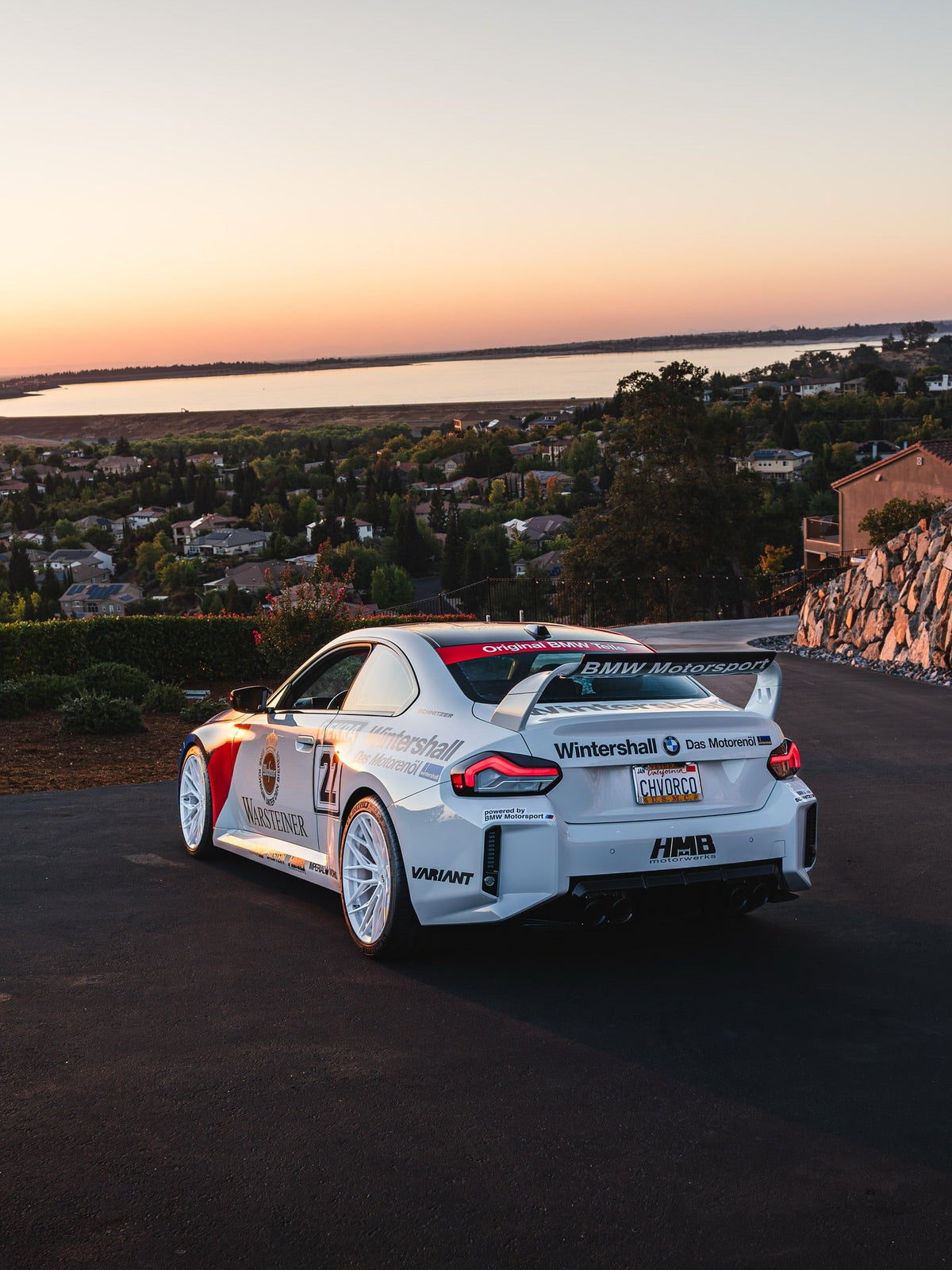
- G87 (2023 and newer): a 19x10 front with a 19x11 rear matches the wider G87 body and its bigger brakes, and keeps sidewall for both grip and ride comfort.
If you want to understand why a staggered layout is popular on the M2 and when a square setup makes more sense, our staggered vs. square breakdown lays out the trade-offs. Because the M2 shares much of its running gear with the M3 and M4, many of the same fitment principles apply; our best wheels for the BMW M3 and M4 guide is a useful companion read.
Why choose forged wheels for the M2?
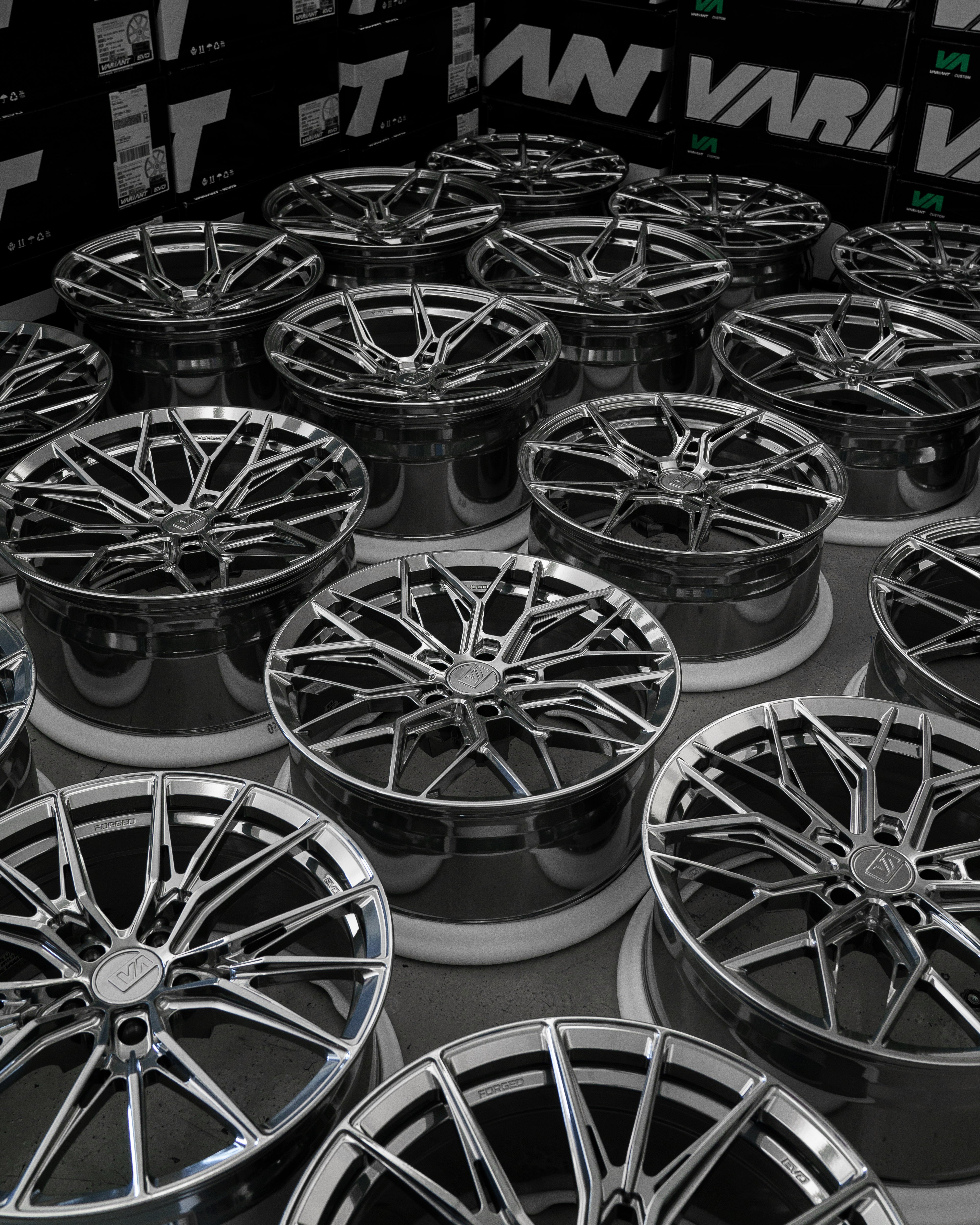
Forged wheels give the M2 the biggest handling gain per dollar because they attack unsprung and rotational weight directly. On a car that already handles well, dropping several pounds per corner makes the steering feel quicker and lets the suspension follow the road more closely. It also frees up a genuinely powerful engine to accelerate and stop a lighter rotating mass. For a data-backed look at how light a forged wheel can go, see our roundup of the lightest forged wheels. Variant builds only true-forged wheels, so every M2 fitment starts from that lighter, stronger baseline rather than a cast blank.
Which Variant wheels fit the BMW M2?
Variant stocks forged fitments for both M2 generations, made to order in your choice of size and finish. For the current car, the G87 lineup includes staggered forged sets such as a 19x10 / 19x11 configuration; for the earlier car, the F87 lineup includes 20-inch staggered forged sets. Browse everything built for the car in the BMW M2 collection. If you also cross-shop the platform siblings, the BMW M3 collection shares design language and engineering, and the broader vehicle-specific fitments and full forged wheel collections show the complete range.
For factory specifications and independent performance data, BMW's own figures and outlets like Car and Driver are good references, and the BMW M2 overview on Wikipedia summarizes the generational changes.
Frequently asked questions
What is the bolt pattern on a BMW M2?
It depends on the generation. The F87 M2 and M2 Competition (2016-2021) use a 5x120 bolt pattern with a 72.5 mm center bore. The G87 M2 (2023 and newer) uses a 5x112 bolt pattern with a 66.6 mm bore. The two are not interchangeable without adapters.
Will F87 M2 wheels fit a G87 M2?
No. The F87 is 5x120 and the G87 is 5x112, so wheels do not swap between the two generations directly. You would need bolt-pattern adapters, which most owners should avoid in favor of buying wheels made for the correct car.
What size wheels are best for the BMW M2?
A staggered setup suits both cars. On the F87, 20x9 front and 20x10 rear is a proven combination; on the G87, 19x10 front and 19x11 rear matches the wider body and larger brakes. Exact offset should be chosen for your ride height and tire size.
Are forged wheels worth it on an M2?
Yes, for most enthusiasts. The M2 is relatively heavy for its size, so cutting unsprung weight with forged wheels delivers a noticeable improvement in steering response, braking, and ride, while adding the strength to handle track use.
Written by Taylor Smith, co-founder of Variant Alloy Wheels, who has spent nearly two decades in the automotive aftermarket.
Share:
Do Bigger Wheels Affect Ride Quality?
Why Do My Wheels Rub, and How Do You Fix It?