


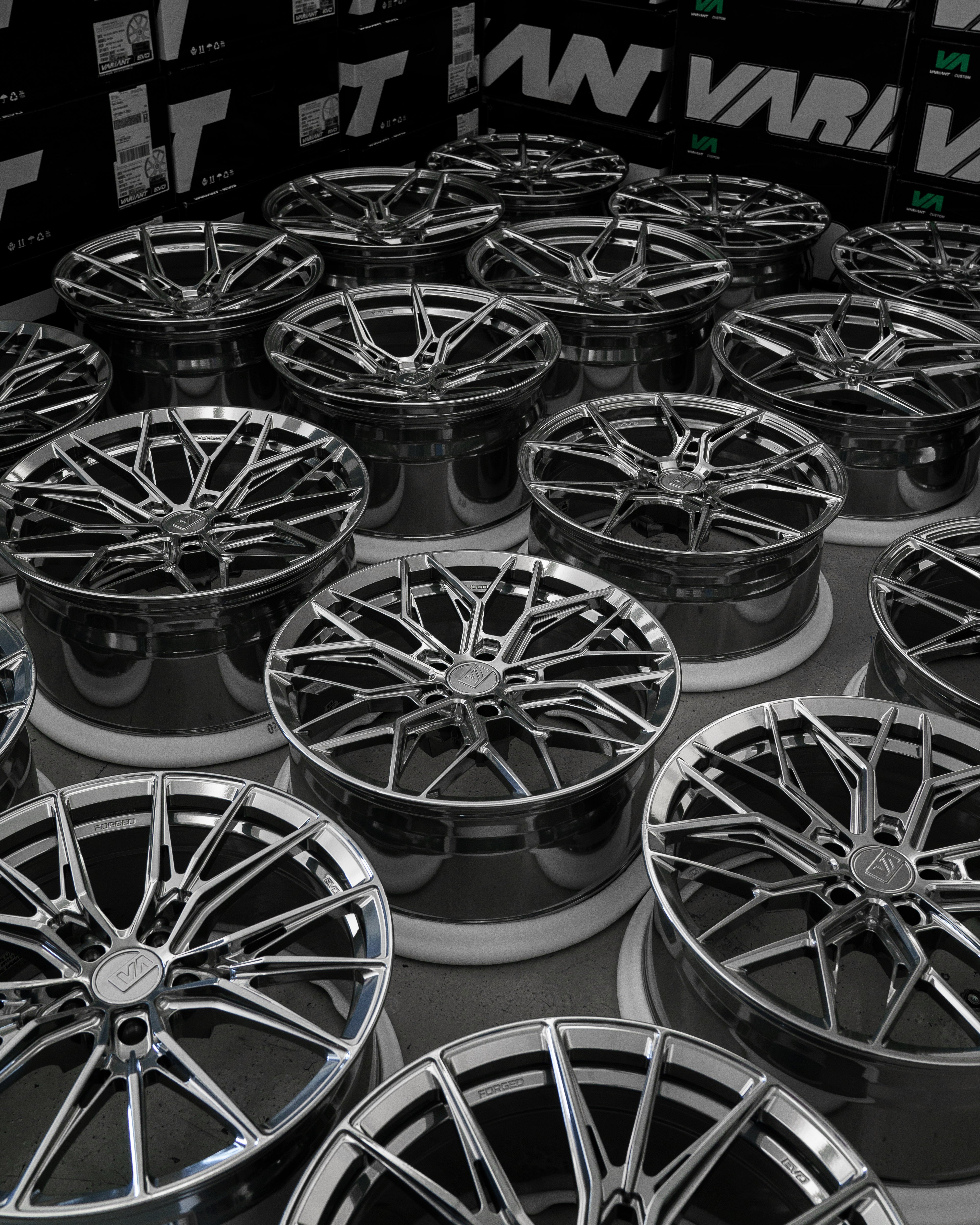
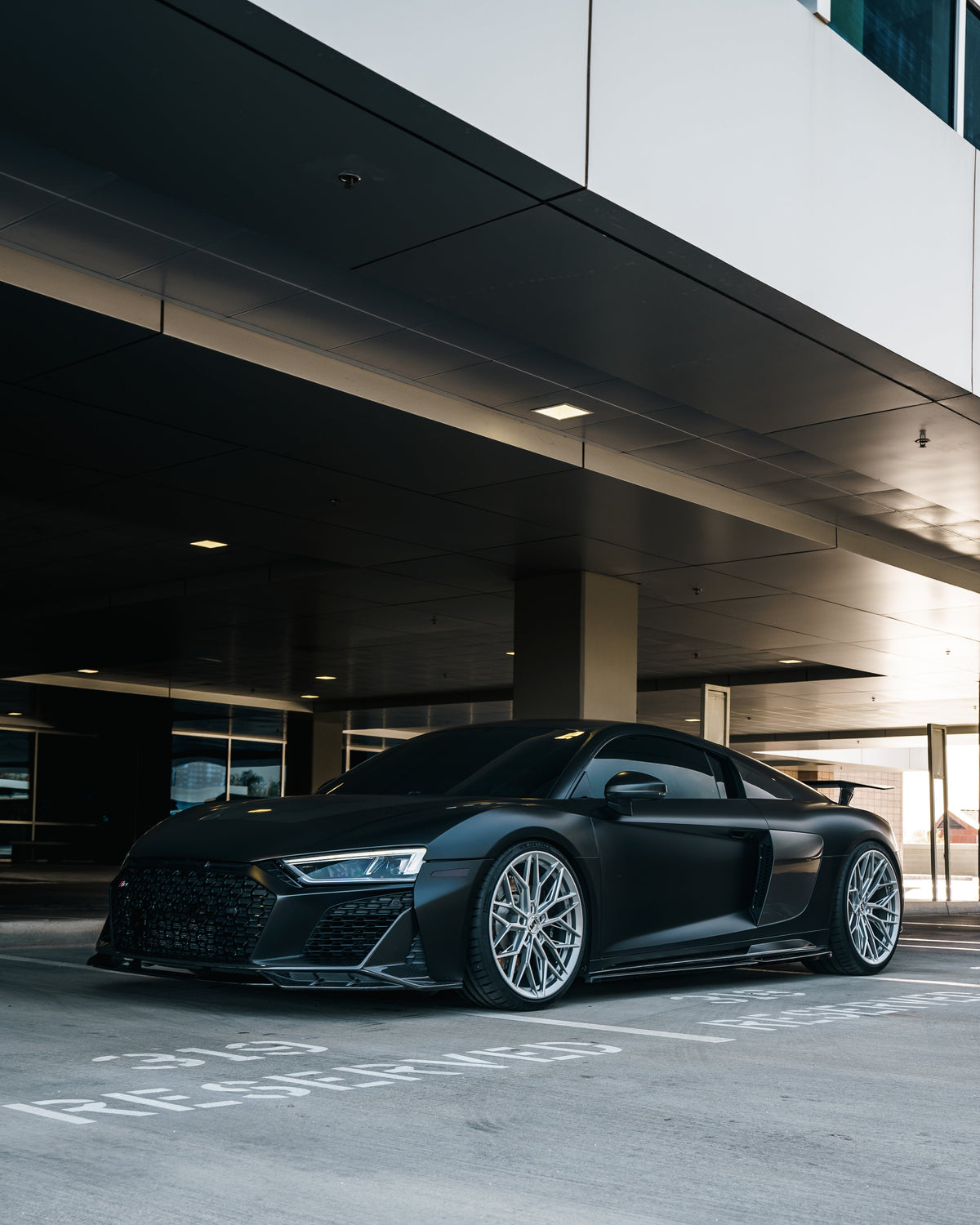
Key takeaways: The best wheels for the Audi R8 are lightweight forged wheels sized to its factory staggered setup, with the correct 5x112 bolt pattern and 57.1mm center bore. Across both generations the R8 runs a width-staggered fitment (narrower fronts, wider rears) in 19- or 20-inch diameters, so the priorities are low unsprung weight, generous brake clearance, and a load rating that suits a mid-engine, all-wheel-drive supercar. Forged construction is the right call here because of the R8's power, weight, and big brake hardware.
If you are shopping for the best wheels for the Audi R8, this guide covers the correct specs, why forged is the smart construction, and how to choose a staggered set that fits and performs.
What are the best wheels for the Audi R8?
The best Audi R8 wheels are forged, correctly sized to the factory staggered layout, and built with enough load rating for a 3,600-plus-pound AWD supercar. In practice that means a lightweight forged wheel in 19 or 20 inches, with the right offset and center bore so it sits flush and clears the brakes. Variant builds forged fitments specifically for this car in the Audi R8 collection, and you can see how vehicle-tailored sets work across models in our vehicle-specific fitments hub.
What size wheels fit the Audi R8?
Both the first-generation Type 42 (2007 to 2015) and the second-generation Type 4S (2016 to 2023) share the same core fitment specs. The R8 uses a 5x112 bolt pattern with a 57.1mm hub-centric center bore. It runs a width-staggered setup, meaning the rear wheels are wider than the fronts while typically keeping the same diameter front to rear. You can confirm year-by-year data on an independent reference like Wheel-Size.com.
| Spec | Audi R8 (both generations) |
|---|---|
| Bolt pattern | 5x112 |
| Center bore | 57.1mm (hub-centric) |
| Common diameters | 19 in or 20 in |
| Setup | Width-staggered (wider rear) |
| Typical front width | 8.5 in |
| Typical rear width | 11 to 11.5 in |
Because the R8 is hub-centric, matching the 57.1mm center bore (or using proper hub rings) is what keeps the wheel centered on the hub and free of vibration. Getting offset right is just as important; if you are unsure how offset affects fit and stance, read our wheel offset guide before ordering.
Why forged wheels for the Audi R8?
Forged is the right construction for the R8 because the car combines real power, real weight, and serious brakes. A forged wheel is shaped from a solid aluminum billet under extreme pressure, which aligns the grain structure and produces the best strength-to-weight ratio available. On a mid-engine supercar that matters three ways:
- Lower unsprung weight: Lighter wheels sharpen turn-in and ride quality by reducing the mass the suspension controls. Learn why in our explainer on unsprung weight.
- Strength margin: The R8's torque and roughly 1.6-ton curb weight load the wheels hard, especially on track. Forged construction carries that load with a healthy safety margin.
- Brake clearance: R8s run large brakes, and the carbon-ceramic option is larger still. Forging allows thinner, stronger spokes and tailored profiles that clear big calipers.
Variant only makes true forged wheels, so every R8 fitment starts from that strength-to-weight advantage. For a forged monoblock look, see the EVO Collection; for multi-piece options with custom widths and lips, see the Corsa Collection. If you want the full picture on construction trade-offs, our forged vs. flow-formed vs. cast guide lays it out.
Staggered or square on the R8?
Stick with staggered. The R8 is engineered around a width-staggered setup, with wider rear wheels to put down power and balance the mid-engine weight bias. Running a square (same width all around) setup is possible in theory but fights the car's intended balance and OEM tire sizing, so the wider-rear configuration is almost always the better choice. For more on the trade-offs, see our breakdown of staggered vs. square setups.
What should you look for in R8 wheels?
Beyond the bolt pattern and center bore, focus on three things. First, a published load rating appropriate for the R8's weight and your use (street vs. track). Second, the correct offset for your exact width so the wheel clears the fender and the caliper without rubbing. Third, the right diameter for your tire and brake package, where 20-inch setups suit carbon-ceramic brakes and aggressive tire choices, while 19-inch setups can offer more sidewall and a slightly more compliant ride.
Frequently asked questions
What is the Audi R8 bolt pattern?
The Audi R8 uses a 5x112 bolt pattern with a 57.1mm hub-centric center bore. This is consistent across the first-generation Type 42 (2007 to 2015) and the second-generation Type 4S (2016 to 2023).
What size wheels does the Audi R8 use?
The R8 runs a width-staggered setup in 19- or 20-inch diameters, with fronts around 8.5 inches wide and rears around 11 to 11.5 inches wide. The exact figures vary by model year and brake package.
Are forged wheels worth it on an Audi R8?
Yes. The R8's power, roughly 1.6-ton weight, and large brakes make forged construction worthwhile for its strength-to-weight advantage, lower unsprung weight, and the spoke profiles needed to clear big calipers.
Should the Audi R8 run staggered wheels?
Yes. The R8 is designed around a width-staggered fitment with wider rear wheels to handle power delivery and balance the mid-engine layout, so a staggered set is the recommended configuration.
Do I need hub rings for R8 wheels?
Only if the wheel's center bore is larger than the R8's 57.1mm hub. The R8 is hub-centric, so the bore must match the hub (or be shimmed with proper hub rings) to stay centered and vibration-free.
Written by Taylor Smith, co-founder of Variant Alloy Wheels, who has spent nearly two decades in the automotive aftermarket.
Share:
What Are Forged Wheels Made Of? 6061-T6 Aluminum Explained
Are Forged Wheels Worth It? An Honest Breakdown