


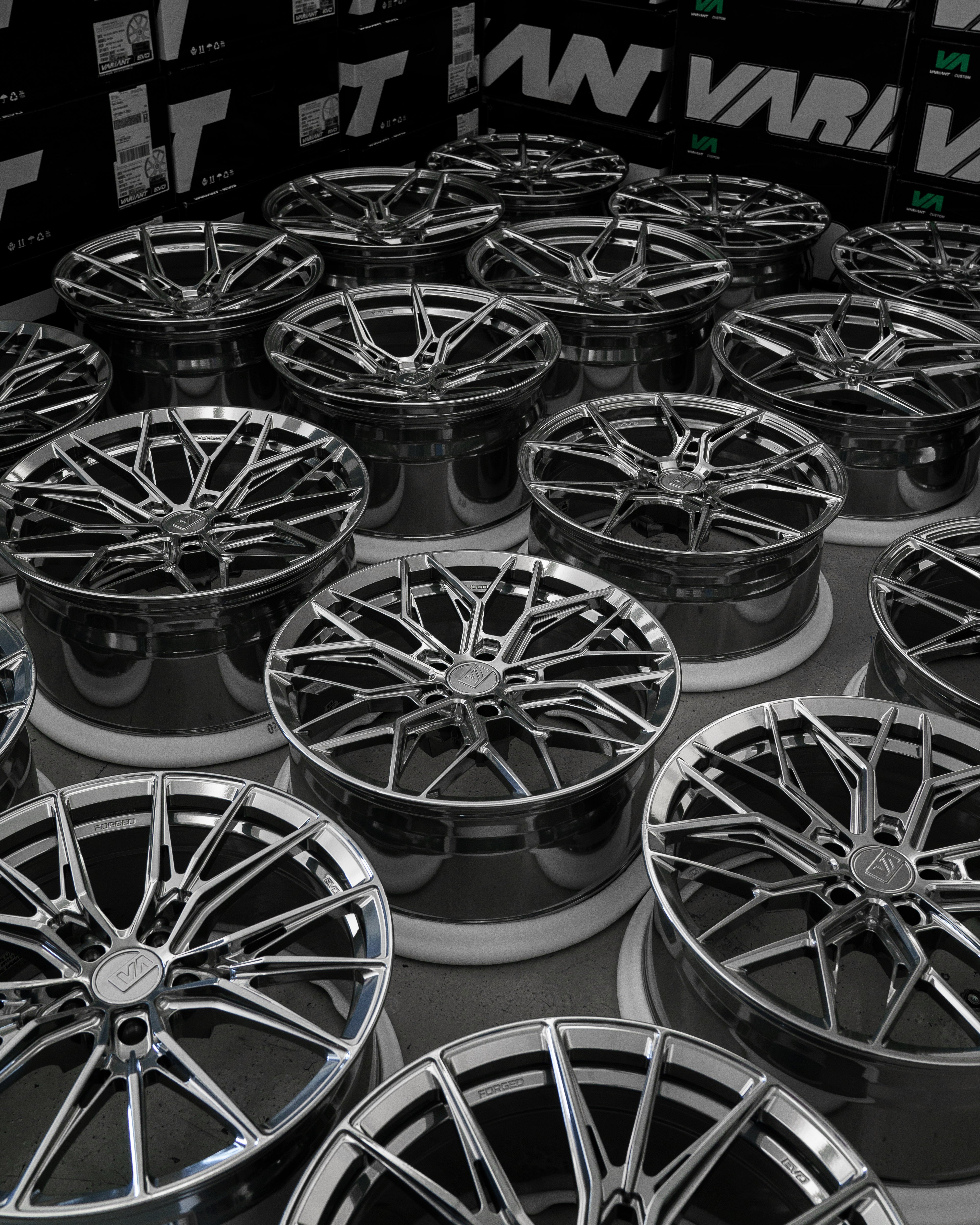

Key takeaways: To clean forged wheels without damaging the finish, work on cool wheels in the shade, rinse off loose grit first, then wash with a pH-neutral wheel cleaner (not acidic or alkaline) and a soft brush. Lift bonded brake dust with a dedicated iron remover, rinse thoroughly, dry with a microfiber towel, and seal the face with a wheel sealant or ceramic coating. Avoid acid-based cleaners, harsh degreasers, and stiff brushes, which can dull, stain, or etch a forged wheel's finish over time.
Knowing how to clean forged wheels the right way is the difference between a finish that still looks new after five years and one that turns cloudy, pitted, or stained. Forged wheels are a serious investment, and the good news is that protecting them takes a simple, repeatable routine rather than exotic products. This guide walks through the safe method step by step, what cleaner to use, how to deal with stubborn brake dust, and the mistakes that quietly destroy a finish.
Why do forged wheels need careful cleaning?
Forged wheels are machined from a single billet of 6061-T6 aluminum that has been compressed under enormous pressure, which makes the metal dense and strong. But the part you actually see is the finish on top of that metal: paint, powder coat, a brushed-and-clear-coated face, or a polished lip. That finish is what gives a wheel its color and gloss, and it is far more delicate than the aluminum underneath.
Brake dust is the main enemy. It is a mix of metallic particles and adhesive residue worn off the brake pads and rotors. When the wheel is hot, that dust bonds to the finish and, left alone, can begin to etch into the clear coat. Road grime, salt, and iron fallout compound the problem. Cleaning regularly with the right products keeps the finish sealed and prevents permanent staining.
What is the safest way to clean forged wheels?
The safest approach is a wash that lifts contaminants chemically so you barely have to scrub. Work on one wheel at a time and follow this order:
- Make sure the wheels are cool. Never spray cleaner on a hot wheel straight off a drive. Heat makes products flash-dry and streak, and can shock a hot finish.
- Rinse first. Pressure-rinse or hose down each wheel to flush loose grit, so you are not dragging sand across the finish later.
- Apply a pH-neutral wheel cleaner. Spray the face, barrel, and spokes, then let it dwell for one to two minutes so it can break down grime. Do not let it dry on the surface.
- Agitate gently. Use a soft wheel brush or wash mitt for the face and a soft barrel brush for the inner rim. Keep a separate bucket and mitt from the ones you use on paint.
- Rinse thoroughly. Flush every trace of product from the spokes, lug pockets, and barrel.
- Dry completely. Blot with a clean microfiber towel or use forced air. Letting wheels air-dry leaves mineral water spots that are tough to remove.
- Seal the finish. Apply a wheel-specific sealant or ceramic coating to make the next clean easier (more on that below).
A consistent routine like this every couple of weeks does more to preserve a finish than any single deep-clean session.
What cleaner should you use on forged wheels?
Use a pH-neutral wheel cleaner, meaning one with a pH close to 7. The further a product moves toward acidic (low pH) or caustic/alkaline (high pH), the more aggressively it attacks not just the grime but the clear coat and any polished metal. Acid wheel cleaners can clean fast, but they can also stain, cloud, or strip a finish, especially on a brushed or polished forged wheel.
Here is how the common cleaner types compare:
| Cleaner type | Best for | Risk to forged finish |
|---|---|---|
| pH-neutral wheel cleaner | Routine washing of any finish | Low — safe for regular use |
| Iron remover (pH-neutral) | Bonded brake dust and iron fallout | Low — designed for finished wheels |
| Acidic wheel cleaner | Heavy, neglected industrial grime | High — can etch, stain, or dull |
| Strong alkaline degreaser | Bare, unfinished metal only | High — can cloud clear coat |
For almost every owner, a quality pH-neutral wheel cleaner paired with an iron remover covers everything you need. Our own wheel cleaner is formulated to be safe on the painted, brushed, and polished finishes we use on our forged wheels.
How do you remove brake dust from forged wheels?
Lift bonded brake dust with a pH-neutral iron remover rather than scrubbing harder. These products contain ingredients that chemically react with embedded iron particles and dissolve them, often turning purple or red as they work. Spray the iron remover onto a rinsed, cool wheel, let it dwell for the time on the label (usually a few minutes), agitate lightly with a soft brush, and rinse. The point is to let chemistry do the work so you are not grinding abrasive particles into the finish with a stiff brush.
If your wheels constantly look filthy a day after washing, the culprit is usually high-dust brake pads rather than your technique. Switching to a lower-dust pad compound reduces how often you have to clean.
Should you ceramic coat forged wheels?
Yes, sealing forged wheels is one of the best things you can do for them. A wheel sealant or ceramic coating creates a slick, hydrophobic barrier on top of the finish. That barrier does two things: it makes brake dust and grime far less likely to bond, so future washes take half the effort, and it adds a sacrificial layer that takes the abuse instead of your clear coat.
Apply a coating to a freshly cleaned, fully decontaminated, and dry wheel, ideally when the wheels are off the car or you can reach the full barrel. A good coating can last many months and is cheap insurance on a set of wheels that cost far more. If you are weighing whether the wheels themselves justify that care, our breakdown of whether forged wheels are worth it covers the durability case in detail.
What should you avoid when cleaning forged wheels?
- Acid cleaners on a regular basis. They can permanently stain or etch painted and polished finishes.
- Cleaning hot wheels. Always let them cool to the touch first.
- Stiff or metal brushes. They leave fine scratches that dull the finish; use soft brushes and mitts only.
- Automatic car washes with harsh wheel blasters. The chemicals and brushes are not finish-friendly.
- Letting product dry on the surface. Work in the shade and rinse before anything dries.
- Sharing your paint mitt with your wheels. Grit picked up from wheels will scratch your paint, and vice versa.
Forged construction makes a wheel strong, but the finish still needs respect. If you want the background on how forging differs from cast and flow-formed wheels, see our guide to forged vs. flow-formed vs. cast wheels. You can also browse our full lineup of true forged wheels to see the finishes we offer.
Frequently asked questions
Can you use regular car shampoo on forged wheels?
In a pinch, a pH-neutral car shampoo is gentle enough for a light wash. But a dedicated pH-neutral wheel cleaner is formulated to break down brake dust and road grime more effectively, so it cleans better with less scrubbing.
How often should you clean forged wheels?
Every one to two weeks is a good target for a driven car, plus a quick rinse after any drive on salted or heavily soiled roads. Frequent light cleaning prevents brake dust from bonding and is far easier than an occasional deep clean.
Will brake dust permanently damage forged wheels?
It can if left long enough. Hot brake dust bonds to the finish and, over time, the metallic and adhesive content can etch into the clear coat. Removing it promptly with an iron remover and sealing the wheel prevents lasting damage.
Do you need to remove the wheels to clean them properly?
Not for routine washing, but taking wheels off the car gives full access to the barrel and is ideal when you are applying a ceramic coating or sealant for the first time.
Written by Taylor Smith, co-founder of Variant Alloy Wheels, who has spent nearly two decades in the automotive aftermarket.
Share:
What Are Forged Wheels Made Of? 6061-T6 Aluminum Explained
Are Forged Wheels Worth It? An Honest Breakdown