


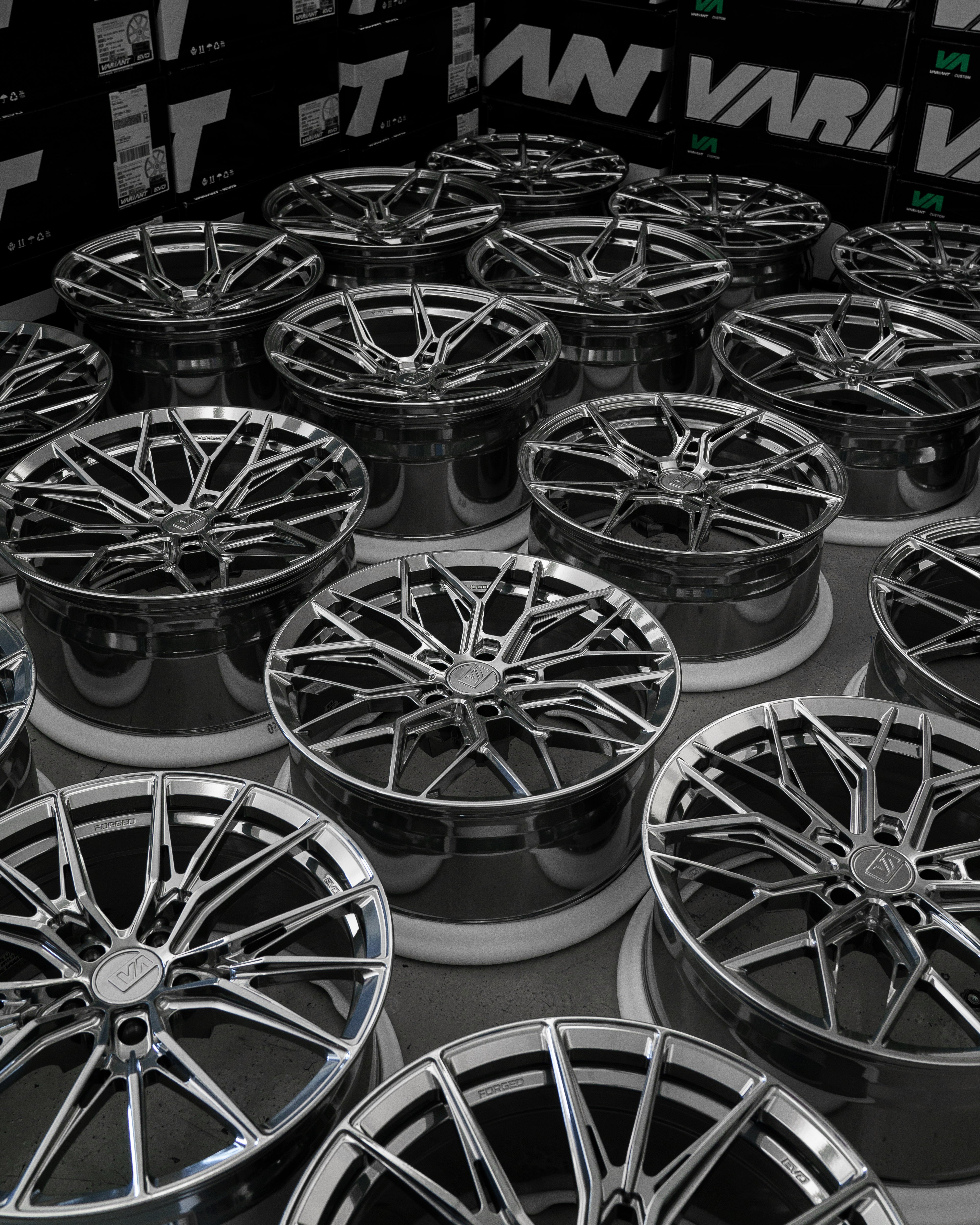
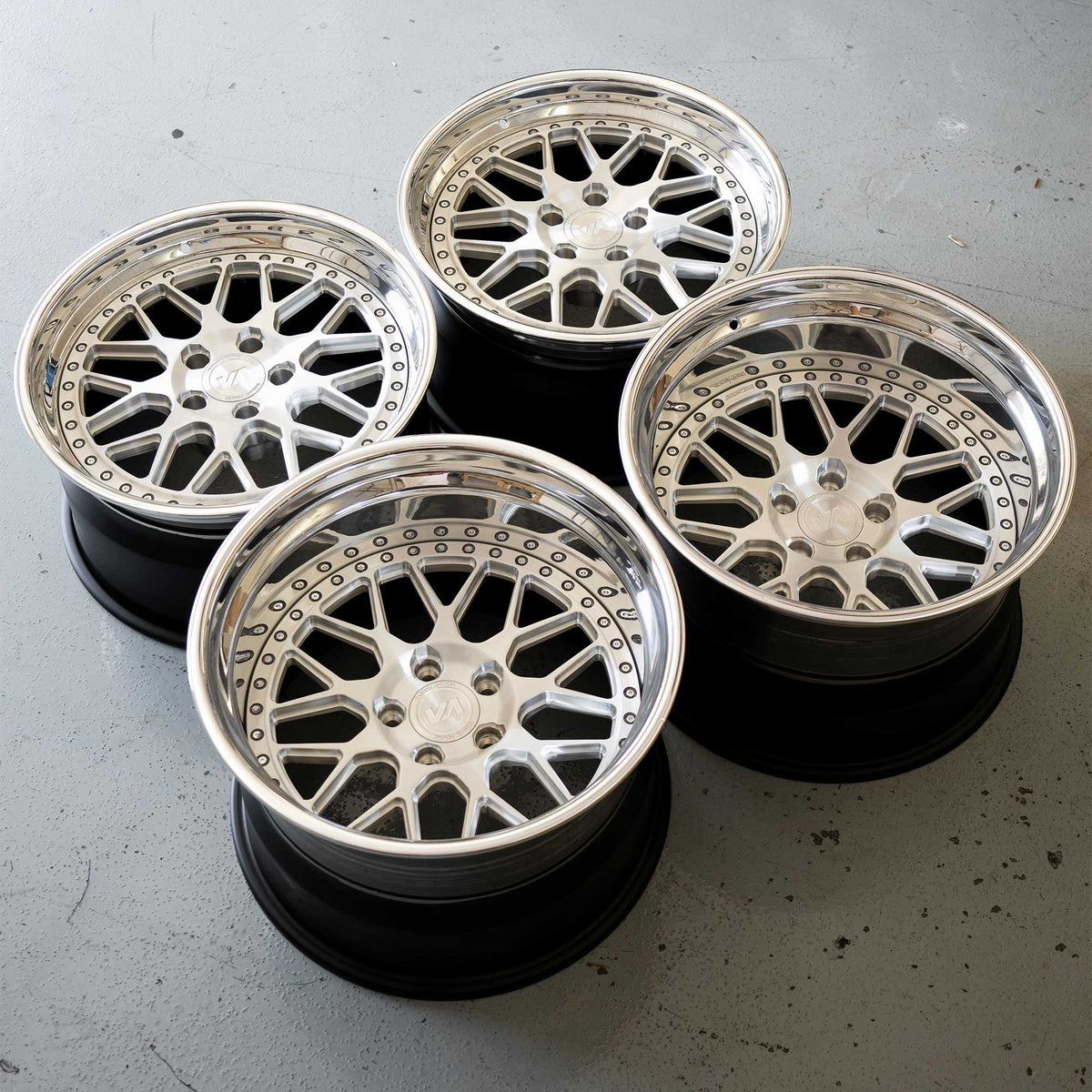
Key takeaways: To choose a wheel finish, weigh three things: the look you want, how much upkeep you will tolerate, and how durable the finish needs to be. Gloss is the shiniest and easiest to polish but shows swirls; matte and satin look modern and hide dirt but need dedicated cleaners and cannot be buffed; brushed and machined finishes give a high-end metallic depth; and custom colors, tints, and coatings let you personalize a forged wheel to your exact build.
Once you have settled on size and fitment, the finish is what people actually see, and it is the decision owners second-guess most. Knowing how to choose a wheel finish comes down to matching the finish type to your car, your climate, and how much washing you are realistically going to do. Below is an honest breakdown of the main finish families, what they cost you in maintenance, and how to narrow it down.
What are the main types of wheel finishes?
Most aftermarket finishes fall into a handful of families. Each has a distinct look and a distinct maintenance profile.
- Gloss: A high-shine, reflective surface (gloss black, gloss gunmetal, gloss bronze). The most classic and the most reflective, so it pops in sunlight but reveals fine scratches and brake dust.
- Matte: A flat, non-reflective finish with a modern, understated look. Hides dust and minor imperfections well but cannot be polished if it gets scuffed.
- Satin: The middle ground, a soft, low-sheen finish that reads more refined than matte without the mirror shine of gloss.
- Brushed: Fine directional grain lines machined or hand-brushed into the face for an industrial, metallic depth, usually sealed under a clear coat.
- Machined / diamond-cut: A precision-cut face that exposes bright bare metal, often paired with a painted window color underneath.
- Custom color, tints, and specialty coatings: One-off colors, translucent tints over brushed metal, and specialty topcoats for owners who want something specific.
Gloss vs. matte vs. satin: which looks best?
There is no universally "best" finish, only the one that suits the car and the owner. Gloss suits classic and luxury builds and makes bold colors look deep and wet. Matte suits blacked-out, stealth, and modern performance looks and photographs beautifully in flat light. Satin is the safe, versatile pick that flatters almost any body color without shouting. As a rule of thumb, darker finishes emphasize the wheel's shape and spokes, while brighter machined or brushed faces emphasize width and dish.
Finish comparison: look, durability, and upkeep
| Finish | Look | Durability | Maintenance | Can it be repaired/polished? |
|---|---|---|---|---|
| Gloss | Shiny, reflective, classic | Hard clearcoat, but shows scratches | Frequent washing to keep shine; swirls show | Yes, can be buffed and re-cleared |
| Satin | Soft low sheen, versatile | Good all-rounder | Use pH-neutral, non-abrasive cleaners | Limited; avoid aggressive polishing |
| Matte | Flat, modern, stealthy | Durable but unforgiving of scuffs | Matte-safe cleaners only, no polish or wax | No, cannot be buffed out |
| Brushed | Metallic grain, high-end | Clear-coated for protection | Gentle wash; protect the clear coat | Refinishing is specialist work |
| Custom color | Personalized, unique | Depends on the coating system | Follow the finish-specific guidance | Varies by process |
Which wheel finish is the most durable and easiest to maintain?
Gloss finishes wear a hard clear coat and can be polished or re-cleared if they get scratched, which makes them the most repairable, but the reflective surface also makes swirl marks and brake dust obvious, so they demand frequent washing. Matte and satin finishes hide dust and light imperfections better day to day, but they are less forgiving long term: you cannot buff a scuff out of a true matte finish, and using the wrong cleaner or a wax can leave permanent shiny spots. Brushed and machined faces sit under a protective clear coat that needs to stay intact.
Whatever you choose, protecting the finish is what keeps it looking new. Our guide on cleaning forged wheels without damaging the finish covers safe products by finish type, and if you want an extra barrier against brake dust and road grime, it is worth reading whether ceramic coating is worth it for wheels. For the science on why anodized and powder-coated layers resist corrosion, the overview of anodizing and powder coating are good non-commercial references.
Should you pay extra for a custom wheel finish?
A custom finish is worth it when a standard color will not complete the look you are building, and it is one of the reasons a forged wheel holds its appeal over time. Because we machine our wheels in-house as true forged products, the finish is applied to a precise, high-quality surface, which is exactly what you want under a specialty color or brushed treatment. You can explore one-off colors and treatments through our additional finishes options, and personalize the details further with EVO center cap inserts.
If you are still deciding whether to invest in a forged wheel at all, our honest breakdown of whether forged wheels are worth it lays out the trade-offs. When you are ready to browse by style, the Designer collection and the customizable EVO monoblock lineup are good starting points, and you can see everything in the full forged wheel catalog.
How do you match a wheel finish to your car?
Start with your body color and the mood you want. A few reliable pairings:
- White or silver cars: gloss black or bronze for contrast, or satin gunmetal for a subtle, factory-plus look.
- Black cars: brushed or machined faces to add depth, or matte black for full stealth.
- Bold colors (red, blue, yellow): satin or gloss black to let the paint stay the star, or bronze for a warm, motorsport-inspired accent.
- Grayscale performance builds: gunmetal, bronze, and brushed tints read purposeful without being loud.
When in doubt, satin bronze and gunmetal are the finishes that flatter the widest range of cars while still looking distinctive.
Frequently asked questions
Is matte or gloss better for wheels?
Neither is objectively better; they serve different goals. Gloss is more repairable and shinier but shows swirls and needs frequent washing. Matte looks modern and hides dust but cannot be polished if scuffed and requires matte-safe cleaners. Choose based on the look you want and how you will maintain it.
Do matte and satin wheels need special care?
Yes. Matte and satin finishes should be cleaned with pH-neutral, non-abrasive products and should never be waxed or machine-polished, since that can create permanent glossy spots. Regular gentle washing is the safest routine.
What wheel finish hides brake dust and scratches best?
Matte and satin finishes disguise dust and light imperfections better day to day because they are non-reflective. Gloss shows dust and swirls more readily, but it has the advantage of being polishable and repairable when it does get marked.
Can you change the finish on a forged wheel later?
In many cases yes, because a forged wheel is machined from solid aluminum and provides a durable, high-quality base for refinishing. The specifics depend on the current finish and the new one you want, so it is best handled as specialist work rather than a driveway project.
Written by Taylor Smith, co-founder of Variant Alloy Wheels, who has spent nearly two decades in the automotive aftermarket.
Share:
How Much Should You Torque Aftermarket Wheels?
How Do You Get Rid of Brake Dust on Wheels?