


Key takeaways: Aftermarket wheels can affect gas mileage and EV range, but usually by a modest amount, and it works in both directions. The factors that matter most are wheel weight, overall diameter, tire width, and aerodynamics. A lighter wheel in a sensible size tends to help efficiency, while a bigger, wider, heavier setup tends to hurt it. On a gas car the change is usually in the low single-digit percentages. On an EV, moving up in wheel diameter can cost roughly 5% of range per inch, and an aggressive setup can take more.
Do aftermarket wheels affect gas mileage?
Yes, aftermarket wheels affect gas mileage, but the effect is smaller than most people expect and it depends entirely on what you change. Swap a heavy factory wheel for a lighter one of the same size and you can gain a little efficiency. Go two inches larger on a wide, heavy design and you can lose a little. The wheel itself is only part of the story, because the tire you bolt to it often matters just as much.
Two properties of a wheel drive the fuel-economy math. The first is unsprung weight, the mass that is not supported by the springs (wheels, tires, brakes, and hubs). The second is rotational mass, the weight out at the rim that the engine has to spin up every time you accelerate. Because that weight both moves with the car and spins, reducing it helps more than trimming the same weight from the body. This is the same physics behind why lighter wheels improve acceleration and braking, which we cover in our guide to unsprung weight.
How much does wheel weight change fuel economy?
Trimming wheel weight helps most in stop-and-go driving, where the car is constantly accelerating a rotating mass back up to speed. The gains are real but modest, generally in the low single digits of a percent for a typical car. You will feel a light wheel in throttle response and steering long before you notice it at the pump.
Because the benefit comes from strength-to-weight, construction matters. True forged wheels are denser and stronger than cast wheels, so they can reach a target strength at a lower weight. That is why forged wheels are usually the lightest mainstream option, a point we break down in are forged wheels lighter than cast wheels. If efficiency is on your list, start by looking at the lightest forged wheels in your size.
Do bigger wheels lower your gas mileage?
Bigger wheels usually lower gas mileage slightly, for three reasons that stack up. First, larger-diameter wheels tend to weigh more, adding rotational mass. Second, a plus-size setup normally pairs a wider, lower-profile tire, and wider tires add rolling resistance and frontal area. Third, at highway speed the extra width and exposed spokes add aerodynamic drag. None of these is dramatic on its own, but together they explain why a jump from, say, 18-inch to 21-inch wheels can nudge economy down. Ride comfort changes too, which we cover in do bigger wheels affect ride quality.
Do aftermarket wheels reduce EV range?
On an electric vehicle the same factors apply, but the aerodynamic piece is magnified because EVs are so efficient that drag becomes a larger share of the energy budget. As a working rule, each inch of added wheel diameter can cost around 5% of range, and independent testing has shown wheel and tire choices swinging real-world range by a much larger margin in extreme cases. Heavier wheels also slightly reduce how much energy regenerative braking can recover, since there is more rotating mass to slow down.
The takeaway is not that you should avoid nice wheels on an EV. It is that diameter, width, and weight all carry a range cost, so a light wheel in a reasonable size protects your range far better than a heavy, oversized one. The U.S. Department of Energy notes that tire choice alone can measurably change efficiency, which is worth remembering when you pick rubber for a new set of wheels. You can read the basics on tires and efficiency at fueleconomy.gov and about rolling resistance in Tire Rack's Tire Tech articles.
Which wheel factors affect efficiency the most?
| Factor | Effect on efficiency | Why |
|---|---|---|
| Wheel weight | Lighter helps | Less rotational and unsprung mass to accelerate |
| Wheel diameter | Bigger hurts | Added weight plus lower-profile, wider tires |
| Tire width | Wider hurts | More rolling resistance and frontal area |
| Aerodynamics | Open designs hurt at speed | Spokes and open barrels create drag, especially on EVs |
| Tire compound | Low-rolling-resistance helps | Less energy lost to tire deformation |
How do you keep efficiency when you upgrade wheels?
If you want a wheel upgrade that is kind to your fuel economy or range, keep the diameter close to stock, choose the lightest wheel you can in that size, and pair it with a tire that has a sensible width and a low-rolling-resistance design. That combination gives you the look and the strength you want without a meaningful efficiency penalty.
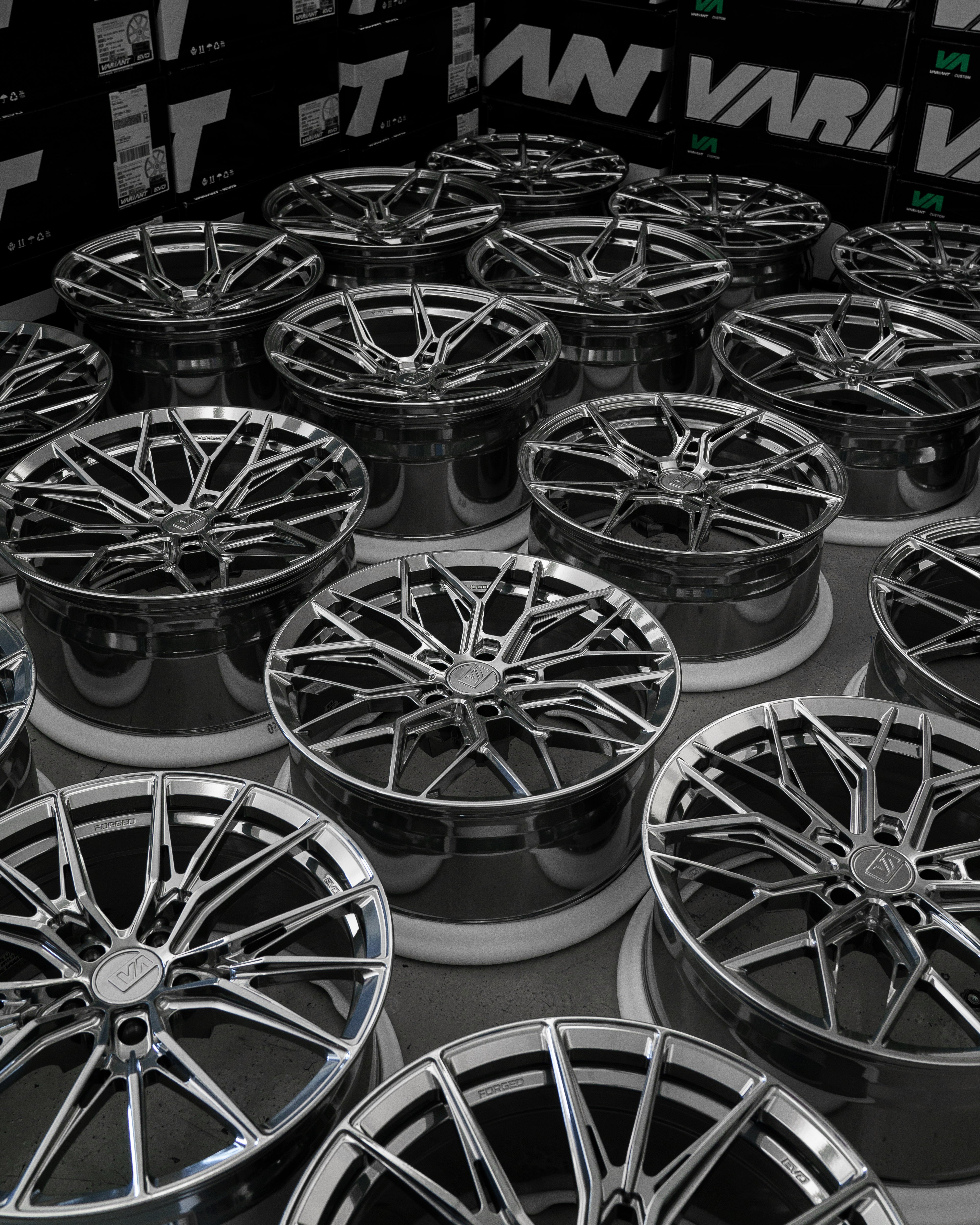
This is where true forged wheels earn their keep. Because forging produces the best strength-to-weight in the aftermarket, a forged wheel lets you hold or even drop weight versus a heavy factory wheel while gaining strength. Variant builds only true forged wheels, so every set starts from that efficiency-friendly baseline. If you are comparing options, our forged wheel lineup and the Corsa and EVO collections are good places to start.
Frequently asked questions
Do lighter wheels really improve gas mileage?
Yes, modestly. Lighter wheels reduce rotational and unsprung weight, which helps most in stop-and-go driving. Real-world gains are usually in the low single digits of a percent, so treat efficiency as a bonus of a good forged wheel, not the main reason to buy one.
How much range do bigger wheels cost an EV?
As a rule of thumb, each inch of added wheel diameter can cost around 5% of range, mostly from added weight, wider lower-profile tires, and worse aerodynamics. Aggressive setups can lose more, while a light forged wheel in a sensible size limits the hit.
Do wider tires hurt fuel economy?
Usually a little. Wider tires add rolling resistance and frontal area, which the engine or motor has to overcome. The exact cost depends on the tire's construction and compound as much as its width.
What is the most efficient wheel upgrade?
A lighter wheel in a diameter close to stock, wrapped in a tire with low rolling resistance. True forged wheels are the lightest mainstream option for a given strength, so they are the efficiency-friendly choice when you upgrade.
Written by Taylor Smith, co-founder of Variant Alloy Wheels, who has spent nearly two decades in the automotive aftermarket.
Share:
What Is Wheel Offset? Positive, Negative, and Zero Offset Explained
Do Forged Wheels Hold Their Value?