


Key takeaways: Plus sizing means fitting a larger-diameter wheel with a lower-profile tire so the overall tire diameter stays almost the same as stock. Going up one inch in wheel diameter is "plus one," two inches is "plus two." Done correctly, plus sizing sharpens steering response and lets you run a wider, better-looking wheel without confusing your speedometer, gearing, or ABS. The golden rule: keep the new overall tire diameter within about 1% of the original.
If you have ever priced out a new set of wheels and wondered why an 18-inch wheel needs a totally different tire than the 17s that came on the car, you have run into plus sizing. It is one of the most useful concepts in wheel and tire fitment, and it is also one of the easiest to get wrong. This guide explains what plus sizing is, how plus-one and plus-two fitments work, and how to grow your wheel diameter without hurting the way your car drives.
What is plus sizing?
Plus sizing is the practice of installing a larger-diameter wheel and pairing it with a shorter-sidewall tire so the overall diameter of the wheel-and-tire package stays close to the factory size. You gain rim diameter, but you give back tire sidewall height to compensate. The result is a taller-looking wheel and a lower-profile tire that together measure about the same from the ground to the top of the tread as the original setup.
Overall diameter matters because your speedometer, odometer, transmission shift points, ABS, and traction control are all calibrated around how many times the tire rotates per mile. Change the rolling diameter too much and every one of those systems reads slightly wrong. Keep it close, and the car behaves exactly as the factory intended while looking and steering better.
What do "plus one" and "plus two" mean?
The "plus" number is simply how many inches larger the new wheel is than the original. Each step up in diameter is matched by a wider tire with a lower aspect ratio (the sidewall height expressed as a percentage of tread width):
- Plus zero: Same wheel diameter, but a wider tire and wheel. Rare, but used when you want more grip without changing diameter.
- Plus one: One inch larger wheel. As a rule of thumb, add about 10 mm of tire width and drop the aspect ratio by roughly 10 points.
- Plus two: Two inches larger wheel. Add about 20 mm of width and drop the aspect ratio by roughly 20 points.
Here is how that plays out starting from a common 225/45R17 tire and wheel:
| Fitment | Wheel diameter | Example tire size | Approx. overall diameter |
|---|---|---|---|
| Stock (plus zero) | 17 in | 225/45R17 | 25.0 in |
| Plus one | 18 in | 235/40R18 | 25.4 in |
| Plus two | 19 in | 245/35R19 | 25.8 in |
Notice how the tire gets wider and the sidewall gets thinner at each step, while the overall diameter creeps up only slightly. Those example sizes stay within a few percent of stock, which is the target. Always confirm the exact numbers with a plus-sizing calculator before you buy, because the right tire depends on your specific starting size.
Why do people plus size their wheels?
Plus sizing is popular because it delivers real handling and appearance gains, not just looks. The trade-offs are worth understanding before you commit:
- Sharper steering response: A shorter, stiffer sidewall flexes less in corners, so the car turns in more crisply and feels more direct.
- More tire width: Larger diameters usually allow wider tires, which means a bigger contact patch and more mechanical grip.
- Better looks: A bigger wheel with a lower-profile tire fills the wheel arch and shows off the wheel design, which is a big part of why people upgrade.
- Firmer ride: Less sidewall means less cushion, so you feel more road texture and impacts. This is the main trade-off.
- More vulnerability to potholes: Thin sidewalls give the rim less protection, so a hard hit is more likely to bend a wheel or damage a tire.
We cover the ride-quality side of this decision in depth in our guide to whether bigger wheels affect ride quality.
How do you plus size without hurting your speedometer?
The safe way to plus size is to hold overall tire diameter as close to stock as possible. Follow these steps:
- Find your factory overall diameter. Start from your current tire size and calculate its overall diameter, or look it up.
- Pick your target wheel diameter. Decide whether you are going plus one or plus two.
- Choose a tire that restores the diameter. Select a width and aspect ratio whose overall diameter lands within about 1% of stock. Up to roughly 3% is generally tolerable but will start to affect speedometer accuracy.
- Check width, offset, and clearance. A wider tire and wheel only work if the offset and width keep the tire inside the fender and clear of the suspension and brakes.
Staying within 1% keeps your speedometer honest and your electronic systems calibrated. Anything beyond about 3% is not recommended. According to the general definition of plus sizing, the entire point is to change wheel diameter while keeping the tire's outer diameter close to the original.
How does plus sizing relate to width and offset?
Diameter is only one dimension. When you plus size, you almost always change width too, and width changes interact with offset and backspacing. A wider wheel pushed too far out will rub the fender; pushed too far in, it hits the strut or brake caliper. Get familiar with the two specs that control this before you order:
- Width determines how wide a tire you can safely mount. See our guide to wheel width and tire fitment.
- Offset controls how far the wheel sits in or out relative to the hub. Our wheel offset explainer breaks it down.
Tire Rack's overview of plus-size wheels and tires is a good outside reference if you want to double-check the fitment math.
What does plus sizing mean when choosing forged wheels?
Plus sizing is a bigger-diameter game, and bigger diameters expose one of the main advantages of forged construction. As wheels grow, weight grows with them, and a heavier wheel adds unsprung mass that can blunt the very responsiveness plus sizing is supposed to add. True forged wheels, machined from a single billet of heat-treated aluminum, let you go up in diameter while keeping weight in check, so you get the sharper steering without the ride penalty of a heavy wheel.
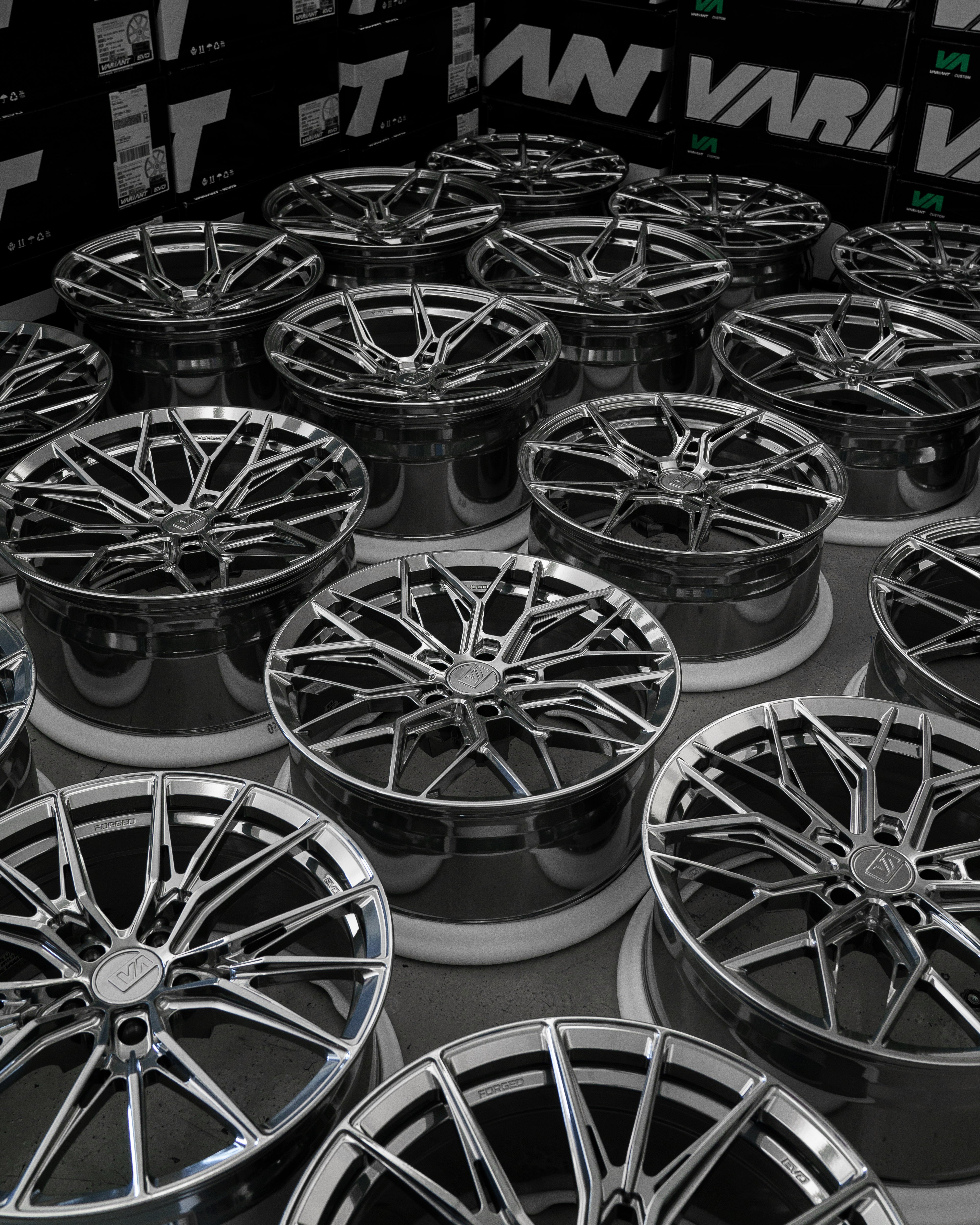
At Variant we build only true forged wheels, so every fitment we offer is engineered to hit an aggressive plus-one or plus-two diameter without carrying dead weight. Browse the full forged wheel lineup, or start with your car in our vehicle-specific fitments to see plus-sized options that are already proven to clear your suspension and brakes. If you want the lightest possible setup at a larger diameter, our Corsa Collection and EVO Collection are built for exactly that.
Frequently asked questions about plus sizing
Does plus sizing make your car faster?
Not directly. Plus sizing improves steering response and grip, which can make a car quicker through corners, but a larger, heavier wheel and tire can actually add rotating mass and slow acceleration slightly. Keeping the package light, which is where forged wheels help, is how you get the handling benefit without the acceleration penalty.
How much can I safely change my overall tire diameter?
Aim to stay within about 1% of your factory overall diameter. Up to roughly 3% is usually tolerable but will noticeably affect speedometer and odometer accuracy and can influence ABS and traction control. Beyond 3% is not recommended.
Is plus two too much for a daily driver?
Not necessarily, but it firms up the ride and leaves the rim more exposed to pothole damage because of the thinner sidewall. On rough roads, many daily drivers are happier with plus one. If you plan to run plus two daily, a strong forged wheel is worth the investment for pothole resilience.
Do I need new tires when I plus size?
Yes. A plus-one or plus-two wheel requires a different tire size, a larger diameter with a lower aspect ratio, so you will always buy new tires along with the new wheels.
Written by Taylor Smith, co-founder of Variant Alloy Wheels, who has spent nearly two decades in the automotive aftermarket.
Share:
How Much Should You Torque Aftermarket Wheels?
How Do You Get Rid of Brake Dust on Wheels?