


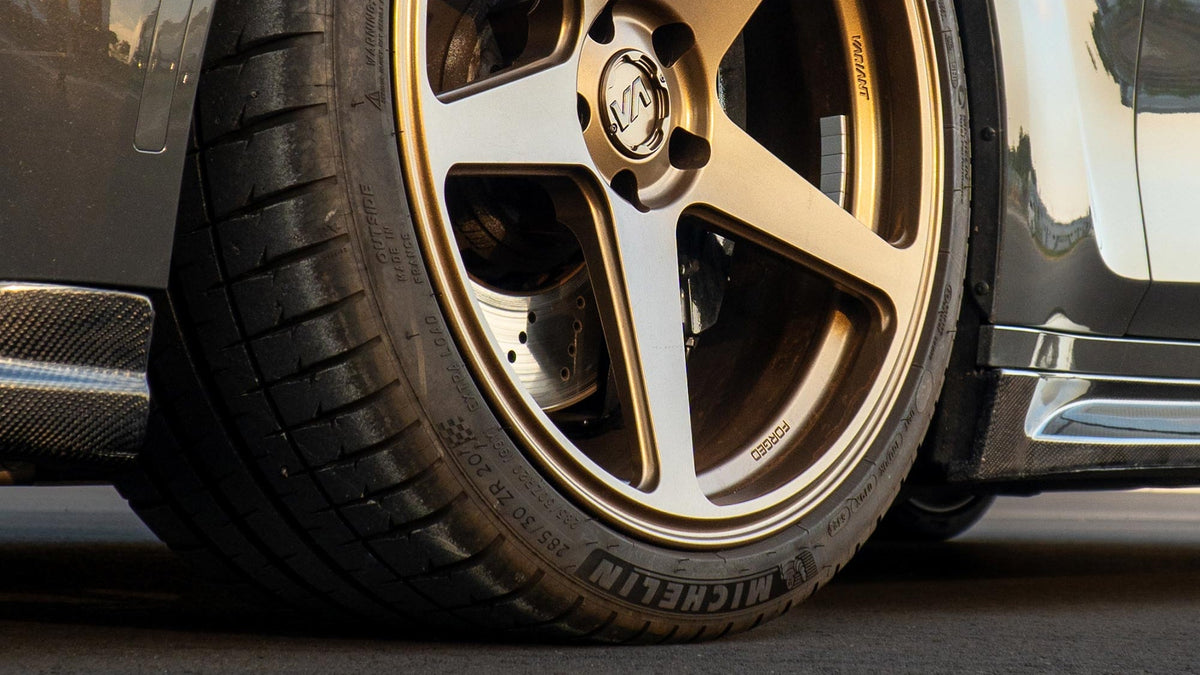
The best way to protect forged wheels from curb rash is to avoid the impact: use tires with enough sidewall, park with space to spare, and take wide turns. Ceramic coating helps with cleaning and contamination, but it will not stop a curb strike. If damage happens, shallow scuffs can usually be refinished by a wheel specialist, while cracks or bends mean the wheel needs a professional inspection.
Curb rash on forged wheels is one of the most common ownership annoyances, and also one of the most preventable. This guide explains what curb rash is, how to prevent it, and what to do when it happens. Shopping for new wheels too? Browse our forged wheel lineup; the fitment choices that keep the lip safe are covered below.
What is curb rash on a wheel?
Curb rash is scraping or gouging on the outer lip of the wheel, caused by contact with a curb, usually while parking or turning. It ranges from light scuffs in the finish to deep gouges that remove material.
Are forged wheels more resistant to curb rash?
Not in a way you can rely on. Forged 6061-T6 aluminum is strong and resists cracking from impacts better than cast aluminum, which tends to be more brittle. But the finish and the outer lip are still aluminum, and a curb will still scrape and gouge it. Strength protects the structure of the wheel, not the cosmetics.
How do you prevent curb rash?
- Choose the right tire size. A tire with a bit of sidewall extending past the wheel lip takes the first contact. An extremely stretched tire leaves the lip exposed.
- Use the parking aids you have. Many modern performance cars offer parking cameras, parking sensors, or a curb-view mode, either standard or as an option. If yours has one, use it every time, especially on a low-slung car like a Corvette C8 or BMW M4 where the lip sits close to the ground.
- Park and turn wide. Leave extra room when pulling in and out, particularly at low-profile tire sizes.
- Be careful with valet and service. Tell valets and shops to take care, and check the wheels at pickup.
- Mind your fitment. A wheel that sits too far out of the fender is exposed to curbs and rub. A proper offset keeps the lip tucked in where it belongs.
Does ceramic coating protect against curb rash?
No. A ceramic coating adds a thin, hard, slick layer that helps shed brake dust and road grime and makes washing easier. It is not thick enough to survive a curb strike. Treat it as a cleaning aid, not armor. If you are considering one, read whether ceramic coating is worth it for wheels. Buying a new set? We can add ceramic coating before your wheels leave our shop.
How do you repair curb rash on forged wheels?
| Damage | Typical fix | Notes |
|---|---|---|
| Light scuffs in the finish | Refinishing or touch-up by a wheel specialist | Often cosmetic only |
| Deep gouges | Machine or sand, then refinish | Only if enough material remains; ask a professional |
| Bent lip or barrel | Professional inspection first | May affect air retention and balance |
| Cracks | Replace the wheel | Do not drive on a cracked wheel |
Do not try to heat, hammer, or weld a structural wheel at home. Heat can change the temper of aluminum and weaken it. Anything more than a cosmetic scuff should be checked by someone who works on wheels every day. Our guide on repairing curb rash on forged wheels goes deeper. For general tire and wheel safety guidance, see the NHTSA tire safety page.
How do you keep the finish looking good after repair?
Wash regularly with a gentle cleaner such as our wheel cleaner, avoid harsh acids, and follow the steps in how to clean forged wheels without damaging the finish. Clean wheels also make it easier to spot damage early.
Should you worry about curb rash when choosing new wheels?
Yes, it is worth planning around. Wheel diameter, tire profile, and offset all influence how exposed the lip is. Going up in diameter shrinks the sidewall, which leaves less cushion between the lip and the curb, so weigh looks against daily usability before you decide.
If you park on city streets, favor a tire size with healthy sidewall and a fitment that keeps the lip inside the fender. Our fitment experts will match wheel and tire sizes to your car. Browse our wheel range, the Corsa and EVO collections, or the EVO vehicle-specific fitments for your car. EVO is one of our lines; EX2 and three-piece builds are specced per car, so their sizes and offsets can differ.
Frequently asked questions
Can curb rash be repaired on forged wheels?
Usually, yes, if the damage is cosmetic or shallow. A wheel specialist can refinish scuffs and light gouges. Bent lips or cracks need professional inspection, and a cracked wheel should be replaced.
Will ceramic coating stop curb rash?
No. Ceramic coating helps repel brake dust and grime and makes cleaning easier, but it is too thin to protect against a curb strike.
Is curb rash dangerous?
Cosmetic scuffing is not a safety issue. Deep gouges, bends, or cracks can be, because they may affect strength or air retention. Have a professional inspect anything beyond light scuffs.
Do forged wheels curb more easily than cast wheels?
No. Both are aluminum and will scrape on contact. Forged wheels are generally stronger and less prone to cracking from impact, but neither is immune to cosmetic damage.
How do I avoid curbing low-profile tires?
Park and turn wide, use your car's camera or curb-view mode, and choose a tire size with enough sidewall to extend past the lip. Avoid heavily stretched tires.
Written by Taylor Smith, co-founder of Variant Alloy Wheels, who has spent nearly two decades in the automotive aftermarket.
Share:
Do You Need a Second Set of Wheels for Winter Tires?