


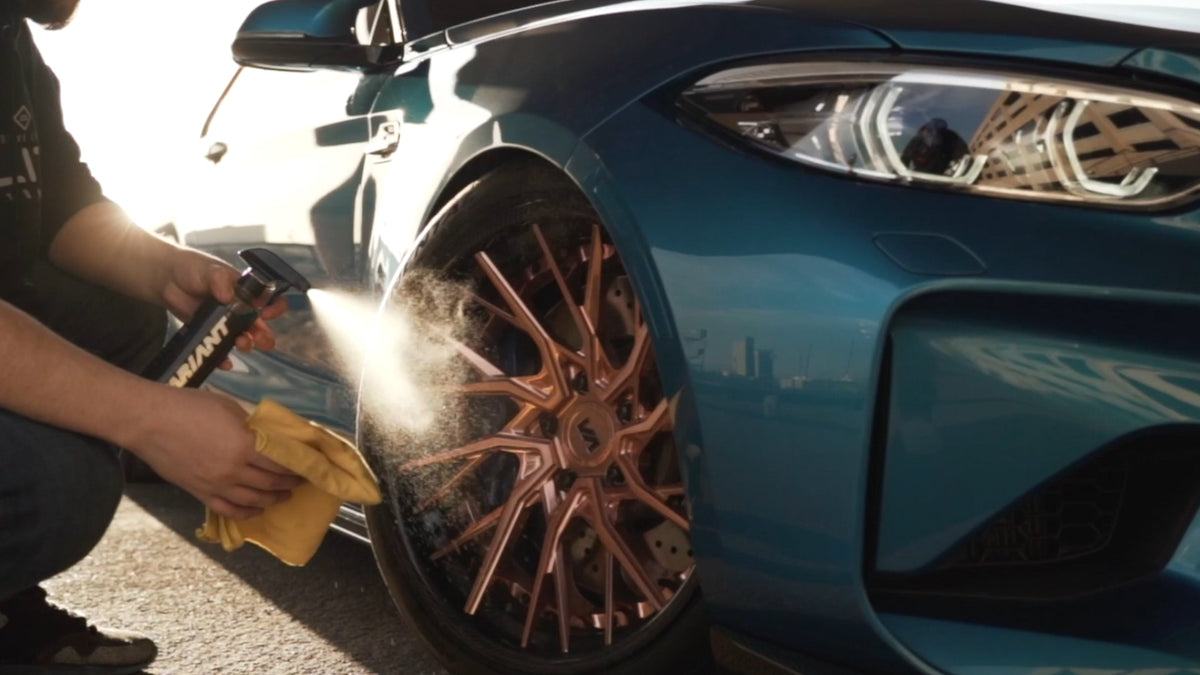
Key takeaways: To clean forged wheels safely, let them cool, rinse off loose grit, wash with a pH-neutral wheel cleaner and soft brushes, rinse thoroughly, and dry. Avoid acid-based cleaners, abrasive pads, and steam, because they can dull or strip the finish. Cleaning every one to two weeks keeps brake dust from bonding to the surface.
How do you clean forged wheels the right way?
The right way to clean forged wheels is the same gentle routine you would use on good paint: cool surface, plenty of water, soft tools, and a cleaner that will not attack the finish. Forged wheels are machined from a solid 6061-T6 aluminum billet or forging, so the metal itself is tough. The part that needs protecting is the finish on top of it, which is typically paint, powder coat, or clear coat. Aggressive chemistry and stiff brushes damage that layer long before they hurt the aluminum.
Here is the routine we recommend:
- Let the wheels cool. Hot wheels dry cleaner too fast and leave spots or a film. Tire Rack's wheel care guidance says the same, and also warns against steam cleaning because it can dull paint and clear coat.
- Rinse first. Hit each wheel, barrel, and the area behind the spokes with full hose pressure to knock off loose grit before anything touches the surface.
- Apply a pH-neutral wheel cleaner. Spray it on, let it dwell for the time on the label, and do not let it dry. Our wheel cleaner is made for this job.
- Agitate with soft tools. Use a soft-bristle brush for the face, a long wheel-barrel brush for the inside, and a small detail brush for lug holes and around the valve stem.
- Rinse thoroughly and dry. Dry with a clean microfiber towel or an air blower so water spots do not form.
What cleaners should you avoid on forged wheels?
Avoid acid-based wheel cleaners, abrasive cleansers, steel wool, polishing compounds, and steam. Tire Rack specifically cautions against abrasive cleansers, steel wool pads, polishing compounds, and acid cleaners (some automatic car washes use acid), plus steam cleaning. Acids can etch clear coat and stain bare or brushed aluminum, and the damage often shows up as cloudy patches you cannot wash off.
Automatic car washes deserve a mention too. Stiff brushes and metal guide tracks can scuff wheels, especially with low-profile tires and wide, deeply concave faces. If you care about the finish, hand wash.
| Product or tool | Safe on forged wheel finishes? | Notes |
|---|---|---|
| pH-neutral wheel cleaner | Yes | Best default for regular washing |
| Soft-bristle wheel brush | Yes | Use for faces, spokes, and barrels |
| Microfiber wash mitt or towel | Yes | Dedicate separate ones to wheels only |
| Acid-based wheel cleaner | No | Can etch clear coat and stain bare aluminum |
| Steel wool or abrasive pads | No | Scratches every finish |
| Steam cleaner | No | Can dull paint and clear coat |
How often should you clean forged wheels?
Clean your forged wheels every one to two weeks if the car is driven regularly, and sooner after winter driving or a track day. Brake dust is made of tiny hot metal particles that can bond to the finish if left on for weeks. The longer it sits, the harder it is to remove without scrubbing. A quick, regular wash is gentler on the finish than an occasional heavy-duty one. If you run a high-friction brake pad, expect more dust and plan to wash more often.
Does ceramic coating make forged wheels easier to clean?
Yes. A ceramic coating adds a slick, hydrophobic layer on top of the finish so brake dust and road grime have a harder time sticking, and it rinses off more easily. It does not make a wheel immune to scratches or curb rash. Apply it to a fully clean, decontaminated wheel, and follow the cure time on the label. We offer a ceramic coating for exactly this. If you are comparing finishes and care requirements across wheel lines, browse our full forged wheel collection or the EVO series.
How do you protect forged wheels from curb rash and corrosion?
Protect forged wheels by rinsing away road salt, parking carefully, and keeping the finish intact. Corrosion on aluminum wheels usually starts where the finish is chipped and salt or moisture reaches the metal. If you drive through winter, rinse the wheels (including the barrels) often. Our guide on driving forged wheels in winter and through road salt covers this in detail, and if the car sits for a season, see how to store forged wheels between seasons.
For the full wash method from a tire retailer that has tested a lot of wheels, read Tire Rack's wheel care guidelines. Always check the care notes for your specific finish, since bare, brushed, and polished surfaces can need different treatment than painted or clear-coated ones.
Frequently asked questions
Can you use dish soap to clean forged wheels?
Mild car-wash soap is fine for a quick wash, but dish soap can strip wax and sealants, so a dedicated pH-neutral wheel cleaner is the better choice.
Is it safe to use a pressure washer on forged wheels?
Yes, in moderation. Keep the nozzle a reasonable distance away, avoid chipped areas where water can lift the finish, and never aim a tight jet at the edge of a damaged spot.
Should you clean forged wheels when they are hot?
No. Let them cool first, because hot wheels dry the cleaner too fast and can leave spots or a film on the finish.
Do forged wheels need different cleaning than cast wheels?
The aluminum alloy underneath is different, but the finish on top is what you clean, so the same gentle, acid-free routine applies to both.
Written by Taylor Smith, co-founder of Variant Alloy Wheels, who has spent nearly two decades in the automotive aftermarket.
Share:
What Are the Best Wheels for the Audi RS6 Avant (C8)?
What Are the Best Wheels for the BMW 6 Series (F06, F12, F13, G32)?